When Facebook makes me Bitter not Better

I have been sick the last couple of days, so I have probably been on Facebook a little more than normal and I have a confession. I don’t like it when people who have hurt me put happy smiling pictures on social media. When they fill my timeline with happy times, it’s like I swallow a giant gulp of bitterness with each picture and post. I’m not proud to admit this, but I also don’t think I’m the only one.  When an ex-spouse or ex-boyfriend/girlfriend is posting Facebook pictures of their new love interest; or when the bully in school has pictures on Instagram surrounded by the cool kids; or when a lazy, coworker brags on Twitter of his/her job promotion; or (for pastor types) when former members who loudly, stormed off post pictures of their new church family—it hurts and we want to shout into our phones or computer screens, “It’s not fair! They shouldn’t be so happy!”

Those people who have hurt us in many ways have moved on with their lives and may never think of how they have hurt us. In some cases, the knife in our back was placed there years ago. These people have families and friends, so of course they will post smiling pictures of happy times. Still there seems to be a part of me that wants them to be perpetually unhappy. I know this is petty of me to feel rotten when a nemesis posts happy pictures, but I’m just being honest. I’m also in good company, David was brutally honest in the Psalms regarding his foes:

Arise, Lord! Deliver me, my God! Strike all my enemies on the jaw; break the teeth of the wicked.” (Psalm 3:7).  Yeah David! God should smack them upside their heads. Or…

In your unfailing love, silence my enemies; destroy all my foes, for I am your servant.(Psalm 143:12). My thoughts exactly David! God should shut them up or at least make them stop posting happy pictures on Facebook.

While I can relate with David’s emotions, I don’t want to stay in the cave with him. I’m not sure what good comes of me dreaming of a holy beat down that the Lord might dish out. Do I really want God to go all Sodom-and-Gomorrah on them?  No.

The Holy Spirit reminds me of Jesus words in my times of bitterness and jealousy: “You have heard that it was said, ‘Love your neighbor and hate your enemy.’ But I tell you, love your enemies and pray for those who persecute you. (Matthew 5:43). I want to shout at my Bible or to God, “Impossible! I can’t do it. Maybe I could pray, “Lord, send the fleas of a thousand camels to infest their armpits,” but I can’t pray nice prayers for them every time I see a smiling picture on Instagram. To which Jesus responds, “With man this is impossible, but with God all things are possible.”(Matthew 19:26).  Deep down, I know the Holy Spirit is right.

Social media has added to our society’s discontentment which, in turn, adds to our angst and ever-increasing gloom. In many ways, instead of connecting us, social media has further divided us. Here’s what I am trying to learn when I see the smiling pictures from people who have hurt me:

1) The person posting (just like me) has good and bad times. (Like me, they just don’t post to social media all of their bad news)

2) Jesus died for them (just like me).

3) Jesus loves them (just like me).

3) Even if they never acknowledge the pain they’ve caused, I need to look to Jesus who forgives all (even them and even me).

4) Bitterness, envy and jealousy are joy killers. I refuse to be controlled by them

5). I can’t let his/her attitude control my altitude.  Instead, with the Lord’s help, I can rise up and get over the pain! And finally, four sentences in eight words

6): Relax. Be faithful. Trust God. Let it go.  Easier said than done?  Most definitely. But life is too short to allow someone’s social media posting to determine your happiness and contentment.


Does the Church really Need to Change? Maybe or Maybe not

We have all heard phrases like “The church needs to change” and “Change or die.”  Nearly everyone agrees that change must happen or the American church will go the way of the horse and buggy, rotary phones and Sears.  A friend of mine recently posted on Twitter this quote: “It is easier for church members to close the doors of their beloved church than it is for them to change.” Is this true?  Is change the hardest yet most necessary thing for a church to do?

I don’t want to be the guy that says we don’t need to change. Clearly, the church in America has issues. As you probably know, every major faith branch in the US is in decline. Every. Single. One. The big question becomes: if the church is to “change” what are we to change into?

Change into a more progressive church?  Progressive churches are dying.

Change into a more conservative church?  They are dying too.

Change into a more liturgical church?  Dead and dying.

Change into a cooler, hipper church?  Who decides what’s cool? Today’s cool is tomorrow’s dead.

Of course, we want our churches growing again.  We want them to be relevant.  We want to reverse the downward trajectory in our attendance and influence numbers.  We want our losses to change into gains. What change needs to happen that will lead to a reversal of our current path?

The Bible tells us:  Jesus Christ is the same yesterday and today and forever. (Hebrews 13:8). In other words, Jesus doesn’t change.  We serve the same Jesus that Francis of Assisi, Martin Luther and John Wesley did. Maybe the changes the church needs are not upping the cool factor, but getting back to the never changing Jesus. Could it be that in an ever-changing culture, the church should not be concerned with changing equally fast, but instead reclaim its original message. Maybe the answer to staving off our imminent demise is less about music style and coffee options in our cool cafes and more about Jesus.

What I’m suggesting is that the primary reason for our rapid decline is that the culture has rejected the church because we don’t look enough like Jesus.  The remedy for the dying church in America is a healthy dose of “that old time religion,” where Jesus is preached and Jesus’ values are deeply imbedded in our church’s DNA once again. A church, like Jesus, loves all people including the “least of these;” shares with the hungry, thirsty, blind, and imprisoned; preaches the good news to the poor; and makes disciples and teaches them in the ways of Jesus. It’s less politics. More Jesus.  Less Judgment. More Jesus. Less hypocrisy. More Jesus. Less pumpkin spice lattes in the lobby and more Jesus in every corner in the church. Our world doesn’t need another church named “the Rock” or some other outdoorsy sounding name, where outsiders don’t know if they are attending a concert, a geological appreciation meeting or a church.  Our world needs the church of Jesus Christ to reflect Jesus Christ more and more.

If your church has gotten away from the Jesus message, then yes, you need to change.  But not change for change sake.  Change for Jesus sake.


The Perfect Life Verses for Church Workers!

Usher: He spoke kindly to him and gave him a seat. 2 Kings 25:28

Church Attendance Secretary: What is lacking cannot be counted.” Ecclesiastes 1:15

Church Bus Driver: The driving is like that of Jehu son of Nimshi—he drives like a maniac.” 2 Kings 9:20

Upwards Concession Stand Cashier: “You are to pay them in silver for the food you eat and the water you drink.”  Deuteronomy 2:6

Funeral Dinner Committee: Prepare me the kind of tasty food I like and bring it to me to eat Genesis 27:4

Church Janitor:  You must distinguish between the unclean and the clean Leviticus 11:47

Babies in the Nursery: “We shall not all sleep, but we shall all be changed” 1 Corinthians 15:51

Overwhelmed Children’s Worker: But the children rebelled against me.”  Ezekiel 20:21

Jr. High Boys Party Planner: “They will eat but not have enough;” Hosea 4:10

Overly friendly Greeter: Greet one another with a holy kiss. 1 Corinthians 16:20

Carnal Board Member (or Pastor): May his days be few; may another take his place of leadership. Psalm 109:8

Church Coffee Shop Barista: “and drink; drink your fill of love” Song of Songs 5:1

Youth Pastor following a Lock-in: “He lay fast asleep, exhausted.”  Judges 4:21

Sr. Adult Pastor: The gray-haired and the aged are on our side. Job 15:10

Church Security team member: For in the day of trouble he will keep me safe Psalm 27:5

Contemporary Worship Leader: Praise him with the clash of cymbals, praise him with resounding cymbals.  Psalm 150:5

All silliness aside as a pastor one of my life verses is this:

Lead Pastor: Be shepherds of God’s flock that is under your care, watching over them—not because you must, but because you are willing.  1 Peter 5:2


Bonus:  Non-Churched Life Verses

Dentist:  Take the silver and gold and make a crown  Zechariah 6:11

Aaron Rogers (Green Bay Packers’ Quarterback): Rescue me from their ravages, my precious life from these lions. Psalm 35:17 (Can you tell I am a Detroit Lions football fan?)

Ohio State Football or New Yankees:  Do not be surprised, my brothers and sisters, if the world hates you. 1 John 3:13 (Can you tell I am not a Buckeye or Yankee fan?)

Hotel Receptionist and Wake Up Caller:  The hour has already come for you to wake up from your slumber Romans 13:11

McDonald’s Chicken McNuggets Cook:  They cooked it in a pot or made it into loaves. And it tasted like something made with olive oil. Number 11:8

Cabela’s Patrons: Now then, get your equipment—your quiver and bow—and go out to the open country to hunt some wild game. Genesis 27:3

Do you have a life verse or favorite Bible verse?  Share it with a friend today!

**All verses from the New International Version


Disagreeing with Stephen Hawking

“There is no God” — that’s the conclusion of the physicist Stephen Hawking, whose final book was published Tuesday. The book, which was completed by his family after his death, offers answers to various questions that Hawking had received in his lifetime. Also “answered” in his book, the British genius believes that alien life is out there. So, if you are keeping score at home, according to Hawking there is no God, but E.T. is somewhere out there in a galaxy far, far away.

With all due respect to Dr. Hawking, I respectfully disagree.

Hawking was a smart guy. Smarter than I ever will be. But he was wrong about God. Now I don’t know if he was wrong about spacemen or not, but I know God is real. I’ve staked my life on it. I believe there is a Creator who made all that there is including Steven Hawking, Pluto, the Milky Way (not the candy bar) and me.

I can’t offer a formula or proof that will convince a hardened atheist. I’m not the mathematician that Steven Hawking was. But here is how my math works:

Jesus > my alcoholic dad

Jesus > than my father-in-law’s Alzheimer’s Disease

Jesus > than a subarachnoid hemorrhage

Jesus > than all my sin (Praise the Lord)

Jesus + the cross = my salvation

Jesus + the empty tomb = my eternal hope

Life – Jesus = meaningless and hopeless

Life + Jesus = Joy Unspeakable

Jesus + us = a match made in heaven (literally)

Knowing Jesus = Peace

Maybe that is all too simplistic for a smart guy like Steven Hawking. The Apostle Paul (an equally brilliant guy) would have answered Steven Hawking this way:

 Where is the philosopher of this age? Has not God made foolish the wisdom of the world?21 For since in the wisdom of God the world through its wisdom did not know him, God was pleased through the foolishness of what was preached to save those who believe. 22 Jews demand signs and Greeks look for wisdom, 23 but we preach Christ crucified: a stumbling block to Jews and foolishness to Gentiles, 24 but to those whom God has called, both Jews and Greeks, Christ the power of God and the wisdom of God. 25 For the foolishness of God is wiser than human wisdom, and the weakness of God is stronger than human strength. (1 Corinthians 1:20-25)

If I am reading Paul’s words correctly (and I’d like to think that I am), Paul’s math formula is this:

God > the smartest minds on earth (including Steven Hawking)


Can the Followers of Jesus Disagree on Politics?

Two notable exceptions to the fishermen faction of Jesus’ twelve disciples was the curious inclusion of Matthew the former tax collector and Simon the zealot. If you know much about first century politics you might wonder, what was Jesus thinking in picking these two guys for his inner circle?

As you probably know, for the people in the first century (and 21stcentury for that matter), the tax man was not high on anyone’s Christmas card list (truth be told, very few people received Christmas cards in the first century).  Still the 21stcentury IRS employees would not be considered thieves, loan sharks or collaborators with the enemies. They are nice people. That would not have been the common opinion regarding their 1stcentury counterparts.

On the other hand, the zealots would have been at the polar opposite extreme of tax collectors. Instead of collaborating with the enemy, the zealots would advocate violently overthrowing the enemy. As much as the everyday people hated tax collectors, the zealots hated the Romans and anyone in cahoots with the Romans even more.

It seems with Matthew the tax collector and Simon the zealot in the tight knit circle of disciples there would have been interesting campfire discussions if not an occasional all-out Conner McGregor vs. Floyd Merriweather-like rumble.

The Gospels don’t sugarcoat the conversations among the disciples.  They tell of the disciples arguing about who among them was the greatest (Mark 9:34).  And how the other ten were upset with James and John when the brothers were trying to finagle the best seats in heaven (10:41).  But you will never read in the Bible: “Simon the zealot was at Matthew the tax collector’s throat. He called him a Little Caesar lover, (which had nothing to do with pizza) and said the Kingdom of heaven wasn’t big enough for them both.”  Apparently, Matthew wasn’t petty either.  He didn’t conveniently leave Simon off the list of disciples in his gospel.  In fact, he points out (like Mark and Luke) that Simon was a zealot.  He didn’t even write that Simon was a low-down-good-for-nothing zealot.  He simply included Simon the zealot on his list. No big deal.

Christ-followers in the 21stcentury could learn something from these two disciples in the first century. Apparently, not every follower of Jesus must be in the same political camp. It’s possible to have vastly different opinions on tough issues and still follow Jesus. Matthew and Simon’s model shows that even when on opposite ends of the political spectrum, we can still sit and learn together at the feet of Jesus. The Kingdom of God took priority over politics.

If an in-cahoots-with-the-enemy tax collector and a wipe-the-stinking-Romans-and-all-their-collaborators-off-the-face-of-the-earth zealot can get along, why can’t we?  Can’t we love those who voted for the other candidate?  Can’t we live into Ephesians 4:2 that says:  Be completely humble and gentle; be patient, bearing with one another in love. “Bearing with one another in love” means to love our fellow believers even when we don’t agree. Can’t we do that? Can’t we be humble, gentle and patient too? It certainly appears that Simon the zealot and Matthew the tax collector were all of those things.

What this Pastor Appreciates Most During Pastor Appreciation Month

October is Pastor Appreciation Month when congregants take time to appreciate their pastors.  But I’d like to flip the meaning of Pastor Appreciation Month a tad and tell you the attributes that I most appreciate in church folks.

I deeply appreciate the people of my church who…

1)  Love my family. These congregants don’t have undo expectations of the pastor’s family. My kids are grown, but when they were young their “adopted” grandparents, aunts and uncles in the congregation loved them and in so doing taught them to love church folks and love the church. Moreover, they don’t insist that my wife play the piano, be a super-spiritual pray-er or act as if she has a Master of Divinity too

2)  Love their fellow church members. Even if they didn’t vote the same way or have different musical tastes or dress out of style or cheer for the wrong teams, they still love them and wouldn’t dream of looking for greener pastures.

3) Serve without being asked. No pleading required.  These church folks show up to work days, revival services, youth fundraisers and whatever else is happening.

4)  Refuse to Gossip. Rumors and innuendo go in one ear and out the other and don’t pass over their tongue or through their lips.

5) Use social media to be the church’s biggest cheerleader and to spread kindness (and not to cherry pick theological or political posts to be used in a passive aggressive ambush of others).

6) Don’t whine when a hymn or chorus is played that they don’t like. Not every hymn is my favorite. Not every chorus gives me goose bumps, but that’s ok because worship isn’t directed toward you or me.

7). Pray regularly for their pastors (and not by praying: “O Lord, could you send my pastor to a little church in Timbuktu. Amen.”).

8). Welcome newcomers.  These parishioners live by the motto: There are no strangers in God’s house.

9). Invite friends on a regular basis. They tell others about their church like they would tell them if their favorite pop star or athlete was going to be in attendance. “Yahoo! Guess what? Jesus is coming to my church on Sunday? You’ve got to come and meet Him!”

10). Give. No pastor likes talking about money.  Don’t force him or her to become a beggar for Jesus. Just faithfully, regularly, generously give to the Lord.

Appreciate your pastor in a tangible way this month if you are so led, but even more importantly appreciate your pastor by being the best layperson all year long!


How To Kill a Church in Six Easy Steps

1)  Evangelism is a relic of the past. If people stumble into the church… great. But don’t ask the members to knock on doors, hand out tracks, hold special revival services or talk to friends or relatives about spiritual things. That’s the pastor’s job.

2)  Brag about everything but Jesus. Be quick to talk about sports, weather, politics, clothing styles, the latest TV shows, a new car, phone or exotic vacation plans. In other words, talk about everything but Jesus? C’mon you don’t want to be pushy or holier-than-thou.

3). Young People’s opinions don’t matter. Who pays the bills? Not the coffee drinking, college debt ridden, stocking cap wearing hipster.

4). Missions are fine as long as it cost me nothing. Don’t ask people to give to missions, go on mission trips, work in their neighborhood, love the marginalized or do anything that will unsettle their safe, secure and worry free life.

 5).  Blame the Preacher.  The church isn’t growing?  It’s the preachers fault.

  • Tithes are down. It’s the preacher’s fault.
  • Worship is lethargic. It’s the preacher’s fault.
  • My kids are wayward. It’s the preacher’s fault.
  • The potluck dinner had too many chicken dishes. It’s the preacher’s fault.
  • Aunt Millie’s feelings were hurt when she wasn’t asked to sing her special rendition of “The Great Speckled Bird” (that’s really a song).  It’s the preacher’s fault.
  • The snow wasn’t plowed in a timely manner.  It’s the preacher’s fault.
  • The temperature in the sanctuary is too cold.  It’s the preacher’s fault.
  • The temperature in the sanctuary is too hot. It’s the preacher’s fault.
  • Communion wafers taste like cardboard.  It’s the preacher’s fault.
  • Communion juice fermented. It’s the preacher’s fault.
  • Communion is celebrated too often (or not enough). It’s the preachers fault.

You name it, it’s the preacher’s fault.

6). Restlessness not Faithfulness is the modus operandi. At the first sign of trouble, when a hot-new church comes to town, when the preacher talks too much about: Money, missions, Luke-warm Christians, or modern day Pharisees—exit the church faster than you can say:  I’m not being fed.

How To not kill a church:  Love. Participate. Give. Invite. Care. Share. Help. Love some more. Offer Grace. Trust. Refuse to Quit. Get involved. Love some more. Pray. Read your Bible. Fast. Be the pastor’s biggest supporter. Give the benefit of the doubt. Pray some more. Serve. Brag on Jesus. And love, love, love some more.


The Day the Westboro Baptist Church Shows Up in my town

I’m not Baptist but I’ve got plenty of friends who are and these folks coming next week to town aren’t them. The Baptists I know love God, love their neighbors and even love their enemies (just like Jesus told us to love). The Westboro (I refuse to attach “Baptist” to their name) folks spew hate. They hate America, hate this and hate that. They hate anyone who disagrees with their distorted view of God and the Bible.

The Westboro folks must not sing the song we sang a lot in the church where I grew up that said, “They will know we are Christians by our love.” They must skip that one in their chorus books.

They think that the best way to transform culture is to hate and condemn it. I think Jesus calls us to a better approach— to transform culture through love and servanthood. Jesus never picketed the Romans or the Pharisees. He didn’t dispense hate. Instead He reminded us, “For God so loved the world he sent His one and only Son” (John 3:16).

I don’t want to imitate culture; or stick my head in the sand oblivious to the various troubling happenings in the world, but that doesn’t cause me to look for a permanent marker and poster board to ready a sign with which to picket. Instead, seeing a culture in desperate need of a Savior makes me want to follow the Master’s lead and love and love and love some more. It makes me want to love my neighbors and enemies alike, to follow the Jesus model and see God recreate and transform our world until heaven and earth are one.

So when the Westboro folks show up dispensing their drool next week, I will be praying for them. I’m not arguing or organizing a counter protest. But I do hope they see in us the love that is strangely missing from their message. I hope they see Jesus in us.

I hate what politics is doing to our America

I hate what politics is doing to our country. I hate how politics have made us look at our fellow Americans.  I hate how political talk has pushed everyone to their respective corners ready to fight anyone who might slightly disagree.  I hate how politics have made us so unkind, untrusting and uncaring.  Blue and Red are equally to blame. The tactics used by one side today and decried as evil and horrible by the other side, were used by the other side yesterday when (in their minds) their actions were completely justifiable.  The hypocrisy would be laughable if it wasn’t so serious and sad. The divisiveness that exists is discouraging and dare I say it unpatriotic.

Our Founding Fathers envisioned a separation of powers, they didn’t envision a separation of peoples. They referred to us as the “United” States of America not the “Divided” States of America that we have become. Such division and vitriol should cause people of faith to cry out to God to heal our land of this scourge. We need to constantly pray that God’s kingdom (not the Red or Blue kingdom) come and God’s will done on earth (in America) as it is in heaven.

It’s just a fact with 325 million people living in the country, we will not always agree. But in our disagreement, do we have to be so disagreeable?  Do we have to vilify the other?  Do we have to use harsh and critical words?  Do we have to be so quick to get angry and so slow to listen? Is there no room for love or compromise?

Social media has not made the lame walk, but has given a platform for the dumb to speak. Cable news driven by advertising dollars and talking heads (shouting heads) have helped create this mess. Unfortunately, Christians are not immune from jumping into the fray. Too few honorable people have stepped up and said, “For the good of the country this must stop.”  Too many people of faith have added fuel to their respective side’s fire, instead of following Jesus lead of being full of grace and truth. We have been all too eager to be bearers of truth (from our perspective) but have not been dispensers of grace. Too often we think Jesus said to disgrace our enemies instead of loving them. May God help us.

May God help us to be the salt and light that Jesus called us to be.  May we refuse to see our neighbors as the enemy but look on everyone no matter their political leanings as people loved by God.  May we regain the courage to be people of faith in this time of political divide.


Breaking Up with your Church

We live in divisive times. As such this era of angst, red states, blue states, choosing sides and picking enemies has filtered into the church and has made pastoring more challenging than ever.  Blame consumerism, politics, sinfulness, or selfishness for the discontentment that has led many folks to break up with their church by either walking completely away or seeking greener pastures.

I have had people leave because they didn’t like my preaching; felt that we talked too much about money; or didn’t like the style of music in the worship service. Some folks didn’t like the denomination’s stance on (pick the topic):  the Bible, women in ministry, homosexuality, speaking in tongues, social justice, our colleges, evangelism or the end times.  Once a lady broke up with the church because she received a thank you note and she didn’t like the way the thank you was worded.  I’m not kidding, she left over a thank you note. One week, two different families told me they were leaving the church. One was breaking up because they thought we were too liberal.  The other was breaking up because they thought we were too conservative.  Go figure.

When people break up with their church, usually there is a stated reason and then there is the real reason. For example, people know that if they gave the real reason (i.e. “my kid didn’t get picked for the lead role in the Christmas program”), it would make them look like a church version of a wacked out Hollywood parent. So instead of being honest (“I really don’t want to tithe and don’t want to be reminded of my disobedience!” Hmmm… maybe I do talk too much about money), they give a more spiritually sounding reason. My favorite is: “we aren’t being fed.”

The “we aren’t being fed” excuse is a popular church break up line. Usually, it’s spoken by someone not involved in a small group, not reading their Bible on a consistent basis, not tithing (there I go again) and/or not spending time in prayer. If their actual eating habits mirrored their spiritual disciplines they would have starved to death long ago. But it’s easier to blame the pastor’s meatless sermons. “We aren’t being fed” sounds so deeply spiritual. You can’t argue with someone who is simply looking to grow in the Lord, can you?  Another popular exit reason is given when their adolescent child is unruly. Again, it is easier to blame the youth pastor for the misbehaviors of their Jr. Genghis Kahn rather than accept responsibility for their parenting skills (or lack thereof) or the free will being exercised by their little tyrant.

Listen, if you are looking for the perfect church. Good luck. It doesn’t exist, not as long as people attend. I tell people all the time, “our church isn’t perfect because they let me pastor and I am not perfect.”  No one has hollered an “Amen” to my “not perfect” confession, but I think a few disgruntled folks have wanted to express it.  The truth is our Enemy loves it when people storm off or quietly slip away from a church that is attempting to follow after God. As long as they are gone, the Enemy is happy.

Instead of church shopping when you don’t like something in your church, how about trying this tactic instead: pray and serve. Pray for your church. Pray for your pastor. Pray, serve and love with a Christ-like attitude. Pray that you can be part of the solution instead of problem. Determine that you are going to love, love and love some more.  You’ll be surprised to discover how great your church really is when you are praying, serving, loving and giving.

Ministering in Flint, Michigan

According to a report released this week, Flint is the nation’s poorest city.  45% of our neighbors live below the poverty line. Moreover, Flint also ranked first in childhood poverty: an estimated 58 percent of Flint residents under age 18 live below the poverty line compared to a national average of 18 percent. That’s the bad news. Here’s the Good News from the Good Book:

Psalm 34:6:  This poor man called, and the Lord heard him; he saved him out of all his troubles. God knows. God hears. God works in Flint.

 Psalm 140:12:  I know that the Lord secures justice for the poor and upholds the cause of the needy. God sides with the poor.

Proverbs 14:31: Whoever oppresses the poor shows contempt for their Maker, but whoever is kind to the needy honors God. We who are not poor side with God when we show kindness to the needy.

Proverbs 19:7: Whoever is kind to the poor lends to the Lord, and he will reward them for what they have done. We will never regret what we do for the poor.

Proverbs 21:13: Whoever shuts their ears to the cry of the poor will also cry out and not be answered.  To the question “if we are going to help the poor or not,” there is only one answer for those who are godly.

Jeremiah 22:16:  He defended the cause of the poor and needy, and so all went well. Is that not what it means to know me?” declares the Lord. If we want to know and experience God, we will advocate for the poor.

Of course, we must mention Jesus words when he described his mission and ministry in Luke 4:18-19: “The Spirit of the Lord is on me, because he has anointed me to proclaim good news to the poor. He has sent me to proclaim freedom for the prisoners and recovery of sight for the blind, to set the oppressed free, to proclaim the year of the Lord’s favor.” Jesus came to set all those who are oppressed by sickness, injustice, or poverty free. Likewise, if we are going to be about the work of Jesus we will do the same.

What these Biblical passages (and several others I could have cited) say to me as we minister in our nation’s neediest city:

God loves the city of Flint.

God has not abandoned us.

God is for us and not against us.

If we want to be on the side of God, we too will be on the side of our poor neighbors.  We will work, give, love and pray with them and for them. We will not stop until poverty has ended and God’s Kingdom comes to Flint as it is in heaven.

Root Canals, Wisdom Teeth and a Date with the Grim Reaper

Would you rather have a root canal or have a wisdom tooth pulled?  I am so “lucky” that on Monday I don’t have to make that choice.  I get both.  Cue the violins with their woe-is-me music!

In a moment of full disclosure, please know I am not a fan of the dentist.  This fact has absolutely nothing to do with my current dentist and has absolutely everything to do the pain machine, tooth driller that I had as a child (Think: If the Bride of Frankenstein had married Batman’s arch enemy, the Joker, and together they had a child who went to dental school—that was my childhood dentist).  My flash backs to the horror show (i.e. dental appointments) have left me with little thrill in having any dental work done, let alone a root canal AND a wisdom tooth pulled on the same day.

My Monday date with destiny is a result of the fact that my regular dentist thought I needed a wisdom tooth pulled, so he sent me to a specialist. The oral surgeon thought I needed to also have a root canal on another tooth done by an endodontist.  So bata boom, bata bing, in one morning to remember I will have a root canal performed by one guy and a wisdom tooth pulled by another guy in a different office across town. If I survive the ordeal, the day will go down in history, “as the day Rob Prince thought he was going to die.”  If I don’t survive, well, when Karla gets to heaven the first words she will hear from Jesus is “well done my good and faithful servant,” but the first words she will hear from me will be, “I told you so.”

Bad days happen to everyone (even if they do not include the dentist). Sometimes far worse things happen than having a wisdom tooth removed on the same day as a root canal. Not every day is easy. Some days are terribly hard. Jesus address this issue in Luke 13.  He gives two examples of bad things happening. 1) Pilate executed a group of people in the temple, and 2) a tower fell in Siloam that killed 18 people.  Referring to the victims of Pilate’s actions Jesus said, “Do you think that these Galileans were worse sinners than all the other Galileans because they suffered this way? I tell you, no! But unless you repent, you too will all perish.” (Luke 13:2-3).  Both of these days qualify as far worse than a trip to a dentist or two.

The logic of the day was bad people suffer, good people don’t. According to Jesus words, that is not the case.  Sometimes bad things just happen.  Moreover, our attention should not be on the gossip surrounding questions of “what did the bad people do wrong?” Rather the question we should be asking ourselves is, “What am I doing right?”  It’s a question that Jesus seems most interested especially if my bad day turns really bad and results in my demise (sooner or later we all have a date with the grim reaper). One Day we will all stand before the Throne and give an accounting of our actions. Jesus seems to be saying, don’t sweat what happened to others, have you repented and do you know where your eternal accommodations will be?

I am sure that there will be dentists in heaven. There will even be crowns, just not dental crowns. There won’t be any drills, probes, swish and spitting into the bowl, Novocain, or anything like it. No wonder we used to sing, “When we all get to heaven what a day of rejoicing that will be.” I want to go to heaven one day, but I hope it’s not Monday.

Aimovig and Me

Today I am trying out a brand-new medication for migraines.  It’s a once a month injection.  For the next couple of months, I will go to my neurologist and they will give me a shot. If all goes well, after two months (the good Lord and my health insurance company willing) I will then start giving myself the injection.  Like a heroin dealer, the drug company makes the first two injections free, and then after that, my insurance company and I start paying for it. Unlike a heroin dealer, the pharmaceutical company doesn’t make me pick up the drugs from a seedy corner in Flint, but will mail it directly to my house (coincidently I think the medication may cost as much as my house payment).

Maybe this drug will end my migraines.  Maybe my daily headache reminders that I am human will be coming to an end. Or maybe not. If I sound skeptical, I probably am. In the last 11 years, I have been on probably 20 different migraine medications; received a summer full of IV treatments, have had close to 1500 Botox or Xeomin injections, a few nerve blocks, MRIs, CT scans, EEGs, been hospitalized and have seen more doctors than I can count.  Welcome to the life of a chronic pain sufferer.

I write this not to make you feel sorry for me, not at all.  I don’t feel sorry for me, so why should you?  Here’s what I know: I will not suffer from migraines one second longer than the Lord’s desire for me.  While my migraines have certainly increased since my brain hemorrhage in 2007, I have always had them (As a pre-kindergartener I can remember having migraines, going in a dark room and being sick to my stomach).  Paul had a thorn in his flesh, I have had lots of needles in my neck, arms, legs, and melon. The Lord helped Paul and the Lord helps me and the Lord will help you. While I haven’t been completely healed like blind Bartimeaus in the Bible…

I believe in a God who answers prayer (even though my prayer hasn’t been answered);

I believe in a God who heals (even though I haven’t been healed);

I believe in God’s timing (even though my timing says, “olly olly oxen free! Time’s up.”); and

I believe that God has great things in store (even though there are “migrainey” days when I don’t want to be in a store or any place that has lights, noise or smells).

I know God loves me.

I know God is at work.

I know I can trust Him.

Whether you deal with chronic pain or any other trouble, my message is the same: We live in a fallen, sin sick world.  Bad things happen to good people.  Far worse things have happened to far better people than me. Still with Paul we all can say:  Now to him who is able to do immeasurably more than all we ask or imagine, according to his power that is at work within us, to him be glory in the church and in Christ Jesus throughout all generations, for ever and ever! Amen. (Ephesians 3:20-21).

Here’s my point:  Life is short. Sometimes life isn’t easy. But God is big and His Love is free, easy and everlasting! He can do “immeasurably more than all we ask,” so hang in there, your answer might be right around the corner or in my vernacular for today, “your big shot may be coming soon.”

P.S.  Shameless Plug:  If you’d like to read more on Chronic Pain get my book:  Chronic Pain:  Finding Hope in the Midst of Suffering, The Foundry Publishing.  Get it on Amazon or ask your local bookseller.


Warm Churches vs. Cool Churches (part 2)

Last week, I wrote that warm churches trump cool churches. That’s important to know (especially if you attend a not-so-cool church) because:

Not every church can be a cool church (While there are cool and warm churches, it seems to me that there are more uncool churches than cool ones. But that’s not the end of the world, read on…).

Not every church can be in a neighborhood where the population is booming.

Not every church can afford lights and fog machines.

Not every church can remove their pews for chairs.

Not every church can change their orange carpet for polished cement floors.

Not every church wants to decorate with wood pallets but has dusty plastic ferns.

Not every church serves cappuccino and lattes.

Not every pastor is hip (The usage of the word “hip” should tell you I’m not “hip” or whatever the new word is that implies “hipness.”).

Not every church can have a worship leader in skinny jeans (one of our worship leaders has recently lost 130 pounds or so, and told me that he is wearing “skinnier” jeans, but he’s still not wearing “skinny” jeans).

Not every church can change the outside of their building to look like a warehouse instead of their circa 1957 church building.

Not every church wants to change their name from Podunk First Church of the Nazarene or Timbuktu Baptist Church to “Sonshine Church” or “The Clift.”

Not every attender wears clothes like they just stepped out of a J Crew catalogue. Sometimes, parishioners’ dresses and suits look like they came from Montgomery Ward and probably weren’t in style even when purchased.

Not every church likes to sing Hillsong United songs but prefers Charles Wesley hymns.

Not every church is cool.

But…

Every church can be warm.

Every church can love their neighbors.

Every church can be welcoming and hospitable.

Every church can act like visitors are their long-lost relatives.  (I told one of my churches that had plenty of older folks when I arrived, that they needed to pretend that new comers were their grandkids who hadn’t been in church for a while.  They bought it. They loved new people.  Offered the newbies to sit in the pew with them and never complained about their attire. They were kind and loving. They were warm).

Every church can have a pastor who models warmth in his/her mannerisms and words.

Every church can help people find Jesus.

Every church can be filled with the Holy Spirit.

Every church can be a lighthouse to those in the dark, a hospital to the hurting, a repair shop for the broken and a loving example of God’s grace to anyone who comes through the doors.

Every church… Every. Single. Church can be warm.

With so many lonely and getting lonelier people, with so many hopeless and discouraged people, with so many faithless people all around us– warm trumps cool.  Cool might get folks in the door, but warm is what keeps them coming back. Even if the church you attend isn’t cool, the good news is that every church can be (should be) warm!  Maybe your church is both (warm and cool), but if I had to choose one, I’d choose warm. People need warm, they don’t need cool.  Let’s determine to be like the believers in Jerusalem who Luke mentions in Acts 21:17, where everyone who walks through our doors can say:  When we arrived at Jerusalem (or in your church), the brothers and sisters received us warmly.


Warm Churches vs. Cool Churches (Hint: It’s not about temperature)

Cool is out.  Warm is in.  This is not a statement regarding weather patterns on the Great Lakes or temperatures in the sanctuary.  This isn’t a new farmer’s almanac proclamation or a slogan from a HVAC seminar, instead this cool/warm discussion is regarding churches and reaching people for Jesus.

“Cool” churches in the not too distant past meant worship services filled with smoke, lights, a wood pallet background, skinny jean wearing worship leaders and a pastor with earrings and tattoos. These fad-based churches generally had a cool name that sounded more like a geological formation or a city park than a church. But like a Detroit Lions’ winning streak, cool churches don’t last.  The fad fades.

I’ll take warm instead.10

In a moment of full disclosure, as if there has ever been any doubt, I’ve never been cool. Back in the day, when I was able to fit into skinny jeans, skinny jeans weren’t cool. Bell Bottoms were in style way back then (think: the exact opposite of skinny jeans).  In my high school senior picture (see photo) that handsome devil weighed 95 pounds, wore a handmade by my mom green suit and had an afro. You can’t be more uncool than a Q-tipped shaped leprechaun. But I digress, this isn’t about my uncoolness, it’s about churches and reaching people for Jesus.

Warm churches are warm not because of the temperature, like when someone recently flipped off our air conditioning in the sanctuary on a Sunday morning. “Warm” doesn’t mean stuffy and stifling. Warm churches are genuine, authentic and real.  Warm churches love one another even if their parishioners (an uncool description of people who come to church) aren’t cool and don’t drive a Prius with a peace sign bumper sticker. Warm churches love Jesus and love their neighbors. Warm churches aren’t judgmental but still preach the truth.  Even when the truth hurts, the folks gathered know that they are loved unconditionally and intentionally.  When someone messes up in a warm church, they aren’t tossed to the side of the road like a worn-out sofa, but are loved even more.  Who needs more love than someone who has recently failed, sinned or messed up? Warm churches do their best to eliminate labels and recognize that everyone can have a place around God’s table even the uncool, the unkempt, unhappy and unappreciated.

No church where I preach on a regular basis will ever have the baggage of being labelled “cool” (I have no earrings or tattoos, and trust me when I say no one wants to see me in skinny jeans).  Still I hope the church that calls me “pastor” is warm and getting warmer.  In a day when people are becoming more and more isolated, more and more lonely and more and more depressed, I am convinced that people are looking for warm not cool.  Folks would rather know they are loved, than whether there’s a fog machine and a wood pallet stage design. Cool is out. Warm is in.


A Case of the Mondays

On Monday mornings, I typically find myself beginning the day at Starbucks.  Today, I got here around 5:45AM.  I send out a weekend recap to the church board and pastors. I also send out a weekly reminder of the week ahead to the pastoral and office staff. And I generally evaluate the previous Sunday—the good, the bad and the ugly.

I am usually harder on myself than what others are (except for the few folks in my congregation who believe that their “spiritual gift” is “Pointing Out that the Preacher stinks”). I evaluate my sermon, the worship services, the intangibles like weather, building issues (yesterday we had to call the HVAC company… twice) and overall ministry effectiveness. Some weeks are better than others. I tend to brush off the compliments and grab a hold of the complaints to a much greater degree. Sometimes people’s comments dig a little deeper.  Sometimes I get too defensive. I think that’s where I was this morning.

So today as I was doing my evaluating, Monday moaning, and probably complaining a bit too much to the Lord in my devotions, I ran across Psalm 5:11-12 just in the nick of time (God has this habit of smacking us and/or reminding us of what is important at the exact right moment).  Anyway, for me this morning it came in the form of Psalm 5 that reads:

 But let all who take refuge in you be glad; let them ever sing for joy. Spread your protection over them that those who love your name may rejoice in you.  Surely, Lord, you bless the righteous; you surround them with your favor as with a shield.

On this day, when I was having a “case of the Mondays” I needed to be reminded that I can be glad in the refuge I find in the Lord.  I can sing for joy (even when it easier to sing a dirge). God surrounds me with his favor which is infinitely better than anyone else’s favor or disfavor. I can rejoice even when things aren’t perfect. Getting my eyes off the imperfections around me (and in me) and onto the perfect, present, powerful Lord is the best cure for a case of the Mondays. So today I am rejoicing that Jesus is Lord not just of Sundays but Mondays too.


“Prayer Works” but maybe not in the way you think Prayer Works

We believe prayer works! Usually when people say, “Prayer works,” they mean, “God answered my prayer in the way I wanted God to answer it.” But even if the prayers we pray are not answered in the manner in which we prayed, prayer still works!  Whenever we spend extended time with God we are changed, shaped and moved. God is God and we are not, and we can ALWAYS trust him are the lessons of prayer.

“Prayer works” can imply that prayer is like a vending machine.  It’s not. You don’t drop in a prayer and assume God is not “out of order,” and the prayer is automatically and, more importantly, affirmatively answered. Simply because someone, somewhere prayed does not mean that God is compelled to automatically answer that prayer request with a great big “Yes.”  (If that were the case, the Detroit Lions would have won the Super Bowl years ago). In my past, I thought I knew what was best and prayed for it (only to later learn it wasn’t the best), and I’m glad God said “No.” I don’t think God replied, “Hey knucklehead, are you crazy?” to my requests, but once I had the advantage of all of the facts, I realized how thankful I should be that God said, “No.”

If the previous two paragraphs are correct (and I’d like to think they are), then here are my three words of advice when we spend times in genuine prayer:  Fasten your seatbelts!

Here’s why:

James 5:13 says: The prayer of a righteous person is powerful and effective. (I know plenty of people who are rightly called “prayer warriors”). And…

1 Peter 3:12 says:“For the eyes of the Lord are on the righteous and his ears are attentive to their prayer.” (Did I mention that some of the finest people I know are pray-ers?)

And the big KABOOM! is in Matthew 7:7, where Jesus said: “Ask and it will be given to you; seek and you will find; knock and the door will be opened to you.”  Now I don’t know how God will work. I don’t know when God will work. I don’t know the nitty, gritty details of God’s working, but I know as God responds (either with a “Yes,” “No,” or “Wait”), God is always up to something good. ALWAYS. Jesus went on to say, “Which of you, if your son asks for bread, will give him a stone?  Or if he asks for a fish, will give him a snake?  If you, then, though you are evil, know how to give good gifts to your children, how much more will your Father in heaven give good gifts to those who ask him! (Matthew 7:9-11).  In other words, following times of genuine prayer from genuine people, fasten your seatbelts we are in for an amazing ride because you got it: “Prayer works!”


If the Church were More Like Rosy’s Diner in Escanaba…

This week I ate lunch (which for me was really breakfast) at Rosy’s Diner. The restaurant can best be described as a “dive” in Upper Peninsula town of Escanaba.  Rosy’s diner is the #1 rated restaurant on YELP for Escanaba (by the way, Krystal Jo’s on Fenton Road is #1 in Flint).  Once I took Karla to Krystal Jo’s (did I mention we only went there once?), Karla wasn’t a fan.  She would have rated Rosy’s similarly.  Not me.  I loved it.

Rosy, I learned, has owned the diner for 19 years.  How did I acquire such news?  Rosy talked nonstop.  From the time we entered until the time we left, she shared her opinions in a loud booming voice.  The entire restaurant (which seats probably 25 people, including those at the counter) also heard her various comments and life commentary. She was better than any late-night TV host. I learned that her feet hurt, the help was slow (from my vantage point I thought the other lady was working hard), and the guy eating at the counter, his wife and her “old man” are planning to go “side by siding” this weekend (which is some type of off road adventuring and has nothing to do with home repairs or having matching refrigerators).  When a family with a couple teenagers came into the diner she said, “Where you been?  You’ve only been here four times this year.” (There are a few people I’d like to say that to at my church, but I digress).  She then turned to one of the teenagers and said, “Are you going to get a hot dog again? You know I can cook other things than dogs.” I learned plenty of other things in the time it took me to eat the eggs and biscuits and gravy that she prepared like “mama used to make.”  When it was time for us to leave, we were told, “You ain’t been here if you haven’t signed my guestbook.” (Have you ever been to a restaurant where you signed a guestbook like you were at a wedding or funeral?  Me neither.) I signed it.

Rosy has to be the reason her diner is #1 on YELP.  It wasn’t for the décor. I doubt anything has changed in her 19 years of ownership.  It wasn’t for the biscuits and gravy (her mama should have used a different recipe).  But Rosy’s love for her diner and the people who entered through her door was evident. We were treated like long lost friends.  Even though this troll lives below the Mackinaw bridge and had never been to Escanaba, I felt like Rosy was family. I would go back again and again just to see Rosy and her boisterous personality in action.

The church needs to be more like Rosy’s Diner and less like some fine dining establishment with table cloths and fancy dinner music. Warm is better than cool. Our love should be evident and contagious just like at Rosy’s place. Some of the things we get bent out of shape over (décor, worship style, and proper decorum), are not nearly as important as newcomers feeling less like visitors and more like long lost family returning home. It the church were more like Rosy’s Diner even strangers would feel like family; we’d tell our stories and want to hear theirs; we’d know each other and we’d be known; we’d be honest and say things like “Hey, where have you been” if you’ve had less than frequent attendance, and we’d probably all leave smelling like grease. But I don’t think anyone would mind.

God’s Money or Our Money?

Down through the years I have had people try to manipulate the church because of finances.  Probably every pastor has had a person threaten to quit tithing because of some dumb reason.  When pastoring in the early 90’s in Michigan (FYI: we build cars in Michigan), I had an auto worker parishioner threaten to quit paying his tithe if I drove a foreign car (I’ve never owned a foreign can, wasn’t thinking about buying one, and probably my auto worker dad would have written me out of his will too).  Still I didn’t like that he tried to hold God hostage to my automobile preference. I resisted the temptation to tell him that the Bible says the early disciples drove a Honda. It’s true. In the book of Acts, Luke says they were “all in one Accord.” (That’s a dumb joke, even if you think robbing God of His tithe is a legitimate form of protest). Another time a man wanted to give his nephew $10,000, but his plan was to give the money to the church (so he could get a tax write off) and then have the church give the money to his nephew. He was going to toss the church a few hundred dollars for our troubles.  Can you say “money-laundering,” boys and girls? I did not ask if he would also start calling me “Rev. Al Capone” if we agreed to his plan. I simply told him, “Thanks but no thanks.” Moreover, we have all heard tales of TV preachers who went on the air begging for money from the gullible viewers with promises of God blessing their “seed money,” only to be discovered living a lavish lifestyle off of the money given. I saw that one such preacher recently drove to church in his $325,000 automobile, that’s a far cry from Jesus riding into Jerusalem on a donkey. No wonder Paul told Timothy “the love of money is the root of all kinds of evil.”(1 Timothy 6:10).

There have always been con-artists and profiteers who have tried to make a buck off of the church. In Acts 8, there is a crazy story about a guy named Simon who is described as a “sorcerer.” Some versions call him a “witch doctor.” The basic facts are: he offered to pay for the ability to lay his hands on people so that they might receive the Holy Spirit. As you could imagine, Peter was less than enthused by his offer and replied, “May your money perish with you, because you thought you could buy the gift of God with money! You have no part or share in this ministry, because your heart is not right before God.  Repent of this wickedness and pray to the Lord in the hope that he may forgive you for having such a thought in your heart.  For I see that you are full of bitterness and captive to sin.” (Acts 8:20-23).  Take that as a great big “No” from Peter regarding Simon’s scheme.  God’s blessings weren’t for sale.

How we handle the money and blessings God provides are important. The question for us is what are we doing with what God has given us?  Are we using his blessings for His glory or ours?  Are we praying “Thy kingdom come” or “My kingdom come”? I’ve seen too many people like Simon get their eyes on money or other things instead of Jesus, and have also observed how bad behaviors or attitudes like Simon’s that can lead to a dangerous or wicked place. The bottom line is this: Seek the Lord, not money. Seek the Lord, not glory.  Seek the Lord, not even happiness.  Seek the Lord, not the approval of others. Seek the Lord, not some supernatural abilities and gifts. Seek the Lord, not anything else and He will supply everything you truly need!


Five Tips for my fellow Male Pastors Regarding Women in Ministry

I’m glad for my denomination’s stance on women in ministry, I’m glad that we have always had female pastors and leaders. I’m glad we have a female General Superintendent (Carla Sunberg), that we elected a female DS this summer (Rose Brower-Young on the Canada West District) and I’m glad that one of our large, historical churches (Pasadena First Church is pastored by a woman (Tara Beth Leach). Having said that, (instead of complaining that we aren’t doing enough, which, by the way, we aren’t providing enough opportunities), allow me to offer my fellow male pastors some tips on ways we can do better:

1).  Hire Female Staff members.  (And not just in the children’s area.  In a moment of full disclosure both of the children’s pastors at my church are female and they are great, but we also have another female pastor on staff.  In past churches I have pastored we have had female visitation pastors, middle school pastors, evangelism pastors, and discipleship pastors).

2).  Enlist Female Role Model Preachers.  Find the best female preachers and invite them to speak at revivals, mission’s gatherings, special services, whatever.  Give those who are being called positive role models.

3). Preach about God calling woman and men.  Remind your congregation that God needs female voices as well as male voices to reach this generation.

4).  Let Young Preacher’s Preach.  When God calls these females to preach (and God will) let them preach. Give them opportunities. This past Sunday night, one of our young preacher’s preached. She did great! She did far better than I would have done as a 19-year-old, I guarantee you that! She is talented and called and will be a great pastor one day.

5).  Encourage your District Leadership to include female preachers on interview lists of churches and to serve as interim and supply preachers, schedule women preachers for pastors’ retreats (not just for the spouses of the ministers at such retreats) but as the actual main speaker and for events like camp meetings and District Assembly and Pastors’ Day enrichment experiences.

If we truly believe Peter’s words in his Pentecost sermon where he quoted the prophet Joel:

“‘In the last days, God says,
I will pour out my Spirit on all people.
Your sons and daughters will prophesy,
your young men will see visions,
your old men will dream dreams. Acts 2:17

 Then do all you can to encourage your daughters to prophesy along with your sons.  Call them to follow God’s calling upon their life and encourage them to become the Women of Christ that God will use for the Kingdom’s glory!


Five Tips for Dealing with Church Politics

The rule of thumb in the art of not offending people is to avoid two conversations that generally get people’s panties in a bunch: politics and religion. Talk about the weather, sports, or something innocuous and no one is offended. Talk about the democrats, republicans or the Second Coming and tread lightly. As a pastor, it’s kind of hard (read: Impossible) to not talk about religion. Call it an occupational hazard. But politics is an area I try my best to avoid knowing I will get into a fight with half the crowd quicker than I can say “Russian Collusion.” But even more dangerous is to venture into the even murkier merged world of “politics in the church.” This topic virtually assures that church folks will be offended at some point in this little essay. (I apologize in advance).

You could make the argument that politics within the church has been around since Ananias and Sapphira wanted to make a big splash with their donated land scheme. What would you call the election of the deacons in Acts 6 if it was not politics in the church? Surely there was some backroom church politics discussions with the circumcised/not circumcised debate of Acts 15. And Paul’s words in 1 Corinthians 1 about those who follow himself or Apollos or Cephas or Christ sounds an awful like a political brouhaha. All of this to say that church politics have been around nearly as long as cheesy potatoes at church potlucks.

Not a News Flash: Politics still exist in the church today. When pastors with a thoroughly unremarkable record get appointed to the role of District Superintendent based on the big wig they know and not on what they have done, politics is at work. When a district “votes” on a lone candidate during an “election,” then you might assume some backroom politics were in play. When a female pastor with a Masters of Divinity can’t get a sniff at an interview with a church, but a first-year home study male pastor does, then you know church political “gerryMANdering” has taken place. When a pastor with a famous last name gets a choice assignment and more qualified candidates get passed over, nepotism is still in style. When people refuse to speak up at injustices within the church for fear it might hurt their career or hurt their chances at the next sweet assignment, church politics is thriving as the shadowy underbelly of the church.

As stated politics within the church have been around for nearly as long as the church has existed, so what is the answer? Here are a few reminders, I’ve told myself:

1) Remember the church isn’t perfect (neither are you). Humility, gentleness and submission to Jesus’ are still the answer to shortcomings within and without of the church.

2) Refuse to become bitter when you see things that might discourage you about the church.

3) Be glad your name is in the Lamb’s Book of Life more than on a church ballot or on a “big wig’s list of candidates.”

4) Walk in the footsteps of Jesus who according to John 1:14 came “full of truth and grace.” Be that way too– truthful and loving. Always.

5) Your work is for the Lord, not anything or anyone else. I have a friend who was snubbed this week by a religious big wig remind me, “I work for Jesus not that guy.”  Sometimes I need to remember that too.

In response to my questioning of the “Diversity” of the Global Ministry Center Leadership of the Church of the Nazarene

Following yesterday’s blog on the lack of diversity in the leadership of the Church of the Nazarene (with the exception of the Board of General Superintendents), I received a few less-than-supportive messages questioning how I could possibly believe that the Church of the Nazarene was not diverse or how I was simply wanting to be “politically correct” to suggest that we should be more diverse. I believe the term is “doubling down” (a gambling term that this life-long Nazarene shouldn’t know) and I confess that the accusations that I am less-than-loyal to a church that I deeply love may have gotten my “panties in a bunch.”

From the chart below (which admittedly might not be complete. If there are mistakes message me without calling me names, and I will adjust it.  And for some reason I couldn’t justify the columns, I apologize for that too), you decide on the question of whether there needs to be more diversity at the Global Ministry Center and how “international” our leadership really is at the GMC.

Draw your own conclusions on how well our 1,917,022 non-USA/Canada members (out of a total membership of 2,550,374 members) is represented with the below list of leaders.

Once again for the record: I love the people on this list (I was pastor to some of them when I served as Lenexa Central’s pastor).  I have no beef with the people or their qualifications or competence. I know they love Jesus and the Church of the Nazarene.

My issue is simply: If we are going to call ourselves an “international church” instead of an American Church that has some missions’ programs shouldn’t we be a bit more “international”?

Position                           Name                  Nation of Origin

General Secretary           Gary Hartke             USA

General Treasurer           Keith Cox                  USA

Chief Financial Officer   Bill Sawyer               USA

Global Mission Director  Vern Ward               USA

President the Naz Foundation Ken Roney       USA

Pres. The Fountry Pub        Mark Brown          USA

NYI Director                 Position Open

NMI Director                 Lola Brickey                 USA

SDMI Director               Scott Rainey                 USA

Clergy Education/Ed Comm     Dan Copp         USA

General Editor               Frank Moore                 USA

Regional Director            Bob Broadbrooks       USA

P&B Director                 Don Walter                    USA

Research                     Dale Jones                         USA

Church Planting              Mark Bane                  USA

Communications               Cort Miller                USA

Multicultural                Roberto Hodgson         Guatemala?

Stewardship                 Position Open

IT Director                  Jeff Beam                         USA

HR Director                  Cindy Armstrong         USA

BGS Office Manager           Joy Hartke              USA

NCM Director                 Nell Sweeden               USA

Global Mission Personnel     Marty Haskins           USA

General Counsel              Michael Thompson        USA

JFHP Director                Brian Helstrom          USA

NCN News                     Chad Schnarr            Canada

Editor of Holiness Today     Charles Christian       USA

I completely agree that some of these positions should be filled by folks from USA/Canada (maybe even more than half… I don’t know the “magic number” that would be fair and equitable).  But can’t we agree that as a denomination we can do better?  Can’t we agree that if heaven is going to be as diverse as Revelation 7:9 indicates (“I looked, and behold, a great multitude which no one could number, of all nations, tribes, peoples, and tongues, standing before the throne and before the Lamb”), then our goal should be that we are a reflection of heaven too if we are praying for God’s kingdom to come and His will done on earth (at the GMC) as it is in heaven.

I love the Church of the Nazarene and pray that we can improve and truly be representative of heaven on earth.

No Congratulations Yet on the Leadership Demographics in the Church of Nazarene

A quick look at the Church of the Nazarene leadership says changes are happening. Three of the six general superintendents are non-Americans (two African and one Guatemalan) and there is a female GS. This summer along with the typical white, middle aged men who were elected District Superintendents in the USA/Canada region, also elected were a man born in the West Indies, a Hispanic man and a woman. All were good choices and this is good news. Our leadership demographics look a little more like the diversity that will exist in heaven than before the last General Assembly!

But let’s not start patting ourselves on the back just yet. Over the last few years those who were elected to the other general leadership positions in the church have all been white, Americans. (Please know, I have nothing against any of these people.  Some I know very well, and think they are great.  They love Jesus, love the Church of the Nazarene and are qualified to do the jobs they’ve been asked to do).  My problem isn’t with the individual selections or their qualifications but rather with a system that seems to favor white, USA born males in key leadership roles.

In the last few years, William Sawyer was elected to be the Chief Administrator of the Global Ministry Center.  The announcement is here.  Keith Cox was elected as General Treasurer.  The announcement is here.  Gary Hartke was elected as General Secretary. The announcement is here. Scott Rainey was elected to be the Global Director of Sunday School and Discipleship Ministries.  The announcement is here.  The lone exception is Nell Sweeden, a female from the USA who was elected to be the Director of Nazarene Compassionate Ministries.  Her announcement is here.

What do all of these major decision makers have in common?  Yes, they are all qualified for their respective positions.  They are also all white men (except for Nell) from the USA (including Nell).  We are a global church, aren’t we? There are more Nazarenes living outside the USA than in it. Surely there must be some wonderful, competent Nazarenes worldwide that can fulfill the duties and obligations in these important roles.

As the search for a new Global Nazarene Youth International Director (to take Dr. Hartke’s place) is being conducted can this white, American, middle aged pastor request that we look outside of the USA to find someone to fill this role?  If we are going to be an international church, then we need to diversify our meeting places (read: General Assemblies not just in the USA) and diversify our key leadership roles (not just the Board of General Superintendents).  I’m glad that three of our six General Superintendents are from outside of the USA and a few of the USA/Canada DSs are from minority groups, but can we admit that we can do much better. If we want our “international” church to be an answer to Jesus prayer that His Kingdom would come and His will done on earth as it is in heaven, then I think our church will look a little more international, a little less white and a lot more diversified in all areas of church leadership and not just at the tippy top.

Is God answering our Prayer in the Church of the Nazarene? I think so!

At our local Nazarene church in Flint Michigan, we are constantly praying a slightly altered version of the prayer that the Lord taught us to pray.  We pray that “God’s kingdom would come and His will be done in Flint as it is in heaven.”  We believe that is a prayer that Jesus not only told us to pray, but a prayer that we should expect and want God to answer.

What would it look like if God actually answered that prayer?  When “God’s kingdom comes and His will is done” then love for neighbor will be continually experienced.  We will only have neighbors in heaven. No outsiders allowed. In Revelation 7, John gives us a glimpse into heaven when he talks of seeing “a great multitude that no one could count, from every nation, tribe, people and language, standing before the throne and before the Lamb.” (Revelation 7:9). I’m pretty sure that means there will be no barriers based on where one’s passport is issued, the color of one’s skin, one’s ancestry, or any of the other things that too often divide us. Jesus talks about heaven being like a great banquet, as such plenty not poverty will characterize the gathering of saints.  Later the Revelator says it will be a place where ‘He will wipe every tear from their eyes. There will be no more death or mourning or crying or pain” (Revelation 21:4).  Healthy and happy will describe us.  All of this happens, when God’s kingdom comes and his will is done.

Some look at our world and say, “We aren’t close to the Lord answering that prayer. There are problems and divisions like never before.” But like the people the Old Testament prophet Zechariah called us to be, I am a “prisoner of hope.” As such that doesn’t mean we have to put on “rose colored glasses,” instead you just need to look a little closer to see God’s work. I refuse to believe that God is done. He still wants to answer that prayer that Christians have been praying for 2,000 years. We have a long, long way to go, but I see evidence of his working.

Take my little tribe, the Church of the Nazarene, for example.  When you looked at our leadership circles a few years ago, it looked like we were communicating that the kingdom of heaven would only be occupied by white haired, American men (and who mostly pastored a church in Olathe, Kansas).  But now our six General Superintendents includes two from Africa, one from Guatemala and a woman. This summer in the USA/Canada region we have elected a Hispanic man, a man born in West Indies and a woman to the role of District Superintendent. All this to say, we are changing.  We are looking more and more like heaven.

I know the change (the answer to the Lord’s prayer) is not happening as fast as some would prefer. I know we have a long, long way to go. I know our country is divided and sometimes those divisions are seen in the church.  We still have problems. But I am a prisoner of hope and believe that God is at work both in my local church and in the larger global makeup of the Church of the Nazarene. So, I’m going to keep being a prisoner of hope and keep praying and keep expecting that God’s kingdom will come and his will done on earth, in Flint, in the Church of the Nazarene as it is in heaven.  Won’t you join me in praying that prayer too.


Churches that Keep the Folks Who are Thinking about Leaving Have these 4 Qualities

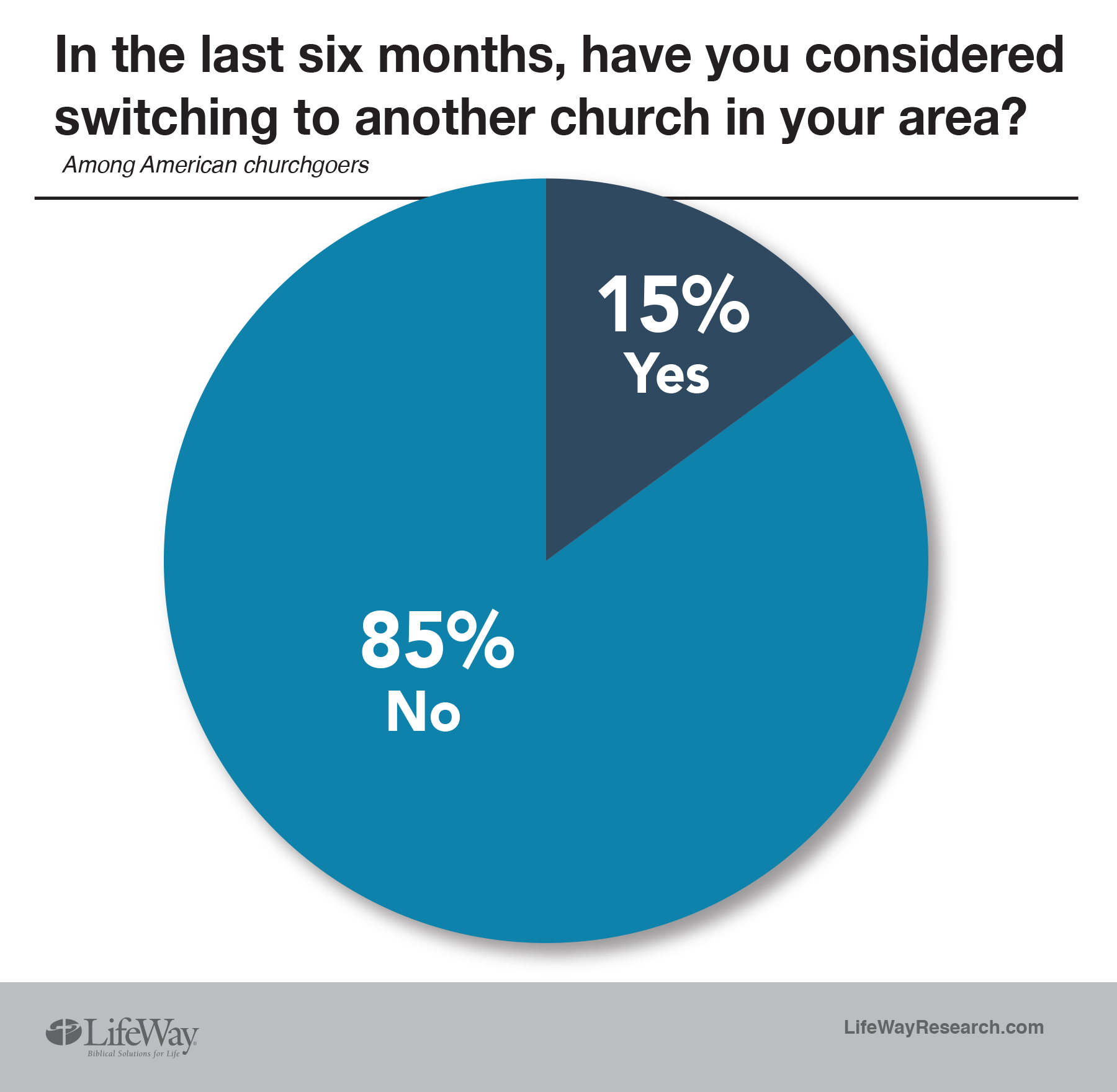
LifeWay Research released a survey this week indicating that 15% of church attenders have thought about leaving their church in the last 6 months. You can see the survey Here.

Why would so many people think of leaving their church? Of course, there are a few legitimate reasons: moving from the area; marrying a heretic (I’m kidding) who attends another church; not getting your way in the Carpet Color Committee Meeting (oh wait… that’s not a legitimate reason).  It’s been my experience that people are too quick to start “church shopping,” but the churches that keep the 15% have taught its members/attenders the following:

1) The Truth about Pastures.  The “grass in the other church’s pasture may look greener” but it’s not.  Churches like cow pastures are filled with shades of green and brown. Since cow pastures are both the cattle’s kitchen and restroom, they contain opportunties for growth, but you also have to watch your step. Just like every church. All the churches I’ve pastored have had a less-than-perfect pastor (me) and have had room to improve. They’ve also had plenty of good folks and ministries. Your pasture (church) just like the next pasture (the church down the road) has its share of green and brown too. You will find whatever color you are looking for, so look for the lush green grass on your side of the fence.

2) Math Rules. Good members/attenders have learned to add and multiply, not subtract and divide. Add to the body by offering your talents, love and positivity. Then watch God multiply what you’ve given for His glory.  Those that subtract from the ministries, who are negative toward leadership and mission become a fraction of themselves and play into our enemy’s goal of dividing the body.

3) Churches should be more like camping, than a cafeteria.  Church isn’t a cafeteria where you pig out on piles of bacon, mounds of potatoes and more of everything offered only to leave as soon as you can’t eat another bite. It’s more like a campground, where you pitch your tent. You stay. Make friends with the next campsite’s residents. Share stories, supplies and maybe eat some s’mores together. Just because there may be rain clouds forming, you don’t pull up your stakes. Instead, happy campers hunker down with a “this-storm-will-pass” attitude. It’s not about consuming all you can and leaving, but joining in life and sharing with others even (especially) through the storms.

4) Members/Attenders should be more like Gorilla Glue than real Gorillas. Gorilla Glue’s marketing campaign states that the glue can hold anything together. On the other hand, you never know what a real Gorilla is going to do: charge or start throwing their own messes. Churches aren’t places to beat one’s chest and claim your territory, instead we need members/attenders who are more like the glue that holds things together.

Conclusion:Your church needs you.  Look for areas of growth, adding and multiplying to God’s work, camping out with a positive attitude and being the glue that holds things together.  Your church needs you to be in the 85% that says: “I’m staying! God’s up to something and I don’t want to miss it!”

Happy July 5th!

We all know what happened on July 4, 1776.  The 56 delegates to the Second Continental Congress officially adopted the Declaration of Independence so that 242 years later fireworks stands could occupy vacant lots across the country, Joey Chestnut could be free to eat 74 hot dogs in 10 minutes and the rest of us could enjoy life in an independent and free country. But what about July 5th?

A quick Google search of things that happened on July 5 shows a few interesting historical events.  It was on July 5, 1937, Hormel Foods introduced the world to Spam (maybe Joey Chestnut should eat 75 cans of Spam today to celebrate).  On July 5, 1946, fashion designer Louis Reard introduced “Le bikini” at a Paris swimming pool (If it’s all the same to you, I don’t want to see Joey Chestnut anywhere near a bikini).  On July 5, 1947 Larry Doby started playing baseball for the Cleveland Indians (becoming the first black man to play in the American League) and on July 5, 1975 Arthur Ashe won at Wimbledon becoming the first African American to win the prestigious tennis tournament.  July 5 is Independence Day in other countries:  Algeria (from France, in 1962), Cape Verde (from Portugal, in 1975) and Venezuela (from Spain, in 1811).

On July 5, 1776, the news of the ratification of the Declaration of Independence began to spread. By July 9, a statue of King George III was torn down in New York City and melted into 42,000 musket balls that the fledging United States army would use in the fight against the British.  On July 5, copies were made of the Declaration of Independence.  A Philadelphia printer named John Dunlop made approximately 100 copies that were distributed to the colonies, newspapers and commanders of the continental army (There are 26 known copies of the “Dunlop Broadsides” in existence today.  In 1989, a Philadelphia man found an original Dunlap Broadside hidden in the back of a picture frame he bought at a flea market for $4. It was in excellent condition and sold for $8.1 million in 2000.  Now that’s reason to shoot off a few fireworks!).

All this to say, on July 5, 1776 the work of fulfilling the Declaration of Independence began.  It was a costly work.  Approximately 25,000 people died during the American Revolutionary War. The war began before July 4, 1776 with the Battle of Lexington and Concord, on April 19, 1775, and lasted until the signing of the Treaty of Paris on September 3, 1783.  While July 4, 1776 made the Declaration of Independence from British rule official, the fulfillment of the Declaration of independence took time, effort and sacrifice.

Why the July 5 history lesson?

You and I can pray a prayer of surrender to the Lordship of Jesus in our lives—anywhere at any time. The decision doesn’t have to take long (a shorter time than it took John Hancock to place his John Hancock on the original document), but like the original signers of the Declaration of Independence deciding to follow Jesus doesn’t mean that the “fight” is over.  In some ways, it is just beginning. Following our Declaration of Dependence on Jesus our enemy will try to get us to recant our decision (one signer of the Declaration of Independence, Richard Stockton, recanted after being captured by the British). There will be challenges and temptations. It takes a daily commitment to serve Jesus with all of one’s heart, mind, soul and strength.  We must daily rely on him for His grace and mercy. Simply bumping one’s head on an altar isn’t the end point, but the beginning of a lifetime of serving, learning, loving and leaning into the loving arms of the Father.

If you haven’t made a Declaration of Dependence on Jesus, July 5this an excellent day to do it.  Don’t delay. Give your life to Jesus today.


LeBron, Boogie and the Body of Christ

The big news out the basketball world was that LeBron James (also known as “King James,” not for his love of the 1611 translation of the Bible, but for his prowess on the basketball court) left Cleveland for the Los Angeles Lakers and the 154 million dollars that they are going to give him to play a game for the next four years.  The pastor in me can’t help but dream…  “if only LeBron tithed.”

The other news in the basketball world was that “Boogie” Cousins (I do not think “Boogie” is related to Central’s Gwen or Gary Cousins, and I don’t know how he got the nickname “Boogie.” Hopefully it’s because he can dance and not because of a nasal drainage problem) signed with the Golden State Warriors.  The Golden State Warriors were already a good team (they’ve won three of the last four NBA championships).  Picking “Boogie” makes the Warriors have five all-stars. You might say, “It snot fair” (sorry for the continual booger jokes), since they will be the first team since the mid-seventies to have that many all-star players.  In other words, the 2019 NBA championship may have already been decided when Boogie blew into the Golden State hanky… ummm arena (sorry these booger puns are a curse).

Who cares? We cheer for the Pistons. The Pistons haven’t sniffed a championship in nearly 15 years and won’t again this year with or without a Boogie on their roster.

I write all of this because God has placed us on his team too. It’s called the church.  Paul used a body metaphor to describe the church in 1 Corinthians 12. But if Paul were a basketball fan maybe he would have written 1 Corinthians 12 this way:

Just as a basketball team, though one, has many players, but all its many players form one team, so it is with Christ…. Now if the center should say, “Because I am not a point guard, I do not belong to the team,” it would not for that reason stop being part of the team, And if the shooting guard should say, “Because I am not a power forward, I do not belong to the team,” it would not for that reason stop being part of the team. If the whole team were a point guard, who would guard the taller centers? If the whole team were centers, who would guard the quicker guards.  But in fact God has placed the positions on the team, every one of them, just as he wanted them to be.  If they were all one player, where would the team be?  As it is, there are many players, but one team.

 The point guard cannot say to the center, “I don’t need you!” And the starters cannot say to the bench players, “We don’t need you!” On the contrary, those players on the team that seem to be riding the bench are indispensable, and the player that we think are less needed we treat with special honor… But God has put the team together… so that there should be no division on the team, but that its players should have equal concern for each other.  If one player suffers, every player suffers with it; if one player is honored, every player rejoices with it. Now you are the body of Christ, and each one of you is a part of it.” (A very loose paraphrase of 1 Corinthians 12:12-26)

LeBron can’t win a championship on his own. He needs teammates. Just because Golden State picked their Boogie, doesn’t mean the other players don’t matter. Likewise, we need each other. If we are going to win the world for Jesus, we must be united and on the same team!


Hello! My name is Holy

A friend of mine married a wonderful, widowed lady from another country who had two daughters from her first marriage.  One of the girl’s name translated into English is “Holy.”  When they were moving to the United States, there was some thought on whether she should add an “L” to her name and become “Holly.”  There are plenty of young ladies named “Holly,” but not too many named “Holy.”  (By the way, her sister’s name is translated as “Glory” and they wondered if she should go by “Gloria.”). In the end, it just seemed right for the girls to keep their given names.  So they are still “Holy” and “Glory.”  What beautiful names!

I wish more of us would equate ourselves with holy too. I’m not suggesting we all change our names.  It might be weird at Christmas time if my friend Jim Knight had a grandchild named “O. Holy.” Still I think we could embrace holiness like it were our namesake.

Most of the holy people I know are reluctant to describe themselves as holy.  Maybe it’s because they don’t want to be “holier than thou” or tout their holiness as if holiness placed them on some kind of pedestal (By the way, I don’t think that’s the case at all.  We all agree that Jesus was the most holy person to walk on planet earth, but Jesus never seemed to place himself on a pedestal.).  Maybe the truly holy people are reluctant to use this term to describe themselves because holiness and humility often go hand in hand. This humility causes the holy ones to honestly evaluate that they haven’t “arrived” and there is still room for growth into Christ-likeness.

In spite of not wanting to describe themselves as holy, make no mistake, people can be holy. When God says (repeatedly) in the Bible to “be holy as I am holy.” God wasn’t taunting us to an impossible holiness dream but instead provides a way for people to be holy.

I know people can be holy, because I see the evidence of God’s holy work in people every day.  I work with some very holy people. I have been privileged to pastor plenty of holy people. I know they are holy not because of the length of their dresses or how they cut their hair.  I’ve observed their holiness not in an outward appearance, but in an inward peace, a joy-filled heart and a servant’s attitude.

Holy people are quick to understand and quicker to forgive. They are slow to anger and refuse to speak poorly of others.  Holy people pray for their enemies and make every effort to transform their “enemies” into friends. Whether you call yourself “holy” or not, we need more holy people in the world today.  We need more people who are displaying Christ-like qualities in their conversations and in their interactions with those inside and outside of the church.

Your name might not be “Holy,” but let’s seek and embrace holiness like it is!

Following Jesus in Divisive Times

As you probably know, I am a pastor.  This has been my calling, my life, my “gig” since 1988.  Obviously, I didn’t pastor during the Viet Nam years (the country may have been more divided then than now), but we are sure divided these days.  So what’s a pastor to do when every issue causes more division than a fourth grade math teacher?  It seems that no matter what position a genteel pastor takes 50% of the crowd will cheer him/her on and 50% of the crowd will think he/she is a moron.

Jesus offers this solution: in his final recorded prayer (in John 17) Jesus prays for himself (not surprising since the next day He is going to be crucified); He prays for his disciples (again not surprising since the next day He is going to be crucified); He prays for the world (also not surprising since… well, you already know, the next day…) and he concludes the prayer by praying for you and me. On the night before his death, Jesus prayed:

I pray also for those who will believe in me through their message, 21 that all of them may be one, Father, just as you are in me and I am in you. May they also be in us so that the world may believe that you have sent me. 22 I have given them the glory that you gave me, that they may be one as we are one— 23 I in them and you in me—so that they may be brought to complete unity. Then the world will know that you sent me and have loved them even as you have loved me. (John 17:20-23)

Jesus prayed that we might be one. His prayer is that through our unity the world would know him. Hmmmm… now I’m just spit-ballin’ here, but if our old Enemy wanted people to NOT know Jesus, NOT follow him and think this whole Christianity thing was a bunch of doggy doo doo (sorry for the deep theological terminology, but you’ve probably noticed that’s exactly how many non-believers characterize Christianity these days), then maybe, just maybe that sly old Snake would do his best to have Christians at each other throats (just like everyone else).  Thereby throwing a proverbial wrench into Jesus’ prayer.

Listen, my brother and sisters, we MUST be united. The last thing that Jesus prayed was NOT for our happiness, health or safety (the things we seem to pray about the most). Instead, Jesus prayed that we would be one. Clearly our unity (more than Aunt Lucy’s case of the sniffles) is a big deal for Jesus. Over and over, He calls us to love one another. Couldn’t we do that?  Let’s not allow politics, skin color, national identity, language or anything else divide us.  The great commandment is to love God and love people. Period. So let’s live into the truth of the old song, “They will know we are different by our love, yes our love.  They will know we are different by our love.”

People are not Pawns

Disclaimer I:  I am not a chess player.  I played some chess when I was a teenager. I am certain that any half-witted chess player could beat me with half their brain tied behind their back.

Disclaimer II: I am not a lawyer (that’s my sister and nephew in the family).

Disclaimer III:  This is not meant to be a political post. I love republicans. I love democrats. I love green party folks, libertarians, socialists, and communists. Jesus said something about how far the extent of our love to others should reach when he said, “Love your enemies.” I am pretty sure Jesus means love everybody no matter how they voted in the last election or their perspective on God and country.

OK, with these three disclaimers behind me let me simply write:

People are not pawns.

People are people, created in the image of God.  (The previous sentence includes all people no matter what their passport says. No matter what language they speak. No matter if they acknowledge God’s existence or not.)

People are not negotiation tools.

People are not expendable.

People are to be treated with love and respect.

Didn’t Jesus also say: Love your neighbor as yourself?  In case you forgot the answer to that rhetorical question: Yes, he did say that with his words and actions, he said it.

Moreover, God cares about how we treat people. Jesus also said, “Whatever you have done for the least of these you have done to me.”

The problem comes when some folks begin to see themselves as the Kings, Queens, Bishops and Rooks but everyone else as the pawns.  Pawns are fodder. If you lose one or two protecting the king and kingdom, well that’s just part of the game.

Jesus reminded us that He is the Good Shepherd.  He is the type of shepherd that leaves the 99 sheep to look for the one lost sheep. The implication is that in his Kingdom every single sheep matters. In other words:  People are not pawns. People matter. All people.

Life is not a game where the last king standing wins.  In Jesus Kingdom, the King laid down his life for the worst of us. Why would the King do this?  Because people are not pawns. People are people created in the image of God.

I think sometimes we forget this.

Got Holiness?

This spring, Karla and I have bought numerous bags of mulch.  We got them on sale, loaded them in our cargo van (aka Karla’s car) and brought them home. We’ve put 45 bags of mulch (maybe more, I lost count) around our flower beds and shrubbery. All done it to make our yard look nice and clean and for the most part it has been mission accomplished.

IMG_4223

There is a house in my neighborhood that has a sign in its front yard that reads “Got Mulch?” It is advertising for a company that does what Karla and I did for ourselves. The company puts the mulch in your flower beds and you don’t have to make four or five trips in your cargo van (aka wife’s car) to the home improvement store to accomplish this goal. I don’t know the cost of their services (maybe next year I will check them out), but I doubt that it will be cheaper than Karla & Rob’s Mulching Company

Why the mulch mumbles? The family that has the “Got Mulch?” sign in their yard, I assume like Karla and me, wanted their shrubbery and flower beds to look nice. No weeds. Just shrubs, flowers and mulch. But here’s the deal:  They haven’t mowed their grass. I don’t mean that they didn’t mow their grass last week.  As if they were on vacation and whoever they asked to mow their grass forgot to do it. I don’t think the yard has been mowed all year. The grass is a foot high. Maybe higher. It’s so high that you have to look through the jungle of a front yard to catch a glimpse to prove that they indeed “got mulch.”  They “got mulch” but I assume they “don’t got a lawn mower” (poor grammar noted).

Which leads to my question: Why spend the money to get mulch if you aren’t mowing your yard?  It’s this like the old philosophical question “if a tree falls in the woods and no one hears it, does it make a sound?” If there is mulch around your bushes but no one can see it, do you really “got mulch”?

Maybe my neighbor’s mixed messages are not so unique.  I see the same thing happen in people’s lives. People focus on minor things, yet ignore major problems. I’ve known folks who say that say they want to be followers of Jesus, yet spend very little time with him.  Got Jesus?  “Well occasionally” is not the acceptable answer.  Or people that claim to live holy lives, but are angry, resentful, and bitter.  Got Holiness? “If it doesn’t cause me to change, ask forgiveness or challenge my preconceived notions, then yeah I got it.” Ummm… no you don’t.

Holiness involves allowing God to look over the grassy fields of your life, and if there is anything unpleasing to Him, then it’s giving God permission to mow down any over grown or unpleasant thing. That was David’s point when he prayed in Psalm 139:23-24:  Search me, God, and know my heart; test me and know my anxious thoughts.See if there is any offensive way in me, and lead me in the way everlasting.

It’s saying “don’t let me simply spruce up my flower beds, while I ignore my lawn.”  It’s praying keep all areas of my life holy and pleasing to you, not just a few areas of my life. Search my blind spots, point them out and make me the person you want me to be. That’s holiness.

The Current State of the Flint Water Crisis: A Pastoral Perspective

I arrived back in Flint in October of 2013.  The Flint Water Crisis began six months later on April 21, 2014.  That’s the date, under the state’s supervision and guidance, the city switched from the Detroit water source to the Flint River. So nearly my entire time in Flint, the citizens of Flint have been living with the effects, the blaming, the promises, the back and forth accusations, the lawsuits, the anger, the distrust that flowed along with the leaded water in the Flint Water Crisis.

Most common sense thinking people look at what happened in Flint and say, “How can that happen in America? How can the richest country in the world allow for a contaminated water supply?”  Some people have been held accountable for their actions (or inactions) that resulted in this crisis.  Some court cases are still on going. Probably more are yet to come.

Water has always been a vital commodity.  In Jesus’ story about the end times when God is separating people like a shepherd separates sheep and goats (you want to be a sheep not a goat); Jesus commends those sheep who followed his example of compassion and concern for others. Jesus said, “I was thirsty and you gave me something to drink”(Matthew 25:35). The implication is that He was given something good to drink.  Not poison to drink; not contaminated water to drink, but rather He was given something good to quench his thirst.

Trying to live out Jesus words, a lot of money and water donations have come to Flint from many different sources from all over the country. Some inspired by the words of Jesus, some not. Some private. Some governmental. Our church worked with the Convoy of Hope to bring a lot of bottled water into the city. We helped our inner-city partner Joy Tabernacle receive a total church filtration system.  We gave funds to purchase healthy foods to be given away that would help mitigate the lead contamination affects in people. We gave out water and filters to our church folks and anyone in need.  We tried to do our part, in other words.

Citing improvements made to the water system since the crisis began (90% of the residents now show acceptable levels of lead), recently the state stopped the water bottle distribution sites and the home delivery to the elderly and infirmed that could not get the bottled water on their own.  Now I was not a math major (I was a psychology major) in college, but it seems to me that still leaves 10% of the residents with water that is still leaded. That doesn’t seem like a good percentage.

There’s another story involving a shepherd that Jesus once told– in that one, the shepherd has exactly 100 sheep but he leaves 99 sheep to find one lost sheep.  In other words, 99% safe sheep was not an acceptable number. Jesus is not called “the good enough shepherd,” he’s the Good Shepherd who looks for the lost 1%.  Given that story, I think Jesus would say 10% of folks without safe drinking water is not good enough.

Without getting into the politics of the situation (I know, I know…everything becomes political these days), still I think we should expect that all of our residents have access to clean, safe water.  Until all of our people can drink clean, safe water we cannot stop advocating for those who need it.  The church behaves as God’s representative on earth. As such, we need to speak for those silenced and cry with those whose tears have been ignored. And let us never forget Jesus words (in that same story about the sheep and goats), “whatever you did for one of the least of these brothers and sisters of mine, you did for me”(Matthew 25:40).

Keep praying for God’s Kingdom to Come and God’s will to be done in Flint as it is in heaven!


WHEN NAZARENES BELIEVED IN EVANGELISM

In the little Nazarene church of my youth, Sunday School and evangelism were a big deal.

  • We had “Opening Exercises” that had nothing to do with calisthenics. Instead it was the time before Sunday School when everybody (old, young, everybody) would gather in the sanctuary to sing songs (Hallelu, Hallelu…, Climb, Climb up Sunshine Mountain and Deep and Wide were my favorites), recognize visitors (the visitors would stand up and we formally welcomed them) and sing happy birthday to those who celebrated getting a year older that week.
  • If it was your birthday week, you went forward with money (a penny for each year) that you put into a birthday cake shaped bank. The money went to missions. My mom always gave 29 cents (I guess she wasn’t worried about lying in the “Opening Exercises.”)
  • We would sing the following birthday song:

A happy birthday to you

A happy birthday to you.

May each day of the year

May you feel Jesus near.

A happy Birthday to you

A happy Birthday to you.

The best you have ever had.

  • We had Sunday School drives and gave out prizes to whoever brought the most friends.
  • We had competitions with other churches on who could most increase their attendance.
  • We went door to door inviting people to Sunday School.
  • We had a bus that picked up kids from some poorer communities.
  • On more than one occasion we brought in a “Gospel Clown.” (There may be some folks who would say our church board did too when they called me as pastor, but I digress).
  • If we broke an attendance record the preacher would get a pie in the face. I think he once promised to preach from the roof if an attendance record was broken.
  • We had dinner on the grounds (which meant a potluck dinner picnic style outside).
  • Old Fashion Days were when we would dress up like pioneers (usually there was “dinner on the grounds” on this day). I still don’t know why we did that.
  • We had two revivals a year (Sunday to Sunday. Every night. Occasionally, we would extend the services an extra week if it was going well).
  • We had little envelopes for Prayer and Fasting and the idea was to put in money that we would have been spent on the fasted meal and give that money to missions. My mom usually gave me 50 cents for my Prayer and Fasting envelope.
  • We were taught the Romans’ Road and the Four Spiritual Laws, which were personal evangelism tools for leading people to Jesus.
  • There were Sunday School Campaigns: Strive for Five; Everybody Win Some, All Out for Souls and Our Church Can Be Your Home.
  • We believed in a heaven, a hell and that Jesus was going to return to earth.
  • We had movie nights that consisted of cinematography classics like “A Thief in the Night” and “A Distant Thunder.”
  • We were convinced that if we didn’t reach our neighbors and give money so that people on the other side of the world could hear about Jesus, then they were not going to make it to heaven. We took that serious.

We don’t think that way anymore.  The arguments are: Our tactics were embarrassing (I’m not preaching from our roof– it’s a little high); It’s old fashion; and those things just won’t work anymore.  Instead, our evangelism now consists of…. umm…. well… we are nice and we hope that somehow, people will assume that we must be Christians because of our niceness.  (We would never want to actually talk to our neighbors and co-workers about Jesus or invite them to a small group, Sunday School class or church and we would never, ever present the gospel to them because that might make them feel uncomfortable and besides isn’t that the preacher’s job?).  But hopefully they will know that we kinda like Jesus and give him a whole hour of our time most (some) Sundays (if there is nothing better going on in our life).

And we wonder why our churches are dying.

Author’s Note: I am not advocating for the good ol’ days. I know we have to change our methods.  I just wonder if we have forgotten the message too.


Had Twitter Existed at Pentecost

My Twitter feed is a mixed bag.  I guess I have friends on both sides of the issues (no matter what the issue is).  Some folks look at a set of facts and smell a rose, others look at the same facts and smell a rat. It’s not a new phenomenon. It happened on Pentecost too. Acts 2:12-13 gives two differing viewpoints of the events taking place:   Amazed and perplexed, they asked one another, “What does this mean?” 13 Some, however, made fun of them and said, “They have had too much wine.”

So, with that in mind, here is what I imagine my Twitter feed might have looked like if Twitter had been around on the first Pentecost:

  • The Holy Spirit filled the people in the upper room? #YeahRight #ItsNeverBeenDoneThatWayBefore
  • Did anybody hear that loud sound? It wasn’t a tornado. God must be up to something #WhatDoesThisMean #CantWait
  • Rushing Wind? Tongues of Fire? #ProveIt #WhatsNextLittleGreenMenfromMars
  • Crowd is asking if these people are drunk. #NoAppearanceOfEvil #IfItQuacksLikeADuck
  • I’m from Mesopotamia and a Galilean is speaking my language! #NoTranslatorNeeded #NoJoke
  • Reports of people hearing the message of Jesus in their own languages spoken by Galileans. #MaybeTheListenersWereDrunkToo #TooMuchWine
  • Peter Preaching. Are you kidding me? #FailureDisqualifies #LiarLiarPantsOnFire
  • Peter is a fisherman. Not a preacher. #SermonFail #NoThreePoints #NoClosingTearJerkerStory #NoJustAsIAm #GoBackToFishing
  • The guy who a few weeks ago was cursing and saying he didn’t know Jesus to a servant girl is now boldly speaking before thousands saying, “Jesus is Risen from the grave.” #WhatHappenedToThisGuy #HeHasChanged
  • Church leaders say there were 3000 converts in one day. #WhenPigsFly #UshersCantCount #MoreLike300 #WontLast #NoAltarNoConverts #FactCheckTheNumbers
  • I believe!#Jesus #NewConvert #Baptized #2999JustLikeMe

Mixed viewpoints still exist.  The question becomes “to whom will you listen?”  Whose voice will win out in your life?  The voice of the hope or the voice of despair?  The American church’s pews too often are filled with people who are more defined by politics, materialism, and a feeble prayer life. Their authority is from a news channel instead of the Bible. Too many are filled with a spirit of fear and criticism rather than filled with the Holy Spirit.

What’s needed?

Another Pentecost.

And for another Pentecost, we will need:

Less social media and more prayer;

Less news channels and more prayer;

Less “us vs. them” and more prayer;

Less trivial pursuits and more prayer.

What voices are you listening to?  What or Who is shaping your story? Bottom line: We all need more of the Spirit of Jesus filling our lives.  #AnotherPentecost

Ten Ways a Mom can get her Adult Kids to Join her in Church on Mother’s Day

1. Bribe them with her world famous homemade fried chicken dinner after church

2.  Remind them that the preacher has a 25-minute sermon guarantee or it’s free (I have heard from a good source this is not entirely true).

3.  Offer to pay for travel expenses even from Australia (They’ll need to get busy. To almost quote Anthony Campolo: “It’s Thursday, but Sunday’s a comin’”).

4.  Tell them if they DON’T come to church with you, then you WILL go with them to their work family picnic telling stories from their childhood (see below).

5.  Promise that you will no longer remind him/her of the infamous alleged booger eating incident during the kindergarten Christmas program of 1989.

6.  No Churchy. No trust fundy.

7.  (If child is single) Assure her/him that you will not introduce your son/daughter to that nice young lady/fella with the wonderful personality but who also has some halitosis issues.

8.  Guarantee no twisty pinches if they misbehave like the old days in church.

9.  Three Words: PLEASE! PLEASE! PLEEEEEEEASE!!!

but the best way to get your adult kids to come to church with you on Mother’s Day is to simply…

10. Invite them*

*Most surveys indicate that people (even family) come to church if invited.


A Suggestion to Improve Nazarene District Assemblies

We are in the middle of the ever-exciting (cough cough) Nazarene District Assembly season in USA/Canada.  With the hand picking (as opposed to truly electing) of District Superintendents that has become more and more in vogue (I’m not expressing an opinion of this practice, simply recognizing its occurrence), even DS election years have lost their luster.  I have been to 30 consecutive District Assemblies and the closest that any of them have ever come to anything that could be described as “exciting” was when a church split boiled over onto the District Assembly floor.  Excuse me, holiness folks don’t have church splits (cough cough). That year, there was some fascinating discussion when a “church plant” had a disagreement over the property and money given or not given by the “mother church.”  With that lone exception, it’s been tough to keep the mostly whited headed delegates awake, much less engaged in anything remotely considered missional.

There have been plenty of honest attempts to juice up our yearly gatherings: special speakers, workshops, and mission projects.  For the most part, it hasn’t worked. So here’s my suggestion (Truth Alert: it’s not a new idea and it’s not even my idea. In fact, it’s ancient).  How about if we followed the Acts 2:42 model for our District Assemblies?  Luke wrote that the early church gathered and:

All the believers devoted themselves to the apostles’ teaching, and to fellowship, and to sharing in meals (including the Lord’s Supper), and to prayer. 

Could we do that in our District Assemblies?

We already have good apostolic teaching (usually).  I generally like the General Superintendent’s sermons and the DS’s report (when they stick to vision, mission and Jesus and not making excuses for the district’s and/or denomination’s decline). I love the ordination service.  But what if like in Acts 2:42 we fellowshipped more?  What if instead of scattering to the closest Golden Corral for lunch we all ate our meals together and we talked about the good things that were happening in our churches. No negativity and gossip allowed (if that is possible).  What if we celebrated the Lord’s Supper together (do you ever remember celebrating the Lord’s Supper at a District Assembly?  Me neither). What if (now I’m just getting crazy) we made baptisms a part of District Assembly? Baptisms at District Assembly? Why not?  And what if we concluded with a great and boisterous prayer meeting where we confessed our faults and failures, thanked the Lord for his provisions and cried out to God for a Pentecost like renewal in all of our churches.

Could such a District Assembly change our churches, pastors and laypeople?  If the manual changed and allowed me to make a wager, I’d bet such a District Assembly would do more good than the snoozefests that too often our District Assemblies have become.


Sins of the Keyboard

Did I miss a heavenly memo that stated all Bible verses concerning gossiping, grumbling, and spreading rumors are null and void? Was there a new proclamation from on high giving the green light to murmuring and slanderous talk? Isn’t such blabbering still considered unChrist-like?  From my casual perusal of social media, to a few conversations and even some flat out lies spoken by followers of Jesus (or maybe better stated, people who claimed to be following Jesus), the growing frequency of “sins of the tongue” (or “sins of the keyboard”) seem to indicate that such behaviors are no longer all that sinful.  (Sarcasm alert:) Who knew?

For example, when news of a renowned pastor’s allegations of misconduct hit the news, it seemed that Christians could not stop reading and regurgitating the reports and blogs of those for and against. It was the talk of the town. Christianity Today’s Twitter feed seemed to tweet about the scandal every other day. This month it’s a renowned pastor’s reputation to devour. Next month it will be someone else. In the old days, under the guise of spirituality we couched our gossip as sharing a “prayer request,” now our gossip is posted on social media with no phony “prayer request” agenda given. It’s simply juicy morsels of murmurs to be shared, as if the biblical warnings about unwholesome talk and slander no longer apply.

Should we rightly condemn bad behavior. Yes. Should we be careful about jumping onto the latest pile of rumors and innuendoes? Double yes. Should we decide to take the plank out of our eye instead of worrying about the speck of sawdust in the someone else’s eye? I’m pretty sure Jesus would say, “Triple yes.” Maybe if we were to receive a memo from on high, it would require us to memorize Ephesians 4:29:  Do not let any unwholesome talk come out of your mouths, but only what is helpful for building others up according to their needs, that it may benefit those who listen.If Paul were writing today, he might have penned, “Let no unwholesome talk come out of your mouths or posted on your Facebook or Twitter feed.” If that is too difficult, how about if all who claim to be followers of Jesus humbly relearn the truth in the pre-school Sunday school song:

O be careful little tongue what you say,

O be careful little tongue what you say,

For the Father up above is looking down below,

So be careful little tongue what you say

Reversing the downward trajectory in the Church of the Nazarene

It’s no secret that attendance in the Church of the Nazarene in the USA is in decline.  There is also no shortage of explanations of why this might be the case: It’s tougher these days; people aren’t interested; culture has changed; every denomination is losing members, blah, blah, blah.

I understand the challenges of leading a church are far different today than when I started pastoring 30 years ago.   Having written that, I hope that my solution is not simply a reminiscing of the “good old days.” I don’t want to be the old guy saying, “Hey you kids, get off my lawn! I remember when…” Still with that disclaimer, here it goes:

We need make evangelism a priority again.  Not church growth (although as evangelism happens churches grow). Not planting churches (although evangelism happens when churches are planted).  My observation has been that most church growth and church planting growth comes from disgruntled church attenders finding the hip new church to attend. It’s mostly fat and sassy sheep changing pastures, not lost and hungry sheep being found.

What we need is pure and basic evangelism.

On a personal level, it’s always remembering that we believe that this world determines one’s eternal accommodations and acting accordingly.  We have friends and loved ones that are on their way to hell if something doesn’t change. Let’s quit saying society has changed and admit that we have changed.  We aren’t as bold as past generations.  We aren’t as committed.  We don’t sacrifice like our grandparents did. We have other interests (distractions) and other priorities.  We need to confess that we have failed at living into the Great Commission and determine to become friends with sinners (it seemed that Jesus was accused of keeping such company) so that we might have the opportunity to share the love of Christ.

Local churches can never be satisfied with the status quo or decline, but having a healthy dose of shame when conversions and baptisms are in decline. Local churches need to be training people (and pastors?) in personal evangelism. We need to count what counts: contacts, conversions and baptisms. We need less emphasis on cool and more emphasis on warm. Less café’s and less wood pallet backdrops and more biblical preaching. Less politics and more holiness.  Less excuses and more Jesus.

On a denominational level, it’s returning the “M” events back into evangelism workshops and evangelism strategizing. Let’s create an Evangelism Department again (I think that office morphed into the USA/Canada office years ago). Let’s produce curriculum in the colleges and seminary that create a fire within the bones of our young people to do the work of an evangelist.  It’s becoming downright Bresee-like in going to those whom society has rejected.  Joining with the poor, the burdened, the disenfranchised and saying. “You are welcome here!” It’s confessing that our last 20 years have been mostly a disaster when it comes to evangelism and the way we have done it (or haven’t done it) has been wrong. Let’s get creative again!

While we are going back to the good ol days of evangelism emphasis, remember keep off my grass you young whippersnappers!

The Best Reasons To Return to Church on the Sunday AFTER Easter

1).  No Problem finding your car in the parking lot (It’s the lonely Chevy surrounded by empty spaces).

2). If you are allergic to Easter lilies, sneeze no more.  They were out of the sanctuary quicker than Michigan State was out in this year’s NCAA basketball tourney (Too soon, Sparty? Sorry!)

3). No pressure to wear the most fashionable Easter Bonnet. (The last Easter Bonnet was worn by Mrs. Bertha Davis at the First Baptist Church of Hattiesburg, Mississippi in 1998.)

4). Two Bulletins for the price of one. (Our worship folders are always free).

5). Plenty of seats in the front (and in the back and on the side and in the balcony and in the… well… you get the idea)

6).  If you have agoraphobia (fear of crowds), you have no worries. Of course, if you have monophobia(fear of being alone) you might want to consider bringing a friend.

7).  No Tithe Sunday! (That’s a lie).

8).You feel bad that no one will be there to laugh at the preacher’s corny jokes (Who’s kidding who? Even in a packed sanctuary no one laughs at the preacher’s jokes… not this preacher’s jokes anyway. Notice your lack of chuckles, giggles and merriment to #7 as proof).

9). The Choir will take requests from the “crowd.”(Umm… no they won’t).

And the VERY best reason to come back to church on the Sunday AFTER Easter…

10). You love Jesus and you want to praise Him on Easter and every other day too! Let’s not wait until heaven to join in the chorus singing, “You are worthy, our Lord and God, to receive glory and honor and power, for you created all things, and by your will they were created and have their being.” (Revelation 4:11)


Empty

If your stomach is empty, you’ll be hungry.

If your bank account is empty, you’re broke.

If your coffee cup is empty, that’s a bummer.

If the cookie jar is empty, that’s sad.

If the candy dish is empty, that’s worse.

If your gas tank is empty, I hope you are wearing good walking shoes.

If your trophy case is empty, you must be a Detroit Lions’ fan (sorry, I couldn’t resist).

If someone’s words are empty, they are meaningless.

If my church is empty on a Sunday morning, the church board will start shopping for a new pastor soon.

Empty is usually a bad thing. But not always.

On that first Easter morning, the ladies who were expecting to do the grim job of applying spices to the cold dead body of Jesus instead discovered that the tomb was empty.

Occasionally, empty is the best news of all!  The angel told them: “Do not be afraid, for I know that you are looking for Jesus, who was crucified. He is not here; he has risen, just as he said. Come and see the place where he lay.” (Matthew 28:7-8).  If Jerusalem had a tabloid newspaper, then the headline would have been a one word, large print, eye-catching caption above a picture of a giant rock on the side of an open tomb: EMPTY!

We are celebrating Easter on Sunday.

The tomb was empty. Death has been defeated. Jesus is alive.

Here’s more good news:

If you are feeling empty;

If your heart is empty;

If your life is empty;

The Resurrected Jesus will come and fill you with His love and presence. Jesus words on the Sermon on the Mount are still true: Blessed are those who hunger and thirst for righteousness, for they will be filled. (Matthew 5:6)

The tomb is empty, but you don’t have to be!