Proof that the Old Preacher is Old

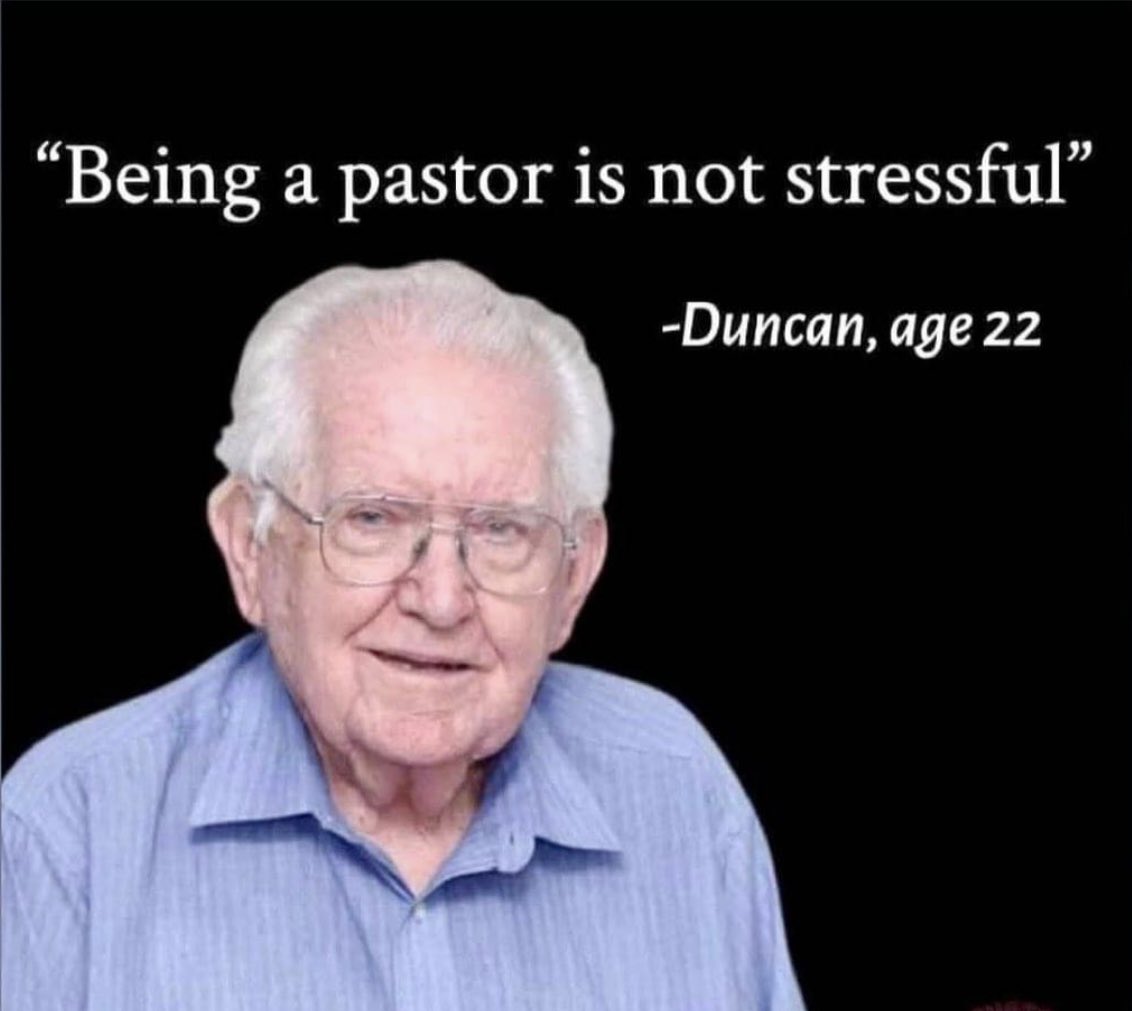
Proof #128 that I am old: I constantly find myself saying, “it was much easier pastoring in “the good old days.” I feel like a curmudgeon to say it, but it’s true. 

Pastoring is hard. 
Harder now than ever.
People are angrier. 
Social media is brutal. 
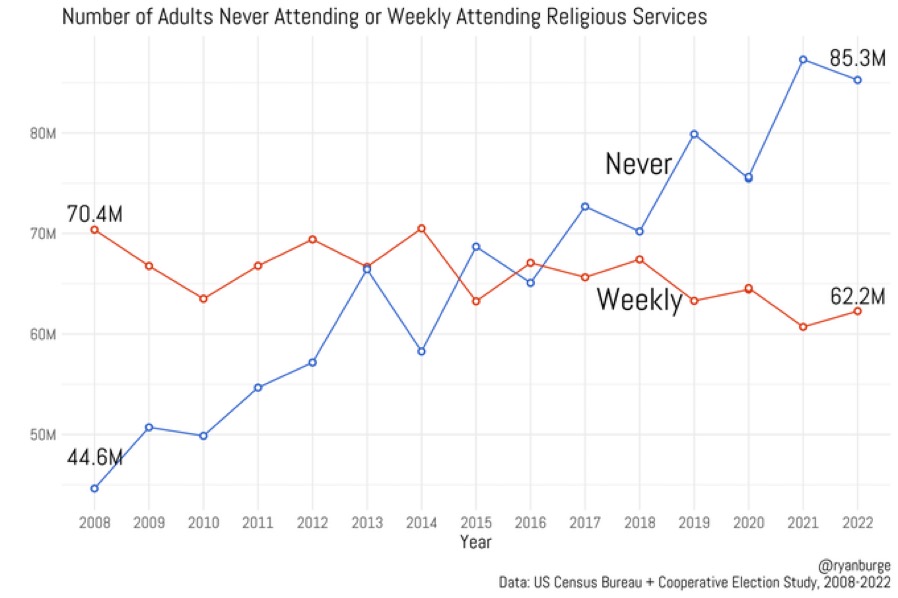
Less people go to church, and 
those that are church go-ers, “comparison shop” more than ever.
An old preacher once told me, “once the sheep start to wander, they never stop.” We’ve got a generation of sheep wanderers, drifters and dropper-outers. That’s Baaaaa-d! (Terrible puns? Proof #129 that I am old.)

Regular attenders are less “regular.”
I’m told that there are more reasons to miss church now (I don’t really think there are more reasons to miss. There have always been plenty of reasons to miss church. It’s just these days people are more apt to miss). 
It is easier to miss church (thank you live streaming). 
The only “live streaming” in the old days was if the water fountain in the church foyer got stuck (Church foyer jokes: Proof #130 that I am old).

Growing up, we went to church. If the doors were open, we, Princes, were there. A little tummy trouble wasn’t a good enough reason to miss church. You had to have a foot in the grave and the other foot on spilled communion juice to miss. (Bad Communion jokes: Proof #131). Not so these days. 

People are less forgiving.
They draw conclusions much quicker.
Authority, respect and kindness have seemed to take a backseat to personal liberties where every behavior under the sun is validated and if you think otherwise, the “Kibosh!” will be on you!! (Use of the word, “Kibosh”: Proof #132)

Often in a vacuum (thanks again social media); non-Christians only hear the voices of like-minded people, and (not shockingly) those in the world are not favorable to the things of Christ. Proof #133: Every fiber in me, wants to make a joke how Hoovers’ aren’t the only vacuums that suck, but I’m not.

Moreover, there are “believers” who likewise are critical of the Church, pile on at any bits of trouble and regurgitate all of the Church’s flaws. Knowing the actual facts seems to be optional. Of course, accountability is needed. Errors and sins should be exposed. Flawed, sinful leaders should be expelled. I’m not talking about that. I’m referring to the ad nauseam criticism and vitriol speech from those who claim Christ. They have no problem slinging mud on the Bride of Christ’s gown. Heaven forbid, if a pastor-type should tell the aforementioned “believer” that their negativity is not helping the cause of Christ. An avalanche condemnation and denigration will fall upon the poor preacher. 

Did I say pastoring is harder now? It is.

What’s my answer to this current state of church life and pastoring? I’m going to try even harder. I am going to work to get others to join me. I’m going to preach and pray and call and visit and love and work some more until Jesus comes. I’m also going to pray for young leaders who are strong, courageous, faithful, loving, truthful, and kind. God is calling them. I’m praying these young leaders will be listening and not get discouraged. The closer I get to the finish line, the more I long to hear, “Well done my good and faithful servant.” A grumpy generation is not going to stop me.

Now, get off my lawn.

(The previous comment is Proof #134 reason that I am old).

Hey Nazarenes, We Need More Good News!

I like good news. Who doesn’t?  The Gospel of Jesus Christ, of course, is the ultimate Good News. We always want to share it–as often as possible. But I also like hearing the good things that are happening in my tribe, the Church of the Nazarene. I especially want to know what’s happening in the USA/Canada region where I live and work. It seems Captain was right in Cool Hand Luke: “We have a failure to communicate.” 

There is news coming from various Nazarene entities. Nazarene Compassionate Ministries post on social media from time to time how Nazarene are helping to alleviate the world’s suffering. That’s good news. The NCM Magazine likewise provides good stories from around the world. Nazarene Missions sends an emailed prayer reminder on Wednesdays about different countries in the world. That’s good too. Nazarene News on Friday’s sends an email about what is happening here and there throughout the world. There is an obituary section (mostly USA/Canada clergy) and a once-a-month notice of the moving ministers (also mostly in USA/Canada). Nazarene News has a slight social media presence (emphasis on “slight”). Holiness Today offers good articles, but isn’t really a disseminator of news from around USA/Canada. There are probably a few other outlets of which I am unaware. Those sources are fine in what they do, but I need more good news. 

Just like the traditional news outlets, where ‘bad news sells,” social media seems to swirl around the negative. There’s bickering on all sides ad nauseam. Paul said our struggle isn’t against flesh and blood, but it sure seems like we are making it out to be. Our Enemy is the same since Eden. So why are we making it so personal against one another? (Cue: the comments about “standing for truth” or the need to “love unconditionally”). 

I’m not a Pollyanna. Bad things happen. When they do, those bad things need to be exposed. Confession, repentance, sorrow, lament and grief are legitimate responses to those bad things. They should never be swept under the rug or the bad things will keep happening. I get all of that. Still Paul said, “Rejoice in the Lord always, again I say, rejoice!” We act (and post on social media) like Paul wrote “Keep hounding on the terrible things, again I say puke it out more and more.” Can’t we rejoice a little more than we currently seem to be? Do we have to be so negative? Our brothers and sisters might differ on some issues, but they are still our brothers and sisters. There need not be a feud in the family of God.

The truth is: Good things are happening. They are happening in my corner of the world (probably in yours too). Lots of good things. A lake-full of people getting baptized last month; the grand opening of Central Park; plenty of new folks at Pastor’s Chat and a great youth fall kickoff yesterday; and a medical team leaving for Panama on Saturday (our third team to Panama this year)—good things are happening at Flint Central Church. But I want to hear about God’s working across the country too.  

Listen in an age of angst and anger, we need to hear about the power of God at work among us. We need to be encouraged. We need reports of the good things of God. I’m not a “world’s going to H-E (well, you know the rest) in a handbasket” guy. I’m convinced that God is still at work in America. I just want to hear about it more and more.

All Alone in a Crowd of 76,416 (and sin has nothing to do with it)

My sons and I will be at the Kansas City Chiefs vs. Detroit Lions football game tomorrow at Arrowhead Stadium in Kansas City. Alex and Ben will be wearing Chiefs’ shirts. I will be wearing the Honolulu Blue and Silver of the Detroit Lions (I have failed as a father. Two sons. Zero Lions’ fans. But I digress.). We will be at the game along with 76,416 others in the stadium. Probably 76,415 will be cheering for the Chiefs. Hopefully, there will be two or three other Lions’ fans representing the Motor City Kitties.  

If you are not a football aficionado, I will remind you that that Chiefs won the Super Bowl last year. In fact, the Chiefs have been in the AFC championship game for the last five years, and have won two Super Bowls. The Detroit Lions, on the other hand, have never been to a Super Bowl; have won exactly one playoff game in my lifetime (you read that correctly. ONE!); and despite greater expectations for upcoming season, the Lions are not predicted to win this game.

If watching the game on TV, in a sea of red jerseys, look for a guy in the nosebleed section in the north end zone wearing blue with his hands over his ears. Arrowhead Stadium has the Guinness World record for the loudest stadium, when Chiefs’ fans’ screaming one time hit 142.2 decibels. I tend to get migraines with a little extra noise in the sanctuary. It could be a long night. If ever I felt all alone in a big crowd, Thursday might be my night. 

Sometimes one can feel like you’re wearing blue in a stadium filled with red.

Recently, a church leader wrote the following on social media: “Loneliness and isolation is (sic) the result of solitude without Jesus.” I get what he was trying to say– “you are never alone with Jesus.” It’s the “Just Jesus and me on the Jericho road” theme of the old hymn. He’s not wrong about Jesus always being with us. Jesus said, “Lo, I am with you always.” Jesus meant it. Moreover, personal sin can lead us to a lonely place as we isolate ourselves from God. My problem is with the mistaken notion that loneliness is always the result of a lack of connection to Jesus. Loneliness might have nothing to do with one’s standing with Jesus. 

Biblical heroes like David, Jeremiah and Paul all had bouts of loneliness and it wasn’t the result of a lack of faith in God almighty. Feelings of loneliness can be the result of grief, friendship changes, mental health issues, singleness, chronic pain, even the lonely servant of the Lord. None of those examples are necessarily a lack of faith and to suggest otherwise, only heaps needless guilt onto the lonely sufferer.

A remedy for loneliness is rarely a simple answer. It involves some or all of the following: acknowledging one’s situation; allowing God’s word to penetrate the soul; being proactive in cultivating Christian friendships; having fellow Christians perceptive to one’s circumstance; and ultimately allowing God to be one’s provision. 

Paul words to the Corinthian church are the beginning of the remedy: 

Blessed be the God and Father of our Lord Jesus Christ, the Father of mercies and God of all comfort, who comforts us in all our affliction, so that we may be able to comfort those who are in any affliction, with the comfort with which we ourselves are comforted by God. 2 Corinthians 1:3-4

In other words, the remedy for loneliness is not “just Jesus and me on the Jericho road.” It’s Jesus and me and you and other believers too on every road of life. Rueben Welch said, “It isn’t Jesus and me, it’s Jesus and we.”* It’s being comforted by God, then passing that blessed comfort onto others. When loneliness attacks, in its finest hour, the family of God moves into action. When God’s people circle the wagons of love around an individual, loneliness’ grip begins to lessen. 

Hopefully, there will be some kind-hearted Chief’s fans sitting nearby that will have compassion on this lonely Lions’ fan too. 

*Welch, We really do need each other, p. 73. 

Ready

Last Sunday, in my sermon I spoke of how we have this life to determine our eternal accommodations. Like I often say in funerals, there are no make-up exams, no do-overs and (if you are a golfer) no mulligans.  My friend, John Faulconbridge, was in the service.

Less than 24 hours later, John had a massive heart attack; shortly after John was, like the Salvation Army would say, “promoted to Glory.” That euphemism for our passing is appropriate for my friend, John. He was a West Point graduate, a very proud veteran, and most importantly a follower of Jesus.

John’s funeral service is tomorrow at the church. His burial will be at a later time at the Oklahoma Veteran’s Cemetery. John just recently took the buy-out General Motors offered their salaried employees. He and Becky had plenty of plans for these years. He was 67 years old.

When I was younger, 67 years old seemed very far away and very old. It doesn’t now. It seems young(ish). I want to put the adverb “only” in front of the number “67.” People are supposed to live a lot longer than 67 years these days. My brother-in-law ran a marathon for his 70th birthday. 70 is the new 50. 

Whenever someone passes away suddenly, I am shocked once more into the reality of our need to be ready. No one is guaranteed any days. We all have an expiration date, but unlike milk jugs we don’t know when that date is. My point: Be ready. This week was a familiar, yet stark reminder. 

Part of my job as pastor (or as my friend Steve Hack refers to me, “shepherd”) is to do all I can to make sure that the flock is ready for the greener pastures in Glory. It’s remembering that all who call upon the name of the Lord will be saved (Romans 10:13). We still need to accept that invitation. It’s free. It’s available to all. But we need to accept and then live into this calling of following Jesus. This sounds a little too transactional: Say a prayer; Get your fire insurance; and bingo, you’re good to go. I don’t mean it that way. Being ready is about encountering Jesus, then formed by Jesus to be a part of the mission of Jesus in the world. John lived into that Jesus calling. There may not be a West Point to be in the Lord’s Army, but John answered the call and wholeheartedly served Jesus.  

As a Shepherd/pastor, I hope to always have the same confidence about the departed loved one as I will have tomorrow when I step behind the pulpit to officiate John’s funeral. He loved Jesus and wanted to serve Him. John was ready for his unknown and unexpected expiration date. I hope you are too.

Central Park: You “gotta” Play With Them

40 years ago (has it been 40 years? Yikes!), when I was a summer intern from Olivet Nazarene University at the Alanson Church of the Nazarene in Northern Michigan, Pastor John Carr, told me, “You’ve got to play with them to pray with them.” He meant that a pastor (or any believer) has to earn the right (via showing that one cares) before people will trust you to talk to them about spiritual matters.

He was right, of course. He’s more right now. (Can one be “more right”?). There may have been a time when cold calling on people by knocking on their front door; spewing out the Four Spiritual Laws or the Romans Road or some other evangelism plan; led to people trusting in Jesus. It might have worked then, not now. Knock on a stranger’s door these days, and you might be greeted with a Glock 44 instead of a crock of honey and crackers. 

These days you need to “play” with them first.

This was proven last Friday as we opened Central Park. Our neighbors nearly outnumbered Central folks with the arrival of the first official day of the park. Kids were sliding on the slides; swinging on the swings; and seeing how fast the merry-go-round could move. Several of the parents talked to me about our church; thanked us for building the park and talked about their intention to “try the church out.” 

You’ve got to play with them (literally). I told one neighbor one of our key commitments at Central Church is “to be the best neighbor.” His response, “You are!” Of course, that’s what we want to hear. 

It’s not 1990. In 2023, people want to know you care. They are more suspicious than ever. Many have been hurt before in their religious experiences. They have seen and heard of too many faith based organizations that have broken the trust of those they were so-called serving. The news of Christians is not always positive. 

The way to combat such thinking is to show folks a deeply religious experience can be different. Caring for the spirit, soul and body seems like a positively wonderful Christian thing to do. Paul wrote (in the verse all good Nazarene’s have memorized): May God himself, the God of peace, sanctify you through and through. May your whole spirit, soul and body be kept blameless at the coming of our Lord Jesus Christ. (1 Thessalonians 5:23). 

That’s exactly what Central Park is hoping to accomplish! Through our efforts to care for the spirit, soul and bodies of our neighbors, we will have opportunity to share with them the sanctifying and peace infusing work of God!

Preaching isn’t always Easy

Every year, since my Bad Axe preaching early years, I get away for four or five days for reading, research and prayer as I plan out the following year’s sermon calendar. I have found that I need a map for my upcoming preaching calendar to be balanced and well thought; and I need to seek the Lord and study to accomplish that goal.

I take this responsibility extremely serious. I believe Paul was writing to me (along with Timothy) when he wrote: Preach the word; be prepared in season and out of season; correct, rebuke and encourage—with great patience and careful instruction. (2 Timothy 4:2). Paul’s instruction to Titus applies to my pastoral responsibility too: Our people must learn to devote themselves to doing what is good, in order to provide for urgent needs and not live unproductive lives (Titus 3:14). Moreover, I hope to accomplish what Solomon spoke of in Proverbs 9: Instruct the wise and they will be wiser still; teach the righteous and they will add to their learning (Proverbs 9:9). 

Here’s your pastoring 101 lesson: Preaching isn’t easy in the 20th century. I suppose that’s why so many pastors are throwing in the towel, and why young women and men aren’t heeding the call as eagerly as they once were. It’s hard. People are more fearful, angry and can be downright mean. The divisiveness in our country is rampant (election years are the worst, by the way). Sometimes it seeps into the church. People often want their way, their message, and their agenda preached. Paul’s stand in Galatians 1:10 is mine too. He wrote: Am I now trying to win the approval of human beings, or of God? Or am I trying to please people? If I were still trying to please people, I would not be a servant of Christ. In the end, the preacher is responsible for what is proclaimed from the platform. Andy Stanley correctly stated, “The cross is our invitation to live for the approval of One, not everyone.” Jesus must be preached and He is to whom preachers must answer. 

I’m thankful for the time to get away and listen to the Lord. I’m looking forward to a great year of preaching in 2024!

The 21st Century Needs Discipleaders (yes, that’s a new term)

Everything rises and falls with discipleship,” I wrote in response to John Maxwell’s old teaching that “Everything rises and falls with leadership.” Making disciples is what Jesus calls us to do (See Matthew 28:20) — not build churches, platforms, big budgets or ministries. Make Disciples. Period. But that doesn’t mean, John Maxwell was totally wrong. Leadership does matter. We need disciple making leaders. To that end, I have created a new term “Discipleaders.” The word placement is important. It’s not leaders making disciples, but disciple-makers with leadership qualities is the need for the 21st century. 

What does a Discipleader look like?

Discipleader is a person first committed to growing spiritually themselves. You can’t teach what you “ain’t” got. Discipleaders are seeking God for themselves, then teach from the overflow. As such, a Discipleader is prayerful, in the Word, a seeker holiness in heart and life and generous. 

Discipleader is on the lookout for those who also want to grow in the Lord. Young Christians need to be invited to be mentored and discipled. Not all are ready, not all have the desire. Discipleaders are looking for those longing to be taught the ways of Jesus.

Discipleader is patient. By definition new believers are not immersed in the ways of Christ. They potentially make mistakes, fail, and sin. A discipleader doesn’t quit on people very easily. Discipleaders are persistent.

Discipleader is humble. It’s learning from the initial, rookie discipleaders, as Jesus reminded them, “Anyone who wants to be first must be the very last, and the servant of all” (Mark 9:35).

Discipleader is relevant. They are moldable. They are not static but look for new ways to teach age old truths. Not always will the disciples-in-training be younger than the discipleader, but frequently they will be. A discipleleader must stay somewhat current (admittedly, I am a fuddy-duddy, and my use of the word “fuddy-duddy” proves it). 

Discipleader can communicate truth in love. It’s the “John 1:14 Model.” Jesus was full of grace and full of truth. Truth means I’m going to be honest no matter what. Grace means I’m going to love you no matter what

Discipleader duplicates her/himself. A church with one discipleader may grow a little. A church full of discipleleaders will grow exponentially. 

Discipleader cares about one number and it has nothing to do with attendance and budgets (Jesus didn’t tell us to get hung up on those things). Its baptisms. Discipleaders are baptizing folks and then following up with a discipleship path that leads to more discipleaders.

Are you a Discipleader?

Have American Christians Missed the Boat?

Forgive my nautical lingo (I just returned from an Alaskan Cruise), but have Christians in America missed the boat?  Not “missed the boat” regarding heretical tangents (although a case could be made that in some corners of “evangelicalism” – even the name itself—has turned heretical). Have we blown off-course (again the nautical language) regarding our main emphasis?  

It was John Maxwell, the leadership guru of the 80’s and 90’s, who famously said, “Everything rises and falls on leadership.”  Maxwell made the point to thousands of pastors and church leaders (and made himself wealthy) by touting this message in multiple books and even more conferences. But was he right? Is leadership the determining factor for the rise or fall of the church and in effect Christianity in USA/Canada?

From the title of this blog, you can probably guess my response. The rise and fall of the church in the last century was determined not by leadership, but by another “ship”: Disciple-ship. Sadly, that “ship” hit the icebergs of consumerism, church growth strategies and, not a little bit of pride and arrogance. 

Jesus gave us our sailing orders. He commissioned the church (see Matthew 28:20) to make disciples. Not make leaders. Not build churches. Not even to “make” Christians (that’s His territory). Our mission is to make disciples. We are to teach people to obey all the things of Christ and to baptized them in the name of the Father, Son, and Holy Spirit. That’s it. 

Name your pet peeve about the modern church: Too Materialistic? Too Nationalistic? Too Political? Too Misogynistic? Too Racist? Not Biblical enough? Not committed. Not loyal. Not caring or compassionate? Bottom line: Not Christ-like.

All of those ills are remedied not by leadership alone, but by discipleship. We haven’t taught people how to be disciples of Jesus Christ. We have (you guessed it) missed the boat.

The big question: Is it too late to get on board the disciple-ship? With Christ as the Commander-in-Chief (see what I did there), it’s never too late. The church must take an inventory and recognize its current reality. We have done an extremely poor job in discipling people. If nothing else, Covid exposed this. The massive decline in church attendance; lukewarm churches; those feeling the need to “deconstruct” their faith; the disconnect many experience in the church; young adults leaving and not returning to church; pastors quitting at a record pace; the politicization of the church (and many other ills) are not the result of poor leadership (although admittedly we’ve had poor leadership too), but the result of leaders not emphasizing discipleship.

Years ago, Willow Creek church did a study of their people and determined that their church was a mile wide and a millimeter deep. Seeker sensitive worship experience built a crowd, but not many disciples. (Reminder: Jesus didn’t commission us to build a crowd). The church in America has the same malaise—seeker sensitive or not. The ship is sinking because we didn’t follow the orders. We built crowds, churches, programs and platforms—just not many disciples.

What’s needed? A return to the basics. Emphasis on the age old Christian practices: Prayer, Bible reading/teaching, fasting, and the fellowship of the believers (see Acts 2:42). It’s confessing we’ve blown it (not a difficult assessment given our current reality) and praying that the ship hasn’t already sailed– leaving us high and dry. 

The Christian fleet needs Leader-ship, Fellow-ship, Partner-ship, Friend-ship, Steward-ship and Wor-ship but without the flagship of Disciple-ship, we’re sunk. 

The Order of the Perpetually Pessimistic, Pickle-sucking, Poo-poo-ers of anything Praiseworthy and Positive

Following the hail storm in Davison last week, apparently, there was a roof leak unbeknownst to Dr. Steve and Marilyn Anthony (former District Superintendent on the Eastern Michigan District). They woke up Saturday morning to a laundry room full of a caved-in ceiling. The repair/restoration crew took out more ceiling yesterday. 

File this under: What a bummer. Thankfully, son-in-law, Ryan and other friends helped them and the mess was cleaned up. A roofing company has already patched the holes and inside repairs will be forthcoming. 

Why share the Anthony’s woes?

There are plenty of Christians who think the sky is falling too and I’m not talking about storm damage. They watch their news channel choice and doom and gloom follow. I’m not a marketing guy, but if the TV networks are the indicator, bad news sells. Convince the audience that trouble is coming, viewership rises. During Covid it was the nightly count of deaths and hospitalizations. If a storm is a remote possibility, it’s nonstop coverage. As the heatwave continues in the southwest, we are led to believe the earth will self-destruct in five seconds. With election season coming, more mud will be slung in 30-second advertisements than at a tractor pull competition. Ugh!

We Christians are not ignorant of troubled times. We need not put our heads in the sand, but neither should we think the sky is falling. Christians know the score: Jesus wins. The gospel is the GOOD NEWS. We need to be GOOD NEWS people. The Bible tells us 365 times (a curious number) to not fear. Which may have led the Apostle Paul to write from a Roman prison (arguably a very fearful place) Romans 15:13: May the God of hope fill you with all joy and peace as you trust in him, so that you may overflow with hope by the power of the Holy Spirit.

Can one be filled with joy and peace and overflow with a hope powered by the Holy Spirit AND think the sky is falling every time they watch the news or listen to their favorite talk show host?  I don’t know how. Christians, we are to be ambassadors of the Good News of Jesus Christ not be of the Order of the Perpetually Pessimistic, Pickle-sucking, Poo-poo-ers of anything Praiseworthy and Positive (I just made up that “order” but I’ve known several people who are over-qualified be president of the group).

Are there problems in the world? Sure. Should we work to solve them? Of course. Can we join in the many voices from all political spectrums and stations of life bemoaning everything in the world?  Why would we want to do that?  

You might clean up a mess every now and then (aka… Pastor Steve and Marilyn’s laundry room) but even that should not rob us of our joy. In another letter from prison Paul wrote:  Rejoice in the Lord always; again I will say, Rejoice. (Philippians 4:4) The sky isn’t falling when the Son (see what I did there?) has risen! Rejoice, my brothers and sisters, REJOICE! 

Planting Trees We Will NOT Climb and Building Slides We Will Go Down

In Central Church’s generosity initiative, IMAGINE, one of the phrases used when talking about building Central Park (but really the whole point of the generosity endeavor) was “we are planting trees we will not climb.” It was another way of saying, “We are sacrificially giving today so the church of tomorrow will be strong.” 

Maybe we are “Planting trees we will not climb,” but there are “slides I will go down.”  

The snail-like playground installers are constructing the Central Park play-scape (one of our IMAGINE priorities). They started in September of 2021 (No, they started a week and a half ago—it only seems like 2021). Each day I drive by to see the progress and every time I think, “I coulda swore (of course I don’t swear) that I saw workers yesterday.” When you are talking about playground safety, we want the installers to take their time and do it right. I shouldn’t make fun.

Assuming they get the project done before I retire (in 2028 or so), I can’t wait to go down the slide. It won’t be the maiden voyage down the slide. Some neighborhood kids will do that when they should be in bed with sugar plumbs dancing in their heads– that’s Christmas lingo, but, at the current rate, the playground construction may still be ongoing in December (making more fun of the slow progress. Sorry). 

To be fair, the very able construction crew informed us that it would look like nothing is getting done as they were pouring cement and prepping the area. It takes time to build a quality play-scape. A 10AM “Start time” and three-hour lunch “hour” may also play a role (I can’t help myself).

Be that as it may, I look forward to going down the slide. As I do, I’ll be IMAGING a future of boys and girls from our church; the Boys & Girls Club of Flint that use our facility; the children from the Fenton Lawn School across from the park; and the kids from the neighborhood swinging, sliding and having fun in Central Park. I hope moms bring their kids. I hope those children with handicaps (yes, there will be some handicap accessible areas) will likewise have fun. I hope the old, barely used softball field, will now be a center of activity. 

Jesus would go to the areas where the people were congregating. He would teach, heal and bless. My prayer is Central Park is a similar place. A place filled with laughter and joy! Church and community gathering together—I can’t wait. You can be sure, I will squeal a loud “Yipppeeeee,” as I zip down the slide. I look forward to seeing all of God’s children doing the same! Remember it was Jesus who said, “Let the children come to me, and do not forbid them” (Matthew 19:14). I hope Central Park embodies that sentiment. 

Now, get out of my way, I might go try out a not-yet-completed slide! As all good Nazarenes are aware: Only feet first sliding– no backsliding!

Campmeetings Are Still Worth It

The argument can be made that the Church of the Nazarene was born out of campmeetings in the 19th century, yet more and more we seem to be getting out of the campmeeting business. Camps have been sold and campmeetings are not as popular as they once were in many (not all) corners. 

Some district superintendents can’t wait to put the nail in the coffin of their campgrounds. I get it. Campgrounds can be a major headache for those in leadership. Insurance companies don’t like campgrounds. There is a liability around every tree and body of water. They can be expensive. A worry. A bother. I get all of that. 

Campmeetings are still worth it.

This isn’t the pining of an old guy remembering the good ol’ days (well maybe there is a bit of that). 

I had a few “firsts” at Water’s Edge Camp on the Eastern Michigan District (it was just called “the campgrounds,” back in the day). The first time I held a girl’s hand that wasn’t my mom or sister. (I ended up throwing that girl in the lake). The first time a girl “broke up” with me (Throwing her in the lake may or may not have played a role her decision). My first job that wasn’t mowing a neighbor’s lawn (I washed dishes in the kitchen) and my first real pay check. All of these things happened on those grounds.

Much more importantly, on those sacred grounds I was baptized in the “girls’” lake. Boys and girls swam in different lakes in those days. FYI, the “girls’” lake was not a great lake. Lots of weeds. No cool dock like the “boys’” lake. There were rusty swing sets nearby. Hand-me-downs from someplace, no doubt. Clearly, “gender equality” was not a discussion in those days. 

I felt called to full time ministry on those grounds also by the girls’ lake. It was at an all teen “afterglow” campfire in which the only teens in attendance were the soon-to-be-seventh graders who didn’t know the “all-teen afterglow” wasn’t a cool thing to attend. Upperclassmen didn’t show up that night, but God did. It was on that evening that I first sensed a call to a life of full time ministry. Those were the biggie events for me, but there were plenty of other times of drawing near to the Lord on those grounds too.   

Times have changed since I was tooling around the campgrounds on my black, banana seat bike-o-saurus. What hasn’t changed is that Water’s Edge is still holy ground. It’s family camp week. Be in prayer for Dr. Scott Daniels and Dr. David Busic (Have two current General Superintendents ever been on the same campmeeting docket at any camp before this week?). Dr. Tim Gaines is the morning Bible teacher (again not too shabby).

Pray for all the happenings at this week’s family camp. People still encounter God on that campground. I’m glad the Eastern Michigan District still values what happens on Burkhart Road in Cohoctah Township. God will be there. Speaking. Moving. Saving. Sanctifying. Calling.

Thank you! Thank you! Thank you Pensions and Benefits Church of the Nazarene, USA!

Big news recently came out of P&B office in Lenexa and my response is six words: “Thank you! Thank You! Thank You!!”

To say that the Church of the Nazarene’s old, old retirement plan was a joke—would be a laughable understatement if it weren’t so true. Those in the old retirement plan barely get enough to buy a daily cup of coffee. I pastored several years under the old plan, but not long enough to be “grandfathered” into it. I get zippo for those years of service. Yippee! (Please read that “Yippee” sarcastically). One Nazarene retiree told me of his whopping $133.93/a month payout. Another retired pastor told me he receives $283 monthly for 36 years of service. Yippee (please read that “Yippee” sarcastically too). 

Most of pastors in the Church of the Nazarene are in the current 403(b) plan which gives a whopping max payment from the denomination of $450 (that’s if the church paid its budgets and pastor contributed $250 of their money). When I tell people this news, usually they say, “the church puts $450 into your retirement account each month? Not bad.” 

“No. Each year.” 

Generally, the follow-up response is “Ugh… glad I’m not a pastor in the Church of the Nazarene.”

But that’s changing. Thank you. Thank you. Thank you. (You can read the article detailing the new plan by Kevin Gilmore, the director of Pensions and Benefits, here).

Beginning in 2024, the new max payout is $2500 a year (that’s a 50% match of the “local” contribution. The “local contribution” is pastor’s and church’s contribution combined). This is HUGE—especially for young pastors. It will help old timers like me in these final years as we head into the home stretch of retirement. But for young pastors in their 20s, 30s and even 40s, it’s a really big change and can make a big difference in their retirement planning. 

Here’s how it works if the “local” contribution is $5000: For example, if the church contributes $2500 and the pastor contributes $2500, then the denomination tosses in $2500. So the pastor’s $2500 investment in their retirement, turns into a $7500 contribution. Over the course of 36 years of service to the church, the pastor will be far, far ahead of my friend who receives $283 a month. Yippee (that “yippee” is for real!).

It’s a no brainer. Pastors, churches and the denomination in cooperation can now make a meaningful effort to prepare for the pastor’s retirement. I hope each church looks into how they might supplement their pastor’s retirement and that every pastor also contributes to take advantage of this new change.

The only string attached is for local churches to pay their P&B budget. Even this is an improvement. The P&B office will look at a five-year average, in case a church has an off year and is unable to pay in full the P&B budget. Also there is no string attached to payment of the church’s educational budget. The new plan is simpler, more generous and hopefully will not leave our Nazarene retirees living below the poverty line. 

Again to Kevin Gilmore, the P&B staff, the General Superintendents or to whomever made this decision: Thank you! Thank you! Thank You!

Three Conversations Confirming Our Church Growth Strategy

Conversation #1: Yesterday, I met a couple who have come to Central Church a few times. They made a point to meet me. With their Exodus journals in hand, they told me they love Central Church and love our emphasis on the Bible. They said, “You don’t know how many churches just don’t talk about the Bible these days.”  

Conversation #2: Just prior to that discussion, I met a first-time guest. I asked her what made her come to Central Church and she said, “I heard this church really loves the community and I wanted to come and check you out for myself.”  

Conversation #3: A long time member said to me concerning our upcoming 24/7 Prayer week (someone in the building praying for the entire 168 hours from August 6-13): “Pastor, I’m so glad we are a praying church.” 

I love it!  

A commitment to scripture and to our neighbors draws people. A commitment to prayer keeps people.

People want to be in a church that preaches the Bible and loves their community. In too many churches, it’s either one or the other. Churches that attempt to love their neighbors too often aren’t preaching the Bible; or churches that are preaching the Bible, too often aren’t doing a great job in loving their neighbors. The two aren’t mutually exclusive. It’s just the opposite. The Bible calls us to love our neighbors. The more we emphasize “both/and” and not “either/or” the more compelling Central Church will be.

Moreover, prayer is over all. A deep commitment to prayer is what people are longing for even if they initially can’t articulate it. Community outreach and Biblical teaching might get them through the door. A deepening of their prayer life and connection to Jesus is what keeps them. (Edited to read: this is an over-simplification, of course. Discipleship, fellowship, worship are all factors in keeping people, but all of those endeavors must be bathed in prayer and flow from a church’s commitment to prayer). 

Conclusion: Old church growth models emphasizing attraction events, being seeker sensitive, developing homogeneous units, blah, blah, blah don’t work in the 2020’s. It’s a commitment to prayer, sound Biblical teaching and loving one’s community that draws and keeps people. 

Our House is God’s House

Five months ago today, our friend, Lisa Faulkner, who had come to stay in our home, celebrated her 58th birthday. Four months ago today, she changed addresses from our place in Grand Blanc to a heavenly mansion. Clearly, she got an upgrade. Even writing those words, while sitting at my kitchen table, and drinking out of a mug that had been Lisa’s, seems surreal. (Shameless plug: You can read about our journey here). Has four months already passed since Lisa went to heaven?

Karla and I had never invited someone to live with us (and might never do it again). But we’ve always viewed out house as “God’s house.” Our name might be on the deed but we want our house to be used by the Lord (well, technically, the mortgage company owns more of this ol’ house than we do, but you know what I mean). To that end, we have various church parties at our house. Our former home group (that was disbanded when Lisa got really bad) is having a cookout/potluck tonight in our backyard (30-something people); last week it was the last Panama team (12 people); and next week it will be the church board, pastors and their spouses having dinner here (50 people). Our house isn’t our house, it’s the Lord’s. 

Too often, we think of stewardship as money. Jesus gets 10% and we get 90%. But good stewardship involves more than my bank account. Jesus owns everything. My money. My things. My time. My gifts. Everything.

The prophet Micah talks of the windows of heaven being opened when we tithe. He is talking about being blessed when we are faithful. Name-it-claim-it preachers have taken that to mean that bundles of money will be thrown your way if you pass the tithing test. I haven’t seen that happen, but what I have seen is better than money, at least in Lisa’s case.

Here’s the rest of Lisa’s story: Lisa moved in with us in November of 2021, she died four months ago as stated above. Prior to that, Lisa’s brother, Tim, had been to church a handful of times, but not the rest of her family. I had never met them. If you knew Lisa, her prayer was that her family would come to know Jesus. That was it. That was her greatest desire. 

In Lisa’s closing days, we got to know Tim and his wife, Sally. They came to our house (God’s house). We ate meals together. We sang around Lisa’s bed together. We became friends. Lisa and the Lord brought us together and today (praise the Lord!!!) they are in church nearly every Sunday. Lisa’s nephew and other others family members are too. It’s no small drive to come to church (they live in Vassar). But nearly every week, our friend Lisa’s answered prayers comes walking through the church doors. The windows of heaven have been opened. The blessings aren’t bundles of money, it’s Lisa’s family. 

Our house is God’s house. Karla is praying that God sends hail storm to “His” house. it needs a new roof. I don’t think that’s the way it works, but God does bless in exciting ways when He is the owner, and we are the stewards of all that we have. Lisa’s family is the living proof!

This isn’t Exile Living (sorry Scott Daniels) this is Exodus Living.

With apologies to Scott Daniels, Brian Zahnd and Walter Brueggemann (all who have written on the western Christian experience in the 21st century with the Israelite Babylonian captivity period in the 6th century BC), I am wondering if our experience is more like the children of Israel in the Exodus story. We aren’t strangers in a foreign land, instead we are quite comfortable and view life through a cultural lens of things foreign to God. Caution: whenever you begin a paragraph “with apologies” to the above theological heavy weights, you are probably in dangerous territory. 

It’s not totally my idea. The more I get into the Book of Exodus, the more I’ve been thinking about this (the Flint Central congregation is going through the book of Exodus this summer). Additionally, I was at a workshop where Olivet Nazarene University professor, Jeff Stark, threw this notion out to the group. I had to leave half way through the seminar, so please don’t blame Jeff for the rest of these thoughts. But his introduction further cultivated my imagination: Are we more like the Jews fresh out of Egypt? 

Maybe we are.

In 1607, Englishmen arrived in Jamestown. Likewise, the Jews were in Egypt for 430 years. Both USA citizens and the Israelites coming out of Egypt had been heavily influenced by the prevailing culture for 400 years. I’ve told our congregation several times, it was harder getting Egypt out of the people than getting the children of Israel out of Egypt (you will recall– It wasn’t easy getting the former slaves out of Egypt. It took ten plagues and a miraculous crossing of the Red Sea). Then 40 years later, on a journey that should have taken 11 days, the people were ready to enter the Promised Land. It took forty years of wandering in the wilderness to exorcise the Egyptian culture out of the people (a case could be made that the way of the Egyptians was never fully exorcised from them). Sometimes I wonder if we will ever escape the cultural influences upon us.

Our culture is diverse but strong. A drift away from God, regardless of one’s cultural influences, is seen in how one interprets Micah’s understanding of what God requires of people: “To act justly and to love mercy and to walk humbly with your God” (Micah 6:8). On the one hand there are those who think (but might not say): “Justice? Yes, but not social justice—that’s socialism; Mercy? Sure, but that only goes so far; Humble? Of course, but my way of thinking is the only way.” On the other hand, are those who think (but might not say): “God requires? The only thing that is “required” is love. There’s no need to “Act” (justly or otherwise) or “Walk” (humbly or otherwise), just love. Love. Love. Love. Period. End of Story. No condemnation. No judgement. No anything. Just “love” (mercy or otherwise).” 

I want to say, “Ugh…” to both sides of that misguided coin.

Moreover, too often people today, like the folks in Exodus, are constantly complaining; wanting to go back to their old ways (even though that was slavery); grumbling against leadership (is this the grumbliest generation ever?); looking for other gods at the first sign of God’s silence; and are mostly a mess. But mostly like the people coming out of Egypt, we have miles to go to move away from the heavy cultural forces upon us. Keeping God front and CENTER was the way then and it’s the way now. The Israelites had trouble doing that, it seems we do too. 

Imagining the Impact if NYC 2023 Overflows onto the Rest of Us

Our Central Church students are at NYC today. Not New York City. Nazarene Youth Conference. It’s in Tampa. Tampa in January is great. Tampa in July? Think: Sauna. Don’t believe people who say, “It’s not the heat; it’s the humidity.” It’s the heat AND the humidity. In spite feeling like they’ve been hit in the face by a wet blanket fresh out of the oven, our 45 students and five adults are part of a gathering of 10,000 students from across USA and Canada in steamy Tampa.

NYC is an every four year conference (although the next one will be in three years), where youth gather for worship services, Christian concerts and lots of fun.  My son, Alex, went to NYC in St. Louis in 2007 and Ben went to NYC in 2011 in Louisville (Ben went back to NYC in Louisville in 2015 when he worked the summer with non-profit Forge Flint). It’s a great event. One could argue, it’s the best thing that the Church of the Nazarene does.

Imagine with me (maybe “Pray with me” is the more correct phrase, but I’ll stick with “Imagine”). Imagine if God Almighty came in such a powerful way that those 10,000 NYC students were forever changed. Now (keep imagining) those 10,000 students then went home. On fire, not because of Tampa’s heat wave, but because of an unforgettable encounter with Jesus. Changed. Empowered. Infused with the Holy Spirit. Some of those students live in homes that are already on fire for Jesus. Great. An on-fire-for-Jesus student returns home and makes a great family even better. But some of those students are from homes that are filled with dysfunction and brokenness. Do you think God could use an on-fire, Holy Spirit empowered teenager in that circumstance? I do. Paul would agree. That’s why he wrote Timothy these words: “Don’t let anyone look down on you because you are young, but set an example for the believers in speech, in conduct, in love, in faith and in purity.” (1 Timothy 4:12). 

Imagine (are you still imagining?) those NYC students come home and do just that… set an example for the rest of us. Whether we are living for Jesus or not. They come home and set the example in all areas of life (Paul left nothing out on the above list). 10,000 students leading the charge, setting an example and making a difference could have a powerful effect not just upon the churches and homes to which they return, but upon our world.

Here’s what I mean: If 10,000 NYC students came home and splashed (not the sweat from steaming Tampa, but the Holy Spirit’s fervor) on just 4 people, now we were at 50,000 people influenced for Jesus. Imagine (don’t stop imagining now, we’re just getting to the fun part) if those 50,000 people splashed on four people, now we are at 200,000 people. You get where I am heading, don’t you? Splash. Splash. Splash. Splash and our country (and Canada too) would be reached for Christ. I am imaging that… no, I’m praying for that eventuality. The theme of NYC 2023 is Overflow. I hope, imagine and pray that the outpouring of the Holy Spirit overflows from our students, and onto our church and onto me. 

Old people like me tend to watch too much news; hear too many bad reports; believe too many tales of the world going down the tubes. But if 10,000 NYC students returned to their cities, schools and churches filled with the Holy Spirit and leading by example—only God knows the impact they can have. I’m praying for NYC 2023. I’m praying that it doesn’t stop in Tampa, but rather the Spirit’s moving ‘overflows” and splashes onto us too!

Just imagine what God could do!

Should Christians Fight? (Hint: The Kingdom of God is Not Middle School)

File the following phrase under “Words Not Found in the Bible”:
“And Jesus fought with the Pharisees…”

Neither does it say, “Jesus brawled with the Herodians” or “Jesus attacked the Roman occupiers.” Jesus clearly had stark differences with each of those groups, but the Bible doesn’t record shouting matches or dust ups. Never, not even once, does it say that Jesus quarreled with the disciples (sometimes the disciples argued among themselves). Never does he tell one of his disciples, “Sorry, I guess we can’t be friends anymore.”

When discussing the Lord’s holy anger, people like to point out Jesus’ confrontation with the moneychangers at the temple. He flipped some tables, scattered their ill-gotten gains and even made a whip. The Bible doesn’t say he used the whip on somebody. Apparently, no one went to the emergency room. He was making point to those clearly outside the bounds of godliness. They were religious profiteers preying on those who could least afford it. Even as he is chasing the money changers out, there is no recorded argument. No physical confrontation.

A case could be made, if ever there was a time to fight this was at his arrest. Probably Peter would have agreed and was the reason why he brought his sword. Still Jesus said “My kingdom is not of this world. If it were, my servants would fight to prevent my arrest by the Jewish leaders. But now my kingdom is from another place.” (John 18:36). The Kingdom of God isn’t about fighting. It’s a new way forward without violence, but also without character assignations, without snide comments, without gossip, without “taking sides” and without “the silent treatment.” The Kingdom of God is not middle school (with apologies to all the great middle schoolers out there). 

Paul sums up the needed posture for leaders in 2 Timothy: “the Lord’s servant must not be quarrelsome but must be kind to everyone” (2 Timothy 2:24). In case, you are wondering 2 Timothy 2:25 does not say, “unless they disagree with you.” It simply says, “be kind to everyone.” Period. End of discussion. 

Christians will not always agree on every theological nuance. We will not always agree on the best steps forward in building the kingdom. Two Christians can disagree on the plenty of non-essentials. Through it all, it would do us well to remember who our Enemy is. It’s not our fellow believers. It’s not the church down the road. It’s not the ones to the slightly right or left of us. Our Enemy is the Father of Lies. Our Example, on the other hand, is the Prince of Peace who calls us to be peacemakers, to be kind, to get along with everyone, and, in so doing, advance His Kingdom. 

Can one have “Life to the Full” (John 10:10) and Chronic Pain too?

As many know, last year I authored a book Got Cancer? There’s Hope (Shameless plug #1: you can get it here). In 2014, I authored a book Chronic Pain (Shameless plug #2: you can get it here). In Got Cancer? I had a chapter titled ‘Cancer Sucks.” My mom wouldn’t have been happy with the title, because it used the “S” word, but it’s true, cancer sucks the life out of you. Chronic pain can too, even if there is no chapter with that title. 

Since a subarachnoid hemorrhage in 2007, I deal with Chronic Pain on a daily basis. Lately, I’ve been in a rather significant migraine cycle (don’t ask me what I preached Sunday, I honestly don’t remember much). So my neurologist’s favorite patient showed up in his office yesterday (I’m not sure I’m his favorite, but I’m pretty sure his accountant loves me). An office procedure, MRI appointment, neurosurgeon appointment (minor outpatient consult); new round of prescriptions (one my insurance company has to preapprove because it’s about a $100 bucks a pop)—and I was walking out the door.

Feeling a tad sorry for myself, I stopped off at a Rally House and bought a Tigers T-shirt. Psst… don’t tell Karla, but I bought a Lions T-shirt too. Two shirts later I was still feeling a little bummed. Things can’t restore joy. But they are sweet shirts. 

Then the Lord brought to mind a Bible verse (probably not any of the verses you’d imagine I’d be thinking in moment). It’s John 10:10, where Jesus says: The thief comes only to steal and kill and destroy; I have come that they may have life, and have it to the full.

“Name-it-claim-it” TV preachers have used this verse to say that Jesus wants you to have a life full of riches and wonderful things. Banks accounts full of money. Houses full of expensive items. Closets of full of designer clothes. And no pain– cancer, chronic or otherwise.

But is that truly what Jesus meant? Is “life to the full” all about possessions, money and skating though life without pain?  Remember when Jesus died his only possession was a robe that the soldiers gambled over. That was it. One robe. Not a closet full of robes. Not even a sweet Tigers’ shirt. Oh, and don’t forget, and in that moment, he was dying on a cross—a particularly painful experience. Yet, I don’t think anyone would claim Jesus didn’t live a full life.

Sometimes “full lives” means navigating life full of joys and sorrow. I have had way, way, way more joys than sorrows. You have too (is my guess). One of the Enemy’s biggest lies is to get one to forget their joys and amplify their sorrows. He wants to steal our peace. Kill our hope. Destroy our dreams. Can I admit—that was happening to me a bit yesterday?  

The Jesus life isn’t always easy (read: migraines for me; something else for you); the Jesus life doesn’t mean we won’t have troubles (Jesus said we would. See John 16:33). The good news in the midst of these issues is that Jesus is with us (see Matthew 28:20). A full life is not free of problems. A full life is full of Jesus through any trials and joys that come our way.

Jesus reminded me of this good news on my way back from Ann Arbor. I would be OK. But I He also gave me permission to sit out the song times at Vacation Bible Camp this week. It tends to be a little loud in the family center these nights and that tends to make my noggin a little grumpy. 

P.S. If the VBC kids raise $1000 for School Supplies at Dillon Elementary school by tonight (they were at $580 last night), I get a pie in my face. No, I will not be wearing my new Tigers or Lions’ shirt for this event. Anyone got a MSU Sparty shirt I can borrow?

Which Brand of Holiness are You? (an over-simplified explanation)

Rules First. Legalists stress holiness over grace. This brand of “holiness” looks a lot like the first century Pharisees with plenty of variations and expressions. It is a “holiness” based on fear and control. A “holiness” governed by guidelines, rules and measuring sticks. When holiness can be measured by the number of rules kept, it’s no longer holiness. It’s legalism. Most generally pride and haughtiness are the ugly underbelly to this brand of pseudo-holiness. Typically, like the Pharisees version in the first century, any who do not abide or “partner” with their version of “holiness” are labeled as heretics, outcasts and/or reprobates. It’s the classical example of one noticing the specks in other’s eyes without seeing the plank in their own. 

Liberty First. The Irreligious (maybe better stated the “sort-of-religious, or the religious wanna-bes, or the have-your-cake-and-eat-it-too religious) stress freedom over holiness. Anything goes. Holiness is not the goal. Liberty is the highest virtue. An in-all-things liberty rule of life leads to an outcome that is far from holiness. If “sanctify” means to be “set apart,” this brand of “holiness” sees nothing from which one needs to be set apart. Each person decides upon their own path. Every road can be good.  All who do not hold to a version of “liberty that leads to godliness” are accused of preaching a vengeful or angry God. There is no need for a God of judgment because there is nothing to judge. All things are good (with the possible exception – ironically– of those that would be judgmental toward the Liberty First crowd).

Jesus First. True Christianity stresses freedom through grace that leads to holiness.  Holiness is the goal. It is not devoid of freedom. It’s just the opposite, this brand of holiness is a fully-realized freedom that embarks on the path toward Christ-likeness. It’s not freedom for freedom sake (see Example #2); nor freedom to follow a list of pre-determined rules (see Example #1), but freedom that leads to self-surrender. It’s an overwhelming desire to be more and more like Jesus. Freedom brought by grace. Fed through grace. Covered in grace. Filled with grace. It’s a Jesus wrought freedom that leads to holiness, according to St. Paul.

But now that you have been set free from sin and have become slaves of God, the benefit you reap leads to holiness, and the result is eternal life. Romans 6:22

Now that the Dust Has Settled, Did the Nazarene General Assembly Change Anything?

Seriously, did anything change because of the 2023 General Assembly?
Time will tell.

We have a couple of new General Superintendents.  

We traded in David Graves for Scott Daniels and Eugenio Duarte for Christian Sarmiento. 
We traded a former college church pastor (Olathe) for another former college church pastor (Nampa). 
We traded a former regional director (Africa) for another former regional director (South America).
Are those good trades?  We’ll see. Probably the two newbies will bring in some strengths, just as we may miss some strengths from the our recently retired duo. 

We didn’t mess with the Articles of Faith. 
We changed the wording of the Covenant of Christian Conduct, but didn’t change the content much.
We left the paragraph regarding human sexuality mostly alone.
We added a somewhat bland statement regarding gender identity.
We spent far more time than I ever could have imagined questioning if the gifts of tongues/prayer language are a part of the sanctified life (Wait! What?).

We suggested five year sabbaticals instead of seven.
We left the gathering for General Assembly at four years instead of five (no matter the cost).
We referred a few things for the GSs to study—Capital Punishment; an Article of Faith regarding the theology of humankind (or something like that), and few other things too.

We passed some manual minutia that probably no one will notice or care.
We spent a lot of time talking (and thereby slowing down the election process) about how we might speed up the election process along. Ironic but true. 

It might have been the first General Assembly that was hammered by social media. Rumors and gossip that used to be shared over coffee were being spread over the internet. Of course, gossip is wrong no matter the venue. I think some holiness folks forgot that truth. 

It seems that in spite of the unifying message that “Jesus is Lord,” there was more disunity than ever before. Maybe it was just me. Maybe it wasn’t that way for everyone. 

The General Assembly math equation seemed to be: 
division was present (American Holiness vs. Wesleyanism; USA/Canada vs. International)
(which might explain the subtraction in USA/Canada), 
and might also explain why some the frustration in the international delegates multiplied

But was anything added?

We were together once again. Whew, that was a long six years!
The worship and preaching were good. That was an addition.
I saw many friends. Many encouraged me on one front or another. That was also good.

There were a few folks that apparently didn’t like some of my blogs (true confession: I don’t always like some of my blogs.). Some of these dear ones expressed their displeasure with yours truly. Umm… maybe that’s why there’s not a faction within the church named “holiness friendship “or “holiness fellowship” or “holiness charity-ship” or “holiness just-don’t-act-like-a-goober-ship.” “Partnership” means different things to different people apparently. 

Did anything change?

Bottom line: Not a lot changed in the manual. But our world is changing. I hope the church and our leadership can travel through the upcoming storms with grace and truth. I pray that the path to the middle road returns. I pray that wherever we gather (outside USA/Canada?) in 2027 that the all-too-elusive unity returns. General Assembly 2023 served as a reminder to pray for the Church of the Nazarene—her leaders and her people (even those who said the disparaging things and spread the vicious rumors—maybe especially them) that we will conform more and more to the likeness of Jesus!

One Delegate’s Take on the Nazarene General Assembly 2023

Having a five-hour drive back to the state shaped like a Mitten, I was able to think about the 30th Nazarene General Assembly.  I found that #GANaz23 was like…

A Family reunion.  I mean a real family reunion— not a sappy idealization of a family reunion, but the good, bad, and ugly family reunion. You know what I mean. There are those in the family to whom you want to give a hug and not let go, and there are others where it could easily turn into “Hatfield-and-McCoys” encounter (in a loving, Christ-like way, of course). At this family reunion, there are those who talk way too much, and those you’d wish talked more. All shapes and sizes and colors. Some wore interesting clothes (I saw one lady who had the Nazarene logo all over her dress). Still looking across the room filled with scholars and goofballs and everyone in between I thought: “These are my people and I love them!” 

A little like Heaven. Whenever you worship with 10 to 12,000 people like on Sunday, you can’t help but imagine heaven. I loved it. 

A Preach-a-thon with no losers. All the GS’s preached. They were all very good. I’ve heard Dr. Duarte preach several times, I thought that was his best sermon. I’ve heard Dr. Busic tell the story about his dad several times. It makes me cry every time. Dr.’s Graves, Chambo, and Crocker hit it out of the park. Dr. Sunberg’s report was more like a sermon and it had us all shouting in a Bresee like fashion, “Good Morning!”

The Tower of Babel. With several languages spoken and several folks needing words and documents translated, things can get a little wonky. We weren’t building a tower like in Genesis, and the folks in Genesis didn’t have top-notch translators. Our language challenges are a beautiful problem of an international church. 

Something that would cause the “My Pillow Guy” to have a heart attack. The voting devises were… a challenge, but we survived and no one shouted, “Stop the steal!” A lot of time could have been saved with a very low tech seven-word approach to many of the resolutions, “All in favor raise your right hand.” Boom. No machines. No delays. Easy Peasy (we got there in the last hour… better late than never). 

A Petri dish growing something toxic. Some “not-so-good” Nazarenes (or former Nazarenes) with nimble fingertips must have thought that the fruit of the spirit is hate-spewing, libel-barfing, gossip-talking, rumor-mongering, fear-encouraging, slander-smearing, cantankerous-posting, division-inducing and reputation-bashing. It’s the ugly side of holiness (think: Pharisees with an iPhone and accounts on Twitter or Facebook). Chalk this up to, sadly, not everyone lives by the holiness they profess.

Paper, Rock, Scissors. Sometimes I was voting with the majority and sometimes with the minority. Sometimes I wished someone would hit me with a paper, a rock, or scissors because I was baffled at the voting. Did we really almost become a Pentecostal church with a 12-word amendment? Whew… crazy things can happen on the floor of the assembly.

The Royal Gorge. There is a divide in the church (maybe more than one). It was evident in voting on resolutions and for the General Superintendents. Here’s a totally oversimplified take of the church in USA/Canada: There’s a Wesleyan-leaning holiness group (Although John and Charlie would roll over in their graves if they knew of the tactics made in their name); and there’s reformed-leaning holiness group (although these folks would not like the “reformed” moniker…. But as you know, if it walks and quacks like a duck then…). There also seems to be a growing divide between USA/Canada and the world (See the vote regarding tongues). Over and over, the call was to be one in Christ. I pray we can be. Wherever we are from and whatever our bent happens to be.

In the end after all the votes cast and two new General Superintendents installed, the body in unity sang the doxology. It was a fitting closure to our week.

Now I’m back in Michigan and just met with a family preparing the funeral for a saint of the Lord. Tomorrow there’s a few graduation open houses I will be privileged to attend. And It’s Friday, so Sunday’s-a-comin’ and I’ve got a sermon to preach. For all the hoopla in Indy, the church is still about meeting people and sharing Jesus in our local setting. The local church is where the action is. The local Church of the Nazarene is the heart of the denomination, not the General Assembly. I’m glad I’m back in the Mitten.

See you in four-years! 

Stop Me If You’ve Heard this Before: The Church of the Nazarene “Ain’t” What She Used To Be.

Of course, the Church of the Nazarene isn’t what she used to be. She is 115 years old. Find any other institution that’s been around for that length of time and tell me it’s the same. I’ll save you the trouble, you won’t find it. It doesn’t exit.

Not a shocking admission: The world is different from 1908. So is the church. But is it worse? That’s what the aforementioned headline implies. It’s not the same and it’s worse. But is it?

When I was a kid there was no dancing. My folks sent a note to the Fifth-Grade gym teacher, Miss Norton, informing her that I was not to participate in the group square dancing. I was a Nazarene. If I could have had a membership class right there, every fifth-grade boy would be a Nazarene today. Fifth grade square dancing isn’t a slippery slope into a life of sin. 

My boys went to their senior proms. Most Nazarene teenagers do too these days. Nazarenes attending prom was unheard of 40 years ago. Instead of the prom, me and two other seventeen year old classmates drove to Cleveland, Ohio (from Detroit) to see the Cleveland Indians play the Boston Red Sox. We stayed in a seedy hotel that night and went to Cedar Point the next day. Looking back, we could have found far more trouble on our excursion than anything that occurred at the Garden City West Senior Prom. 

We couldn’t go to the movies either. I snuck out of the house as an eleventh grader to see Disney’s cartoon, Lady and the Tramp. It was my first movie. I was surrounded by second graders, thinking I was going to the Bad Place if Jesus returned at that moment. I’ve bumped into District Superintendents on my way out of the theatre now. 

The church has changed in ways besides the rules. 

There are more Nazarenes in Africa than in the United States. This is not a fact to be mourned but a reality to be celebrated. World Missions worked and is still working. Wasn’t seeing Africa turn to Jesus the goal when the first Nazarene stepped foot onto Capo Verde or Eswatini (Swaziland)? We might need our African brothers and sisters to return the favor (Praise the Lord!).

The Foundry and the Global Ministry Center are far less populated than in days’ past. And yet, ministry is still happening. Holiness publishing is still taking place. The work of the church continues. The valued employees of both entities work hard and are committed to the Church of the Nazarene. Is it different? Yes. Is it worse? Not necessarily.

The colleges and universities aren’t as “Nazarene” as they used to be. It’s true that the percentage of Nazarenes is at its lowest point in the USA/Canada schools, but is that a bad thing? My son married a non-Nazarene girl he met at Olivet. She’s a wonderful Christian. The addition of students from other traditions doesn’t water down who we are. It enriches the experience. 

There are challenges, factions and the church is faced with economic and ecclesiastical disaster as funds dwindle and clergy age. All true in deed. But is it worse than the challenges faced in the Great Depression or during world war time? Every generation brings challenges, but that doesn’t doom the church. The Church of the Nazarene is not yours, mine, Phineas F. Bresee’s or anyone else’s, it’s the Lord’s. As long as the church keeps her eyes on Jesus, she will be just fine—no matter what changes occur in the world. 

The headline is right, the Church of the Nazarene “ain’t” what she used to be. Neither are we. But that doesn’t make it bad. It makes it different. Sometimes different is OK. 

Hooray! I’m a Grandpa!!!

A new Prince has finally made his entrance into the world. The boy (I thought it was going to be a girl) was born on Thursday at 11:26 PM. After an all-day affair, he came into this world via C-section weighing 6lbs, 15 ounces. Both mom and baby are doing great. What’s his name? Good question. They’ve had nine months to figure this one out… and they are still deciding. Stay tuned.

I am not biased in any way (cough cough), but he is the most handsome boy that has ever been born. I know what you are thinking: “There have been approximately 117 billion people born on planet earth. Roughly half of that number have been male. So how I can be certain that he is the cutest boy ever born?” Well, let’s just say, I have it on very good authority (Read: Karla).

Since this is my first piece written as a grandfather, I feel obligated to say, “Hey you kids get off my lawn! Don’t you know I am watching Wheel of Fortune and Matlock reruns?” (that was a joke, I rarely watch Matlock reruns). Grandparents already know the jumble of the emotions I’m feeling today. Joy. Love. Hopes. Dreams. Thankfulness. Nervousness. Faith. Worry. Trust.

I have so many questions: Will he dream of becoming a doctor, in healthcare IT (like his dad), a baseball player, carpenter, President or preacher? What will the world be like when he graduates high school (class of 2041)? Class of 41? Yikes, I’m old!

I never knew my dad’s dad. He died before my mom and dad even met. My Grandpa Keach died when I was 12 or 13 years old. He was a Ford Motor retiree from Missouri, smoked filter-less Camels, and drank Falstaff beer. He went to church one time in his life. As a teenager in Mexico, Missouri, he went to church wearing overalls (Probably holey. He was very poor). The “greeter” informed him that he wasn’t dressed properly and to return when he was wearing better clothes. He never went back. Not there. Not anywhere. My grandpa was a good man. I like to think that he had a relationship with the Lord, even if he didn’t feel welcome in the Lord’s House (thank you, Mr. Goober Greeter).

All this to say, I am not experienced in grandpa-ing. Of course, I saw mine and Karla’s dad as they “grandpa-ed” for my boys. My dad was slowing down a bit by the time my boys came around. Karla’s dad was a little more active (before Alzheimer’s Disease robbed him of his memory and life). But one thing is for sure, my boys knew that their grandpas loved them and loved Jesus too. 

I hope this lil’ dude sees that in me too. I want him to know that he is deeply loved by his grandparents (not just Karla and me, but Blaire’s side too) and, even more, loved by Jesus. I won’t be standing on the platform (unless I’m officiating) when he is brought forward for infant baptism or dedication, but I want him to see a grandpa that is dedicated to living before him a godly life. I’ll be praying for him daily (I’ve set my alarm to pray each day at the time he was born—11:26… AM…not PM… and probably not on Sunday’s since, I’ll be preaching most weeks).

We’ve got to get to Kansas and greet him properly (next week). We need to give the Hugs, Kisses and Michigan/Motor City Sports gear. Train up a child in the way they should go, and when they are old they will not depart from it… (I don’t think that verse was referring to Tigers, Lions, Pistons, Red Wings of the Wolverines), but you know…

Hooray!! I’m a grandpa today!

The USA/Canada Church of the Nazarene is Experiencing Unprecedented Decline– What Are We Doing Wrong?

Since the last General Assembly, the Church of the Nazarene has grown in every region except USA/Canada. The losses in the USA/Canada are staggering—down 57,279 members and 172 churches. One wonders if the numbers were based on worship attendance (and not membership) if the losses would be even worse. I suspect they would be.  

There have been numerous reasons given for the American church demise. Life in a post Christian America is hard; notable Christians’ infamous failures/sins; the development of growing factions within the church; the politicization of American Christianity and the questions revolving around human sexuality are just few reasons given. Maybe the reason is much simpler. It doesn’t involve looking in the Bible for answers or the latest census numbers for clues. It involves looking in the mirror. Maybe the problem is us.

Admittedly, my perspective is limited and purely anecdotal. In the last ten years, I’ve been to Panama several times. No where else, just Panama. What I’ve seen there is a commitment to the cause of Christ that puts Americans to shame. 

There is a unity among churches that leads to cooperation not competition. Work projects at fellow churches bring out people from across the district to help, not simply a handful of old men and women with nothing better to do. 

Money isn’t wasted on unnecessary things. I asked a missionary friend recently if he knew of a District Superintendent (not in the USA/Canada) that was not also pastoring a church. He could not think of a single one. Most all DSs on the mission field also pastor a church. Why does the USA/Canada think DSs need to do that job exclusively? Most international DSs don’t have an assistant. Is the job that much more difficult in the US? Would our numbers be worse (how could they be worse?) if our DSs were also pastoring a church. Instead of taking some of our best pastors out of growing churches and making them a DS, what if they could pastor and be DS. It would cut district apportionments and the strong local churches would not lose momentum.

Maybe there are foolish debates among the believers in Panama, but I have not witnessed it. There is a focus on preaching the gospel and going to the places that most need Jesus. It seems the USA/Canada have been committed to going to places that are fresh and new, and have abandoned the cities and places were ministry is hard but most needed.

Moreover, the folks in Panama know how to pray. They really pray. Could our demise be as simple as weak and feeble prayer efforts? Call a prayer meeting and a handful show up to quietly pray. Call a prayer meeting in Panama, the church shows up for a loud, boisterous, holy gathering. We need to learn how to pray once more.

Instead of sending our best and brightest to the world regions to teach and instruct pastors and leaders in the ways of the church. Maybe the world areas should be sending teachers/missionaries to us. It seems we have much to learn from them. Maybe what the USA/Canada church need most is a dose of humility to learn from our brothers and sisters in the regions of the world where church growth is happening.

The Grandbaby is Coming, But I Need a Name

My daughter-in-law, Blaire, has been given a date on which her doctors will induce labor if the baby has not already arrived. She goes in the hospital on Wednesday night. That means– this time next week, I will be a grandfather. I’m still not sure how I want the newest Prince to refer to me. Karla is going to be “Mimi.” We’ve called her Mimi for years.  So Mimi seems to fit. But what should the whippersnapper call me? I still haven’t decided. Here are a few options…

Pops (If I move out west would I then be called “Soda” or if we move down south would they call me “Coke”?)  

Paw Paw (There’s a town in Michigan by this name. Listen, If I’m going to be named for a city in Michigan that kid better call me “Ann Arbor”). 

PeePaw (this would be appropriate for the grandfathers who wear Depends)

PooPaw (see the above parenthetical comment).

Ice Cream Pop (I do like Ice Cream, but I’m afraid Karla would start to call me “Chubby Pop”).

Preacher Pops (this is what my buttons are called when my shirt is two sizes too small from eating all that ice cream).

Pop Daddy (sounds like something P-Diddy would say. If you don’t know the P-Diddy reference chances are you are already a grandfather) 

Pop Pop (apparently, this is what Alice Cooper’s grandchildren call him. If you don’t know who Alice Cooper is you might think Alice is a woman. He’s not). 

Gee Gee (this sounds too much like the lesser known 80’s brother band who sounded eerily similar to the Bee Gees. If you’ve never heard of the Bee Gees count yourself “blessed and highly favored”). 

Italians call grandfathers, Nonno, which sounds like something Mork from Ork might say (if you know the “Mork from Ork” reference you are probably already a grandfather).

I heard of a set of grandparents who go by the names “Honey and Poo Bear.” (I’m not sure which moniker “honey” or “poo bear” is worse. No thanks).   

Some have told me let the kid figure it out. (I’m afraid I’d be called “blah blah” or some other bodily function noise the rest of my days).

Last week, my friend, Tom Ireland, told me, “You can call me anything, just don’t call me late for dinner.” It’s an old joke, but hearing Tom say it made me laugh. 

In the end, it doesn’t matter what name I’m called by my grandkid (In case you are wondering, my rotten son and daughter-in-law still haven’t told us if the soon-to-be-born child is a boy or a girl). What does matter is that my grandchild knows that he/she is loved by Karla and me and more importantly knows the love of God and decides to follow Him all of her/his days!  3 John 4 is still my verse, but I’ve had to add a parenthetical comment (the comment is mine, not John’s): I have no greater joy than to hear that my children (and grandbaby) are walking in the truth.

Why the Upcoming General Assembly is the Most Important One in Decades (maybe ever)

All General Assemblies are important for the life and health of the Church of the Nazarene (CotN), but the 30th General Assembly convening in June will be the most significant in decades. The 2023 vote for General Superintendent (GS) will have long lasting consequences. 

The re-election of the four-current, eligible GS’s is a fairly safe assumption. The last GS to not get reelected was Orval Neese in 1944. There were accusations of improprieties relating to nepotism that kept him from being reelected. Apparently, all was forgiven by 1948 when Dr. Neese was elected GS once more. Not the silence of the Board of General Superintendents (BGS) over social issues; nor the recent controversy regarding the BGS statement on what defines doctrine will be consequential enough for any of the four GSs to not get reelected. GSs are always reelected.  They will be again this time.

Moreover, all four of the GSs who are to be reelected in 2023 are under the age of 64 meaning all will be eligible for reelection in the 2027 General Assembly (GA2027) too. Assuming the two newly elected GSs are also under the age of 64, they also will be eligible for reelection at the next GA. In other words, barring unforeseen circumstances, GA2027 will not be electing a new GS. Not since 1956, has a General Assembly not elected a new GS.

No GS election will make GA2027 a little less dramatic, but it also makes GA2023 that much more important. For all practical purposes, this eight-year-termed BGS will oversee what could possibly be the most tumultuous period in the CotN’s history. There are numerous challenges awaiting: 

1) The CotN in USA/Canada is in massive decline.
I wrote about this reality here and here. The denomination will look very different in 2031 than it does today. The attendance drop will not only impact delegate counts for GA2031, but more crucially it will affect the economics of the church.  The exodus of people and the closing/merging USA/Canada churches ultimately will affect the World Evangelism Fund and thereby the funding of the church’s worldwide mission. (Between 94-96% of WEF comes from USA/Canada churches). The BGS will have tough decisions regarding sending of missionaries, funding projects, and doing the basic work of the church with far less dollars at their disposal in the next eight years. 

2) Factions are real.
The fundamentalists inside the church are making noise. The CotN has never been a fundamentalist church and the “standard” the fundamentalists are defending and the means by which they often defended it—void of the Fruit of the Spirit– is at odds with the church regarding scripture, holiness and polity. Similarly, the progressives within the church are pushing the church towards a United Methodist-like schism over human sexuality. The BGS must tightrope-like walk through increasingly loud factions on all sides. This delicate walk will only increase between now and 2031. 

3) The world is changing…fast.
The rule-by-committee approach of the BGS may have served the church well in the past, but it slows decision making when strong leadership is needed. Again, in the next eight years the church will need leaders who boldly and courageously lead, not hunker down in the Global Ministry Center hoping the storm passes them by. 

The newly elected (in all reality, eight year termed), BGS must navigate the coming economic tsunami; noisy factions, and give strong unwavering leadership in our ever-changing world. There will be tough decisions between now and 2031. That’s why the GA2023 election of the BGS is the most important vote in nearly 70 years, possibly making GA2023 the most important General Assembly ever convened. 

How to Show General Assembly Generosity

According to the Church of the Nazarene’s General Secretary’s office, delegates from places outside of USA/Canada will receive a “Purchase Card” (credit card) to help with food costs throughout General Assembly. These cards will only work for food and beverage purchases at the convention center food stands, local restaurants, and/or grocery stores (following GA they have no value). The most any delegate is eligible to receive is $280 (I’m guessing this amounts to about 28 bucks a day). Assuming the delegates are housed in a hotel that serves breakfast, they have 28 bucks for their other two meals. In downtown restaurants, at $28, no one will be ordering filet mignon. (FYI, the IRS standard per diem rate for Indianapolis is $69). 

Obviously, this is one reason why GA is so expensive. Providing food and lodging for delegates that cannot afford to come without assistance is a necessity. It’s costly to be a global church. For the record, I do not begrudge giving the purchase cards, nor do I fault the church for giving cards valued $41 less than the standard IRS rate. Did I mention General Assemblies are expensive?  

Part of the goal of General Assembly is to deepen our world-wide family ties. One way to do this (following the Acts 2:42 model) is to eat and fellowship together. To that end, on the Saturday night of General Assembly weekend before the evening service, Central Church will host the Panamanian delegation to dinner. We did this at the last General Assembly back in 2017 too. Of course, back then, we were only two years into our partnership and our friendships were new and fresh. Six years and several work and witness trips in-between our friendships are much deeper. The folks from Panama are family. 

By taking our Panamanian friends to dinner one night, not only does it show hospitality and encourage fellowship, it is also one less meal that has to be placed on their “purchase card.”  It helps our friends to better budget their meals for the rest of the week. They still won’t be ordering filet mignon. 

For most USA/Canada delegates their district is footing the food costs. Many churches assist their pastors who are not delegates with the funds for food and lodging. Even those USA/Canada members attending General Assembly without any church assistance can probably afford to do so. My point, I hope other USA/Canada attenders will find some international friends (or make new international friends), share a meal, then generously pick up the tab. It’s a way of showing hospitality and participating in fellowship. It also helps our international brothers and sisters spend just a little bit more on the rest of their meals during their time at General Assembly. 

Hospitality must be intentional. It doesn’t just happen. Our friends from around the world are converging upon Indianapolis. May we USA/Canada delegates look for ways to be kind and generous. May we exude the love of Christ even if languages and cultures separate us. May we live out the holiness message as we eat, share and care for one another.

Practice hospitality.” -Romans 13:13b

How are you Feeling Going Into General Assembly 2023?

Is there anyone in the Nazarene world who (like me) is going into the Church of the Nazarene General Assembly 2023 with a little bit of hesitation? 

Maybe it’s me and where I am in life, but this General Assembly just feels different. 

Maybe I’ve seen too much church politics. 

Maybe I’m fearful of USA national politics seeping into our church gathering. 

Maybe I have trepidation because this General Assembly is two years too late. 

Maybe the various noisy factions within the church are shouting too loudly for my liking. 

Maybe it’s because a longtime friend who is a part of one of those factions (of which I am not) wondered “if we can still be friends,” since I don’t associate with his clique. Is this Middle School? 

Maybe I’m diffident because I don’t seem to fit into any of those moving-to-the-edges divisions. Instead, I am trying to walk the tightrope of the via media (the middle way) that (in my opinion) the Church of the Nazarene has historically followed. 

Maybe it’s because I’ll look around the assembly floor and wonder where are some of my world-wide friends who could not obtain visas or where are the millennials or theologians or people of color who couldn’t get elected by their district assemblies. 

Maybe all the junk going on in the United Methodist church has me wondering if that will be the Church of the Nazarene sooner rather than later. 

Maybe because so many churches haven’t bounced back from Covid, I feel a bit discouraged. 

Maybe social media has allowed us to better connect to old friends from long distances, General Assembly will feel less like catching up. 

Maybe I’m less starry eyed when I go to these affairs than I was in my younger years. 

Maybe I’m just getting old.

I can’t put my finger on it. It just feels different. 

Worse, not better.

I hope I’m wrong. 

I hope that I don’t feel awkward when greeting some people who have put passive aggressive things on social media. 

I hope people don’t feel awkward around me. 

I hope we can smile, hug, laugh and talk even with those with whom we might disagree over little things here and there. 

I hope we can elect two individuals who can help lead us through the ever-changing waters of modernity. 

I hope that the Spirit will move upon all who gather.

I hope the theme “Jesus is Lord” is a unifying call. 

I hope the music is terrific and the General Superintendents’ sermons hit home. 

I hope I am surprised by the freedom and love expressed. 

I hope and pray that I’ll be amazed at what God is doing and going to do through the Church of the Nazarene. 

I’ve always been an optimist. 

I hope I still am when I return home from General Assembly.

Paul’s Epistle to the Church in America would be Brief and to the Point.

When Paul was urging the Colossians to “be wise in the way we act toward outsiders,” he understood that “outsiders” are watching. If alive today, Paul would have frowned upon those who put on Facebook veiled passive aggressive statements directed toward other believers (whom the post-er views as in theological error), and where everyone can see. He would have taken issue with those who are “protecting the doctrine” while being jerks about it. Likewise, he would have been shocked by those who pompously display for their new-found liberty in deconstruction while bashing everyone and everything along the way. It’s not being very wise.  

We are to “make the most of every opportunity.” That means to always be ready to love; ready to share God’s love; and ready to be the hands and feet of Jesus.

“Seasoned with salt” means letting our words (whether in person or on social media) flavor the conversation with the love of Christ. Let them bring words of grace not condemnation; words of hope not fear. 

“Ready to answer” is simple to understand; hard to accomplish. It involves knowing the Bible. Knowing the truth and have the ability to explain it in a loving manner. Preparedness only comes through study and conversation with other believers. There is no short cut. 

If Paul were living today, we would have already received the “Epistle of Paul to the Church in America.” It would be a brief and to the point letter. Probably the first words would be: “Stop it. Stop fighting. Stop arguing. Stop posting garbage on Facebook concerning other believers. Stop being pompous jerks. This isn’t rocket science (Paul would know what rocket science is? Sure. Why not). Outsiders are watching you and they have concluded church folks are nothing like Jesus. Start acting like Jesus and get your act together. It’s no wonder the church in America is in decline. People have seen your actions and concluded, “Thanks, but no thanks!” Wise up!!!

Be wise in the way you act toward outsiders; make the most of every opportunity. Let your conversation be always full of grace, seasoned with salt, so that you may know how to answer everyone. Colossians 4:5-6

The Case for an every four year General Assembly

In each of the recent General Assemblies, a resolution has been presented to move to an every five year General Assembly instead of four. In 2017, every General Superintendent spoke in favor of the move. The retired Generals did too. If the powers that be could have brought back from heaven a few dead GSs, they would have.

I get it. General Assemblies are expensive. Really expensive. They are a lot of work too. No sooner does the poor General Secretary’s staff get through one General Assembly, they are on the clock for the next one.

It would be easy to think, “Well, we’ve just gone six years between General Assemblies, moving to every five years wouldn’t be so bad.” But is that true?

Look what has happened since the last General Assembly. The pre-Covid, 2017 world doesn’t exist. No one could have imagined the changed world in which we now live. Of course, delaying the planned 2021 General Assembly was necessary. Why would anyone willingly delay the gathering when the world and the church change so rapidly. An extra year, simply puts the church that much further behind and allows cancers within the church to metastasize.

For example, the big tent of the Church of the Nazarene has been fracturing (“faction-ing”) into pup tents. One faction’s periodical even had an article opposed to the “Big Tent Concept.” It seems like Nazarenes are going to their corners, putting on fighting gear and looking nothing like the holiness people they aspire to be.

There are many groups organically forming around their particular theological, geographical or sociological perspective. A non-exhaustive list includes: The Holiness Partnership, the 1908 project, affirming Nazarenes, Naztoo, Nazarenes for peace, various geographical Nazarenes, Boomer Nazarenes, Millennial Nazarenes, Gen X and Gen Z Nazarenes, Nazarene college fandom, fundamentalist-like Nazarenes, progressive Nazarenes, you name it. The list is long and getting longer.

Of course, our social media, react first (before thinking), blog first (ahem… sometimes guilty), anger and angst world is conducive to factions. These groups would, no doubt, develop no matter how frequent General Assemblies occur, but a more frequent gathering could help alleviate the fracturing (faction-ing) that all non-casual observers have witnessed in the last couple of years.

The only way Bresee’s mantra (not original to the founder), “in essentials unity, in non essentials liberty, in all things charity” can happen is through personal, face to face interaction. It’s much more difficult to demonize people with opposing views if one has seen, talked, worshipped with, and maybe even had a meal together. Even more than the official meetings of General Assembly, the casual conversations in the Exhibit Hall and before and after services in the meeting places are crucial to the unity and charity within the church.

A four year, family gathering is crucial for the survival of the denomination in our ever changing world. Zoom meetings, email, social media conversations can be helpful (they can also be disruptive as we all know) but none are substitutes to the friendships developed among those who disagree about various non-essentials. The recent dust up concerning what constitutes an “essential” might have been avoided (maybe not) if people were not quick to jump to conclusions, assume the worst, and demonize those with whom they disagree.

The cost and work of an every-four-year General Assembly is high, but it’s worth it if unity, liberty and charity are the result.

Just Another Crazy Week on Nazarene Social Media

This past week on my Social Media feed I saw that…:  

  1. Charles Stanley, long time pastor of First Baptist in Atlanta, had passed away.
  2. It’s good to make those baptized write out their testimony (one video had a lady saying once baptized she was leading a group of angels to protect animals all over the world and in another video a guy said he was “a piece of doo doo”—he didn’t say doo doo—and that’s why he wanted to get baptized).
  3. The General Superintendents released a very brief memo regarding doctrines and what is considered essential.
  4. A lot of Nazarenes didn’t like the memo from the GSs.
  5. Those who lean toward left were up in arms predicting the demise of the denomination; those on the far right made posters about lines in the sand with bad guys and good guys pictured; and those in the middle were mostly silent or vowed to get off social media because of the garbage spewed from both (all) sides.
  6. Someone wrote a few lies about me on social media (that’s always a pleasant surprise… well, maybe “pleasant” isn’t the correct word).
  7. A bunch of my friends had birthdays. I sent greetings their way.
  8. Generally, I side on the fence that says social media is an unscrupulous, vile, mostly horrible place (see above statements of the Nazarene firestorm regarding the GS memo and the one regarding lies concerning yours truly), then I saw a post comparing social media to the old town square. Items are discussed. People have opinions. Back and forth is good they said. I don’t think the argument convinced me. I still think that social media is the bane of my existence, but it did make me think.
  9. A friend gave an update on her cancer journey. I prayed then and there for her and her family.
  10. Other friends had parties and baby showers and proms pictures and trips to fun places. 
  11. The GS’s posted a “clarifying statement” regarding their first memo. It was better than the two-sentence memo.
  12. Some people liked it. Some people didn’t. More blah, blah, blah ensued.
  13. A lot of churches had pictures of their services or people getting baptized or pastoral renewal reviews successfully completed.
  14. A lady from Central Church posted how she was watching the service in Wuhan, China. (Yeah, that Wuhan… I know, crazy).
  15. It was Just another crazy week in the Nazarene social media world.

My conclusion, social media, like other forms of media, is a tool. It can be used for good or evil. It can make you smile, cry or cringe. For holiness folks, like we claim to be, it can reveal our hearts. Let’s make sure that in all things “our activities should be life giving and affirming and should seek to uplift all persons.” Those words bold and italicized are the very last words of the Manual before the index. The very last “Amen,” if you will. It’s as if we needed one last reminder that as holiness people we need to act like it in all areas of life—including social media. 

But What if I’m Wrong…

Was the Apostle Paul ever wrong? Well, he was human, so I am certain he made mistakes. Who was right and who was wrong in Paul’s disagreement with Barnabas in Acts 15?  Then there is the curious passage in Acts 16 which suggests Paul got his wires crossed.

Luke wrote, “Paul and his companions traveled throughout the region of Phrygia and Galatia, having been kept by the Holy Spirit from preaching the word in the province of Asia. When they came to the border of Mysia, they tried to enter Bithynia, but the Spirit of Jesus would not allow them to. So they passed by Mysia and went down to Troas. (Acts 16:6-8)

What does it mean “having been kept by the Holy Spirit” in verse 6 and “they tried to enter Bithynia, but the Spirit of Jesus would not allow them to” in verse 7? Sounds like Paul and friends mistakenly went one direction, then the Lord prompted them to go another way. They listened to the Spirit and were successful because they did. This is the “Macedonia call” passage, which prompts Paul to begin the evangelization of Europe. Good thing Paul listen to the Spirit!

My point is sometimes leaders can be wrong (even Paul). Sometimes they make mistakes. Sometimes they think they should go one way and (if they are listening) the Lord prompts them to go in a completely different direction. Good leaders listen. Learn. Change direction if necessary. Then move forward.

I’ve been wrong plenty of times. I’ve made my share of mistakes in pastoring. I’ve spoken when I should have been silent. I’ve been silent when I should have spoken. I’ve written blogs (ahem) that I regret writing. I’ve been wrong before and I’m pretty sure I will make mistakes in the future. I wish that were not the case, but it is. This is not news to anyone who knows me, I am not perfect (ahem again… neither are you). 

What does one do after making a mistake? It begins with listening to the prompting of the Spirit. What follows is the “Triple A Challenge,”

Admit any wrong doing (either sins of commission or omission).
Accept responsibility for any hurt that may have occurred.
Apologize (if needed) in word and deed.

Assuming we are not talking about a sinfulness that disqualifies a person from Christian service, mistakes in judgment, direction and focus occur in the church. Following the mistaken person’s “Triple A,” all involved need to forgive, accept forgiveness and move forward. 

Let’s acknowledge following the “Triple A Challenge” is not easy. It usually involves swallowing pride. Being humble. And most importantly, not repeating those mistakes again. In other words, it involves learning. Let’s also acknowledge it’s not always easy to forgive either. The steps following sins/mistakes/errors are tough all the way around—but necessary.

Last time I checked, we are all human (leaders included). Humans make mistakes (leaders too). Humans don’t always think through all the consequences of their words and actions (yup, including those in authority). Humans act like humans. Ugh. Sometimes it’s such a hassle to be a human. But we are what we are—this side of heaven. As such, when a person (leader or otherwise) takes the difficult, necessary Triple A Challenge, then let’s then cut each other some slack. 

The golden rule has not changed in the social media world (maybe it’s more needed than ever). “Do unto others, as you would have them do to you” (Matthew 7:12). Let’s follow that when people (including leaders) make and admit mistakes; and let’s follow that even when they don’t.

What will Destroy the Church of the Nazarene? 

Politics (church variety)? There’s always been church politics, just ask Mathias in Acts 1. Make no mistake, church politics will be alive and well at the upcoming Nazarene General Assembly, but that was probably the case at Pilot Point too.

Politics (national interest’s variety)? There has always been that too—maybe it’s not been as divisive as it is today, but national politics have seeped its way into the church from the beginning. Often to its detriment, but not to its demise.

Sanctification? The adherence to our “cardinal doctrine” has changed. Entire sanctification is not preached as much. It’s not talked about as much. A case could be made, because of that, the Church of the Nazarene is weakened, but that’s not what will kill the church.

Alcohol? Is asking in some Macbeth-ian sort of way “To drink or not to drink?” going to kill the church? No, that ship has sailed and the church still stands.

LBGTQ+ issues? In spite of the 97% approval at the 2017 General Assembly, the discussions surrounding the Nazarene stance regarding paragraph 31 (Human sexuality) are real, but they are symptoms of the issue but not the real issue. 

Fundamentalism? That’s the opposite side of the same LBGTQ+ symptomatic coin. Discussions surrounding “anti-wokism” in the church, Christian nationalism and the rest are symptoms not the issue.

Social Media? Social Media is a tool. It may speed the demise along with its far-reaching dissemination of information (false and true). Social media is the lighter fluid, not the fire.

Heavy handed leadership? Power grabs are nearly as common as air. Why are there are more than 45,000 denominations in the world?  Someone else wanted to be in charge.

What is the real tripping point for the Church of the Nazarene?

It’s the via media, middle-of-the-road stance of Article Four regarding the Holy Scriptures. The Church of the Nazarene stands or falls on its view of scripture. Hear me, I’m not advocating a change in Article Four, but rather simply stating the tension regarding scripture leads to, well, tension. There are plenty of people who can’t exist in this middle path. 

Article Four states that Nazarenes believe the Bible is “inerrantly revealing the will of God concerning us in all things necessary to our salvation.” Here’s the issue: Who decides what is “necessary to our salvation.” The individual? The denomination? Your “all things necessary” and my “all things necessary” might lead to two very different conclusions. That’s exactly what has the United Methodists to become the Divided Methodists. Their statement of scripture, similar to the Church of the Nazarene’s, has led to irreconcilable differences with in their ranks. Will we be next?

A denominational divorce does not have be the future. From an outsider, overly-simplistic view, what has led to the Methodists demise is a that the bishops stopped adhering to the church’s stated beliefs regarding “all things necessary.”  Once that happened, the end was near. Was the purpose of the recent BGS infamous memo an attempt to shore up the “all things necessary” question concerning the church’s doctrine? Who knows?

For the Church of the Nazarene to survive, it will fall on the senior leadership (read: General Superintendents and Regional Directors) and middle managers (read: Field Strategy Coordinators and District Superintendents) to know what we believe, why we believe it and be united as we live within the confines of the tension (emphasis on: “live within the confines of the tension”). Falling into one side ditch or the other (a Progressive-type of Christianity or Fundamentalism) will be the demise of the church. We need leaders who understand the tension of “all things necessary” and can navigate the future sticking points down the middle road without veering into the left or right ditches. 

This week’s BGS dust up over a memo is ultimately an “all thing things necessary” question. Will we land in the via media? Only time will tell.

Is the Church of the Nazarene an “Old Wineskin”?

“No one pours new wine into old wineskins,” Jesus taught some 2,000 years ago. “Otherwise, the wine will burst the skins, and both the wine and the wineskins will be ruined. No, they pour new wine into new wineskins” (Mark 2:22).

New wine was from freshly squeezed grapes. Since new wine continues to ferment once placed in a container, Jesus is using a very well understood practice of the time to remind his listeners of the foolishness of placing the fermenting wine into a container that is old and rigid. The wine will continue to ferment and expand whether in new or old wineskins. As such, as the formation process happens, the old wineskins will crack or burst, the wine leak out and all would be ruined.

This short statement has since become one of the more famous sayings of our Christ. What’s the significance of new wine in old or new wineskins for us? There is debate over what exactly is the “new wine” that’s being placed in the “old wineskins.” Maybe that’s a discussion for another day. I’d rather focus on the old wineskin.

Central church is over 100 years old (established in 1920); as is the Church of the Nazarene (established in 1908).  We’ve been around awhile. That could qualify as an old wineskin material. As such, it would be easy to hold tightly to our old wineskin ways, to reminisce of the good old days and all the good old wine (in a Nazarene sort of way) and become rigid, ineffective and useless.

NOTE: The new wine being placed in the old wineskins in Jesus story, wasn’t different from the new wine that had been placed in the wineskins in year’s past (that is the content hadn’t changed). What changed was the old, rigid wineskin. 

As a church, to be effective, we need to be flexible (again not regarding our content), but in our delivery.  Our adaptability to changing times is critical to our usefulness. In other words, the things that worked in 1920 or 1908, aren’t going to work today. My goodness, the things that worked 10 years ago, aren’t going to work today. In the whirlwind world in which we live, everything is changing every couple of years. As a church, we must be supple. Open to new ways of delivering the Gospel message. Let’s not rigidly hold onto the ways of the past. Let’s not hold so tightly to the old wineskin that the message can no longer be delivered.  

The implied message of Jesus that pertains to a 100+ old church is simply this: If the old wineskins don’t work anymore, God Almighty will find new wineskins to deliver the same content. It’s true. Look around. There are empty or repurposed churches everywhere (the church I grew up in is now a doctor’s office). If the wineskins grow old, God will fill up new wineskins. Moreover, what is true for individual congregations is true for denominations too. We are watching in real time the death of denominations. Let that not be us.

Let’s pray that in spite of our age we don’t become an old wineskin. Let’s not hold so tightly to the past, that we have no future.

When Mass Shootings and a Pro Life Position Collide

Fact 1: A “mass shooting” is defined as an incident where there are several victims of gun violence.
Fact 2: In the United States, there have been 146 mass shootings in 2023 (not in the last 23 years or 23 months, in the first 100 days of this year). Last year there were 647 mass shootings in the United States. 
Fact 3: These 2023 mass shootings have occurred in a bank, a Christian school, a University campus (where I know the interim president and students who were on campus), a dance hall, farms, homes, you name it.
Fact 4: In the United States, the number one killer of those under 18 is gun violence.

Those aforementioned facts, make all Americans sick. It is a national disgrace. Here’s the problem: Often after a mass shooting, there is a pattern that we’ve followed. It goes like this: 

1. People die at the hands of a mad person. 
2. Thoughts and prayers.
3. People protest guns, gun laws and what we are doing to prevent such evil from happening.
4. One side says: Eliminate guns. 
5. The other side says: Have more police and better mental health awareness. 
6. There is an uproar on both sides on social media. 
7. The news cycle dies down.
8. Nothing happens.
9. Another shooting occurs and more people die. 
10. Repeat steps 2 through 10

I am Pro-life which means from the womb to the tomb. I am pro-life. Every single life should have a chance to live. 

Unborn. 
Born. 
Born into good situations.
Tragically born into not-so-good situations.
Good People. 
Bad People. 
Old People.
All People.
Kids in school.
Workers in a bank.
People within their homes, churches, stores and workplaces.

In other words, it’s not up to me who lives and who dies. Live and let live is my motto and, I’m pretty sure, it’s God’s motto too (see Deuteronomy 30:19). This means that violence, all violence, is abhorrent to God Almighty. Naturally, being Pro-life through and through, informs my view on assault rifles too.

Moreover, changing gears slightly, in the Church of the Nazarene where I pastor, we’ve decided the best way help those who struggle with alcohol is to advocate for abstinence. We don’t think having a glass of wine sends a person to hell (FYI…Jesus turned six jugs of water into wine). But in our world, where alcohol has had such devastating effects on individuals, families and society, we’ve chosen to side with those who struggle. If drinking alcohol causes someone who struggles to fail, then we say, “we willing give up alcohol.” In other words, if our “sacrificing” alcohol helps someone in harm’s way and helps society, it’s a no-brainer. We will sacrifice alcohol.

Why bring up alcohol when talking about guns and being pro-life?

The same reasoning should apply to assault rifles. Like our stance on alcohol, if we err, we should err on the side of helping those who struggle. Being pro-life and pro-active means if we err, let us err on the side with those with mental health issues who need love and care so they don’t pick up an assault weapon (or any weapon). Let us also err on the side of those on the other side of those assault weapons, the victims of violent crime.  Can’t we say like in the case of alcoholism, our society is drunk on weapons. Owning an assault rifle doesn’t send anyone to hell, but we willing “sacrifice” those weapons for the good of victims and society.  

Pro-life in a violent society, means for the good of society we act. We love. We sacrifice. We do whatever it takes to curb the death and destruction. Pro-life people need to rise up and are advocates for life in all circumstances – especially as it relates to violence in any of its forms. Pro-life means just that… all people should have the freedom to live.  

Sizing up the Easter Crowd with an Important Message.

There were a lot of people in church on Sunday morning—the post-Covid crowd is not quite at pre-Covid numbers, but it was bigger than it has been the last few years.  Here’s the list of who was in church and my message for each group.

Out-of-towners (Visiting relatives, college students returning): Hey, glad you were with us and when you are in town: Keep Coming! 

Faithful-Every-Single-Sunday-ers: We couldn’t get things done without you. Until Jesus returns: Keep Coming!

Regularl-Attenders-First-Class (most always in church): We are blessed by you and all the things you do. Keep Coming!

Regular-Attenders-Second-Class (in church, if nothing better is going on):  Church is high on your list just maybe not at the top of the list, I hope you will see there is nothing better than praising Jesus: Keep Coming! 

Regular-Attenders-Third-Class (A stranger came up to me one January telling me she “regularly” attends church– I had never seen her before– she concluded, “Yeah, I attend Christmas Eve Service “regularly.” She wasn’t joking): Keep Coming— maybe even more “regularly.”

First-Time-Back-From-Covid-ers: Yup, these folks are still trickling in. “Welcome! You’ve been missed. Keep coming!

Been-Watching-Online-ers: Hey, glad you stepped in the building!  Keep Coming!

Still-Watching-Online-ers: Glad you are joining us, when ready: Start Coming!

Kickers-and-Screamers: I get it. You were dragged or “guilted” to church by a parent or spouse on Easter, but worship wasn’t so bad, was it? Keep Coming!

Used-to-Attenders: Don’t you miss it? Keep Coming!

Came-to-the-wrong-church-ers: Your friends invited you to their church; you got your directions messed up; and ended up in ours. It was not accident. Keep Coming!

Checking-you-out-ers: Hope you liked the service! If not try us again, you’ll like us next time (I hope). In other words: Keep coming!

Far-Far- Far-From-Jesus-ers: You sensed Jesus in the service, didn’t you? He is faithful and He was with us.  You might not even want to admit it, or maybe rationalize it away, but deep down, you saw something that was real, so: Keep Coming! 

To all who gathered on Easter Sunday my message is the same: Keep Coming!

When Holy Week and Opening Day Baseball Collide

Today is Opening Day of Tiger baseball at CoMerica Park in Detroit at 1:10PM. It is also Maundy Thursday and Central Church’s Service at 6:30PM. I plan on being at both. 

I don’t know why the powers-that-be put Opening Day on Maundy Thursday. Doesn’t Chris Ilitch (the owner of the Detroit Tigers) know I need to be at church for the 6:30 service? He didn’t call to ask (he doesn’t call me on other baseball matters either, believe me, I could tell him a thing or two). How rude!

It’s happened before—Holy Week and Opening Day baseball. 2018. Opening Day. Tie game. Tigers might win. Might lose. Ninth inning and…. fiddle-sticks (does anyone under 70 besides me say, “fiddle-sticks”?), we have to leave the game to get back to the church (that was a Good Friday Opening Day because the scheduled Maundy Thursday game had been rained out). We left the game, but followed on the radio on the drive back to the church. The Tigers should have won in the tenth inning. Everyone thought they won. The team came on to the field to celebrate, but upon further review the umpires robbed the victory. The game went into the 13th inning, when a Pittsburgh batter hit a homer and the Tigers lost. Yes, I’m still bitter.). All that to say, Opening Day and Holy Week have collided once again, and for this baseball-fan-preacher, it’s a scheduling quagmire.

There’s quite a contrast between Maundy Thursday and Opening Day.

Opening Day at CoMerica has hope and anticipation. The Tigers might stink in the end, but on Opening Day there is hope. Maybe the team will shock the world. Maybe their young players will figure out how to hit and pitch. Maybe, just maybe, in my wildest dreams, there will be a parade in Detroit in October celebrating an unbelievable Tigers’ World Series win.

Maundy Thursday commemorates that night that Jesus washed his disciples’ feet, instituted the Lord’s supper, told us to love one another, was betrayed and then arrested in the Garden of Gethsemane. The night ends with hopelessness in many ways. The disciples scattered. Jesus alone facing the crucifixion.

Comparing a baseball game with Holy Week happenings is pure foolishness. Of course, baseball really means nothing in the grand scheme of things. Jesus means everything. What happens on a ballfield in Detroit in 2023 will not matter at the end of time. What happened on Golgotha outside of Jerusalem means everything. The baseball championship celebration parade on Woodward Avenue in October would not come close to the celebration of an empty tomb on that first Easter morning. That’s a celebration which has happened every Sunday since the resurrection and even more so on Easter Sundays like this week. 

You might miss the Opening Day gala at CoMerica Park today, but don’t miss Holy Week’s services. Starting with tonight’s remembrance and communion service, tomorrow’s Good Friday Tenebrae Service and, of course, Easter Sunday’s powerful celebration service. All are meaningful. All are good.

Say “Go Tigers” this afternoon if you want, but more importantly, say, “Go Jesus!” and invite your friends to join you in great remembrances and celebrations this week!

Nine Must Read Tips for an Effective Easter Sermon (Non-preacher-types please read too)

An Effective Easter sermon DOES NOT have to be…

1.) Flashy. It’s not about you. It’s about Jesus. Make Jesus known, not you. Elevate Jesus, not you. Have the people leave thinking Jesus is great… you got it… not you.

2). Funny. You are not Jim Gaffigan. Don’t try to be. 

3). Fiery. The “turn-or-you’re-gonna-burn,” “comply-or-you’re-gonna-fry,” “shake-or-you’re-gonna-bake” lessons are appropriate for a food network special not an Easter sermon.

4). Fluffy. Preach the Word. Folks didn’t come to hear Oprah. They came to hear about how the One crucified, now alive, can change their life.

5). Flamboyant. It’s not about you. (Hey, Isn’t that the point in Easter Sermon Tip #1? Yes, it is, but another reminder might be needed. It really is not about you!).

6). Filibuster-like. Let them drink from a fountain of living water, not douse them with an over-wordy fire hose. Long sermons are the remedy to insomnia. Be No-doze, not melatonin.

6). Forget-me-not-able. Let’s not kid ourselves, people will probably forget what’s said before the last devilled egg is eaten. It’s OK. God will bring what the congregant must remember exactly when the lesson is most needed.

7). Faultless. You’ll probably make a mistake. Say the wrong word. Forget a point. Hey, you’re human. Don’t sweat it. The congregation is made up of humans too. The only One in the room not human, the Holy Spirit, can use or correct any of your blunders. Relax!

8). Fabulous or fantastic. Do your best. Study. Pray. Study some more. Pray even more than study. “Fabulous or fantastic” is not the goal, instead…

The Effective Easter sermon DOES have to be…

1). Faithful.  That’s all. Just faithful. Be faithful. The Lord will use your faithful sermon offering for His glory. That’s the point anyway, isn’t it? It’s praying, “Not my words, but Your words be heard, O Lord!”

P.S. No need for alliteration in your sermon as this article so cleverly (ahem) has been arranged around the letter “F.” Just organize, plan and preach in a manner comfortable to you and the folks who are in the room.

P.S.S. Hey, non-preachers-types who have been eavesdropping on this lil’ article. Encourage your Easter preacher. Before the sermon pray for the preacher. During the sermon say things like, “Amen,” “preach it” or “that’s right.” After the sermon, pray that God would continue to use the message for His glory; and before walking out the church door look at the preacher and give a “thumbs up.” 

Relevant Churches in 2043 Will be Different from Today (and that’s not all bad)

There are many indicators that the church in America is teetering on the precipice of uncertain and unsteady future. Attendance is down. Those having no religious preference is up. Resources are down. The clergy is aging. Fewer men and women are seemingly called into vocational ministry. Will governmental restrictions and church taxation impact the church’s mission? The fear and trembling are asking what the church will look like in twenty years? Will there even be a church? 

Short answer: The Church (capital “C”) will survive, but many churches (small “c”) will not. 
Longer answer: Relevant churches in 2043 will…

1).  Preach Jesus. It’s the same message preached since the Resurrection and the gates of Hell shall not prevail against her. 

2).  Provide community. Social media has brought us knowledge, but we are less connected to one another. The relevant churches of tomorrow will fill this ever-widening void. 

3). Be good neighbors. Being “in the world” means finding and ministering to those the society and culture have forgotten or left behind. The Church has always flourished when it cared for the people on the margins. 

4). Emphasize holiness. Being “not of the world” means not being seduced by the cultural downward pull, instead it’s creating a new place of hope in our unholy world.

5). Be intergenerational. The church of tomorrow will honor the voices of the elderly and the young alike.

6).  Be less political. In a divided country, to reach 100% (not 50%) of the people we must not cater to any particular political party.

7). Have less resources. The tithe-first generation is dying off. Less in the offering plates and more in taxation equates to smaller buildings and budgets, more bi-vocational pastors and more lay driven ministries. 

8). Prioritize prayer. Above all, the church of tomorrow will need to be a praying people. Lose sight of prayer and all the above points will be moot. The complexities of tomorrow’s world will need the creativity of the Holy Spirit.

The mid-21st century Church will look different than today. There will be less clergy, smaller buildings, smaller crowds, smaller budgets, more lay-driven, (hopefully) more holy and will probably look more like the first century church. The Church will survive. Today’s version won’t endure and maybe that’s not all bad. 

Beat the rush. Start building a relevant 2043 model of ministry today.
Be alive once more.

How to Make Holy Week Holy

Next week is Holy Week. It is so called because we remember Jesus’ Triumphant Entry on Palm Sunday; receive communion on Maundy Thursday; look at the Cross on Good Friday; and celebrate the Resurrection on Easter morning. All of those are wonderful things in which to participate. But what if “Holy Week” meant we did holy things. What type of things? Holy week activities could include:

  • Sharing a meal with a lonely senior citizen.
  • Including a single person in a gathering.
  • Crying with a teenage girl whose heart is broken.
  • Playing catch with a boy or girl whose dad is out of the picture.
  • Praying with a teenage boy who is struggling with pornography.
  • Calling on a neighbor.
  • Loving a difficult person.
  • Sitting in silence (because no words are adequate) with the family of a suicide victim.
  • Empathizing with parents of wayward children.
  • Educating oneself on the immigration crisis on the border.
  • Reassuring someone with drug or alcohol issues that there is a better way.
  • Cleaning the restrooms at the church.
  • Writing a member of congress about gun violence.
  • Listening to a person who is struggling with their sexual identity.
  • Distributing Bibles in a VA hospital.
  • Grieving with those who grieve.
  • Learning about life from a member of a different race.
  • Volunteering at a crisis pregnancy center.
  • Encouraging a worn-out pastor.
  • Coloring eggs with the children of a single mom so she can get out of the house.
  • Sending in monies to help the Mississippi tornado victims.
  • Doing yard work for a disabled person.
  • Cheering for a teenager (who’s not a family member) in their school sporting activity
  • Leading your family in devotions.
  • Delivering care packages to the homeless.
  • Visiting a prisoner.
  • Inviting a friend to Easter Sunday services.

… and a million other things.

Let’s make Holy Week holy not simply because we attended a few extra services, but because we were also about the holy work of the Master.